Table of Content
- Introduction
- Top 8 Best AI Tools for Voice Call Automation (2026)
- 1. Retell AI
- 2. PolyAI
- 3. Google Dialogflow CX (with telephony connectors)
- 4. Twilio Voice & AI Voice Agent
- 5. Synthflow
- 6. Talkdesk AI Voice
- 7. CloudTalk AI
- 8. Aircall with AI Voice Agent
- Quick Comparison Table (High‑Level)
- Key Features to Look For in an AI Voice Automation Tool
- Final Verdict: Which Tool Is “Best”?
Introduction
AI-powered voice call automation has moved from “nice-to-have” to “must-have” for sales, support and operations teams in 2026. With modern Voice AI, you can answer calls 24/7, qualify and route leads, book appointments, resolve common queries, and drastically cut handling time without forcing customers through clunky DTMF IVR menus.
AI voice call automation uses speech recognition, natural language understanding and voicebots to handle inbound and outbound calls with human‑like conversations. These systems can authenticate callers, understand intent, fetch data from CRMs, and respond or transfer to agents when needed.
Typical use cases include appointment scheduling, first‑line customer support, debt collection reminders, post‑purchase follow‑ups, lead qualification and IVR replacement.
Top 8 Best AI Tools for Voice Call Automation (2026)
1. Retell AI
Retell AI is a dedicated Voice AI platform focused on realistic, low‑latency voice agents for sales and support use cases.
Key features:
1. Real‑time voice agents with barge‑in and low latency.
2. Integrations with CRMs and ticketing tools.
3. Call recording, transcripts and analytics.
4. Prebuilt templates for call‑center automation.
Best areas of use: Lead qualification, appointment booking, L1 support, speed‑to‑lead workflows.
Main strengths: Very natural conversations, strong call‑center focus, developer‑friendly APIs.
Drawbacks: Pricing is usage‑based and can climb with very high call volumes; requires some technical setup to unlock full power.
Pricing (indicative): Usage‑based per minute/interaction; custom plans for teams and enterprises.
2. PolyAI
PolyAI is a conversational Voice AI platform used by large brands to replace or augment traditional IVR with branded voice assistants.
Key features:
1. Advanced NLU optimized for noisy, real‑world phone environments.
2. Multilingual support.
3. Deep integrations with contact center stacks.
4. Detailed analytics and intent reporting.
Best areas of use: High‑volume customer service lines, travel/hospitality, banking, utilities.
Main strengths: Very strong intent recognition at scale, proven enterprise deployments.
Drawbacks: Enterprise‑oriented pricing; implementation projects can be longer and require dedicated teams.
Pricing (indicative): Quote‑based enterprise pricing; typically multi‑month contracts.
3. Google Dialogflow CX (with telephony connectors)
Google Dialogflow CX is Google Cloud’s advanced conversational orchestration platform, widely used to power voice bots over telephony via connectors and partners.
Key features:
1. State machine–style conversation flows with rich conditions.
2. Native speech recognition via Google Cloud Speech.
3. Omnichannel deployment (phone, chat, web).
4. Integrations through Contact Center AI and third‑party telephony (e.g., Twilio, telephony partners).
Best areas of use: Complex IVR replacement, multi‑language support bots, omnichannel self‑service journeys.
Main strengths: Very flexible design, strong NLU, broad ecosystem of connectors.
Drawbacks: Steep learning curve; cost estimation can be tricky due to multiple GCP components (STT, NLU, telephony).
Pricing (indicative): Per‑session or per‑minute Dialogflow usage plus telephony and speech charges on GCP.
4. Twilio Voice & AI Voice Agent

Twilio Voice is a programmable voice platform; Twilio has added AI Voice Agent capabilities for automated, conversational call handling.
Key features:
1. Voice APIs for inbound/outbound calls in many countries.
2. AI Voice Agent and integrations with LLMs.
3. Call recording, conference calling, call queues.
4. Pay‑as‑you‑go pricing and robust developer tooling.
Best areas of use: Custom voice workflows, startups building AI calling products, global outbound campaigns.
Main strengths: Highly programmable, global coverage, strong ecosystem and docs.
Drawbacks: Can become expensive at scale; setup and maintenance often need engineering teams; some users look for simpler alternatives due to complexity.
Pricing (indicative): Per‑minute voice pricing varies by country; AI Voice Agent around per‑minute usage plus phone number costs.
5. Synthflow
Synthflow is a newer Voice AI platform focused on no‑code creation of AI calling agents for outbound and inbound scenarios.
Key features:
1. Drag‑and‑drop call flow and agent configuration.
2. CRM integrations and webhooks.
3. AI‑generated call summaries and notes.
Best areas of use: Agencies and SMBs running outbound campaigns, appointment setting, real‑estate and local services.
Main strengths: Fast setup, low technical barrier, agency‑friendly model.
Drawbacks: Less suitable for highly regulated enterprises; feature depth and global coverage may trail long‑established CPaaS vendors.
Pricing (indicative): Tiered plans with included minutes plus usage overage; agency and white‑label options available.
6. Talkdesk AI Voice
Talkdesk AI Voice is part of Talkdesk’s cloud contact center platform, adding AI voice bots and agent assist on top of telephony.
Key features:
1. Conversational IVR with NLP.
2. AI agent assist (prompts, suggestions, next best action).
3. AI call summarization and notes.
4. Deep CRM and helpdesk integrations.
Best areas of use: Mid‑to‑large companies wanting an all‑in‑one cloud contact center with AI built‑in.
Main strengths: Strong analytics, integrated suite (voice, digital, AI) in one stack.
Drawbacks: Works best if you adopt Talkdesk fully; mid‑to‑high pricing and more complex deployment.
Pricing (indicative): Typically per‑seat, per‑month CCaaS licenses plus AI add‑ons; quote‑based.
7. CloudTalk AI
CloudTalk is a cloud phone system for sales and support teams that now ships AI‑powered call automation features.
Key features:
1. Smart IVR and call routing.
2. AI‑powered analytics and call summaries.
3. Sales dialer, call recording, call monitoring.
Best areas of use: Sales teams, outbound call centers, SMB support lines.
Main strengths: Easy to deploy, sales‑friendly feature set, suitable for fast‑growing teams.
Drawbacks: Less flexible than raw CPaaS for highly custom AI flows; global coverage and advanced AI may not match enterprise‑focused competitors.
Pricing (indicative): Per‑user, per‑month plans; AI features included on higher tiers or as add‑ons.
8. Aircall with AI Voice Agent
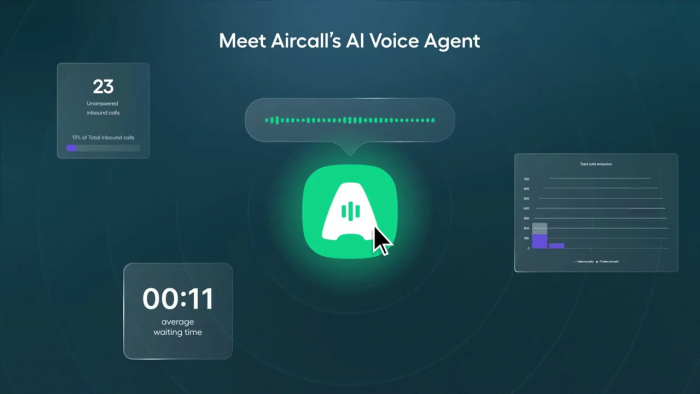
Aircall is a popular cloud phone system that now includes an AI Voice Agent allowance in its plans.
Key features:
1. Cloud phone numbers and call routing.
2. AI Voice Agent minutes for automated calls.
3. Integrations with CRMs and helpdesks.
Best areas of use: Startups and SMBs that want a modern phone system plus basic AI call automation out of the box.
Main strengths: Simple packaging, 50 free AI Voice Agent minutes per account per month plus a 100‑minute bonus at sign‑up, native sales/support integrations.
Drawbacks: AI minutes are limited on base plans; more advanced, deeply customized AI workflows may need additional tooling.
Pricing (indicative): Per‑user monthly plans; AI Voice Agent minutes bundled (50 free minutes per account per month, plus 100 extra minutes at sign‑up, then usage‑based).
Quick Comparison Table (High‑Level)
Key Features to Look For in an AI Voice Automation Tool
When choosing an AI voice call automation platform, buyers should evaluate:
1. Voice quality and latency: Natural, human‑like voices with low delay and smooth turn‑taking (barge‑in support).
2. NLU accuracy and language support: Ability to understand accents, noisy environments, and domain‑specific terminology; support for your required languages.
3. Telephony coverage and compliance: Availability of numbers and outbound calling in your target countries, with adherence to local telecom and data regulations.
4. Integrations and workflow depth: Native integrations with CRMs, helpdesks and data sources, plus webhooks/APIs to trigger business workflows.
5. Analytics and optimization tools: Dashboards for intents, containment, call outcomes and agent handoffs, plus A/B testing or flow iteration tools.
6. Security and compliance: Encryption, data residency options and certifications relevant to your industry (e.g., HIPAA, PCI for payments).
7. Total cost of ownership: Blend of seat licenses, per‑minute voice fees, AI usage and implementation costs; predictability of monthly spend.
Final Verdict: Which Tool Is “Best”?
There is no single “best” AI voice call automation tool for every business; the right choice depends on your scale, tech resources and regulatory constraints.
For agencies, startups and fast‑moving teams that want ready‑to‑use AI agents with minimal code, tools like Retell AI, Synthflow, CloudTalk AI or Aircall with AI Voice Agent can provide the quickest time‑to‑value.
For enterprises with complex contact centers, PolyAI, Talkdesk AI Voice or Dialogflow CX are more suitable due to their depth, analytics and enterprise‑grade controls.
If you are building your own product on top of AI voice, Twilio Voice with AI Voice Agent or GCP connectors to Dialogflow CX offer maximum control and customization.
A pragmatic approach is to shortlist 2–3 tools, run a tightly scoped pilot on a single high‑impact use case (e.g., appointment booking or L1 FAQs), and then scale the winner across more lines and geographies.
Post Comments
Be the first to post comment!
Related Articles