Introduction
From small SaaS startups to global enterprises, businesses are increasingly using AI voice agents to handle routine calls, reduce wait times, and free human agents for complex issues. These tools combine speech recognition, large language models, and text-to-speech to deliver natural, human‑like conversations over phone and VoIP.
The result is a new generation of “always-on” AI phone agents that can resolve support requests, collect payments, book appointments, and even run outbound sales campaigns with measurable ROI.
Unlike legacy IVR menus, modern AI agents can understand natural language, maintain context across turns, access your knowledge base or CRM, and hand off to humans when needed. Vendors now embed this into full contact‑center suites or offer developer‑first APIs so teams can build their own call flows.
Key Features to Look For in AI Voice Tools
When you evaluate AI voice platforms, focus less on buzzwords and more on practical capabilities that matter for real calls.
1. Real‑time STT and TTS
Low latency (sub‑second), accurate transcription, and natural voices are critical for “human‑like” conversations and low caller frustration.
2. Strong conversational intelligence
LLM‑driven flows, context retention, interruption handling, and fallback to FAQs or knowledge base answers.
3. Telephony and channel support
Native PSTN/SIP, VoIP, and integrations with existing contact center stacks or in‑app voice via WebRTC/SDKs.
4. Integrations and workflow orchestration
Connectors to CRMs, helpdesks, payment gateways, and no/low‑code flow builders so non‑developers can manage journeys.
5. Analytics, QA, and monitoring
Dashboards for call outcomes, CSAT, containment, and transcript search plus alerts when the agent misbehaves.
6. Compliance, security, and hosting options
SOC 2/GDPR alignment, data residency, PII handling, and in some cases on‑prem or private cloud deployment for regulated industries.
7. Pricing model and scalability
Most vendors mix subscription with per‑minute or per‑call usage; make sure the model fits your volume and use case.
Top 10 AI Tools for AI Voice Agents in 2026
Below are 10 widely referenced AI voice platforms that cover both “out‑of‑the‑box” contact center solutions and developer‑centric stacks.
1. Robylon AI
Robylon is an AI voice and chat agent platform built for modern, omnichannel customer support, with a strong focus on CRM and helpdesk integrations. It automates inbound and outbound voice, chat, and ticket workflows while preserving full context across channels.
Key features
● AI‑powered voice and chat agents with NLU and speech recognition.
● Integrations with HubSpot, Freshdesk, Slack, WhatsApp, and other messaging tools.
● Smart routing, automation rules, and analytics dashboards.
Best for
Businesses that want unified voice + chat automation tightly integrated with CRM and ticketing tools.
Pros
● Strong omnichannel story with both voice and chat.
● Rich integrations out of the box.
● Analytics to track performance and optimization.
Cons
● Best features are geared to support teams, less developer‑first than pure APIs.
● Pricing details are not fully public; larger deals may require sales calls.
Pricing
Typically offered as tiered, usage‑based plans with custom enterprise pricing; public site positions it as a scalable, enterprise‑friendly platform rather than a low‑cost commodity.
2. Retell AI
Retell AI is often highlighted as a strong real‑time AI voice agent platform that balances latency, feature depth, and cost efficiency. It targets teams that want production‑ready phone agents with monitoring and observability.
Key features
● Real‑time STT/TTS optimized for conversational calls.
● Tools for monitoring, analytics, and tuning agent behavior in production.
● Developer‑friendly APIs and webhooks to integrate business logic.
Best for
Product and engineering teams that need programmable phone agents with good observability and reliability.
Pros
● Strong reputation for responsiveness and low latency.
● Good balance between flexibility and ease of use.
● Designed for real‑world, production deployments.
Cons
● Requires some technical setup; not a pure no‑code solution.
● Exact per‑minute pricing may vary by region and volume.
Pricing
Commonly follows a hybrid model: base subscription plus per‑minute or per‑call usage, aligned with typical AI voice agent SaaS pricing strategies.
3. Vapi AI
Vapi AI is an open‑source voice agent SDK and platform that gives developers a flexible stack to build their own real‑time voice agents. It emphasizes low‑latency audio streaming and straightforward orchestration with LLMs.
Key features
● Low‑latency voice API for real‑time calls.
● Prebuilt integrations with popular LLMs like OpenAI and Claude.
● WebSocket and webhook support for custom logic, fully open‑source core.
Best for
Developer‑led teams that want to own the agent logic and infrastructure, and value open‑source flexibility.
Pros
● Open‑source approach reduces lock‑in and allows deep customization.
● Built specifically for real‑time audio and agent orchestration.
● Plays nicely with modern LLM stacks.
Cons
● Less turnkey than full contact‑center suites.
● Requires engineering resources to get the most out of it.
Pricing
Core SDK is open source; commercial usage typically combines infrastructure costs (telephony, STT/TTS, LLM) with any managed hosting, often billed in per‑minute or per‑token models.
4. PolyAI
PolyAI is an enterprise‑grade platform known for multilingual voice assistants that can handle complex customer service use cases. It focuses on designing brand‑aligned voice experiences at scale.
Key features
● Multilingual AI agents that support many languages and accents.
● Custom AI personas and dialog design for brand‑consistent experiences.
● Real‑time analytics and integrations with existing IVR and contact center tools.
Best for
Large enterprises that need advanced, multilingual automation for high‑volume contact centers.
Pros
● Strong multilingual and localization capabilities.
● Suitable for complex, enterprise customer journeys.
● Deep IVR and telephony integrations.
Cons
● Custom‑pricing, enterprise‑focused—less suited to small teams.
● Longer implementation cycles compared to lighter tools.
Pricing
Custom enterprise pricing; deals are typically structured around call volumes and integration scope rather than simple self‑serve tiers.
5. CloudTalk AI Voice Agent
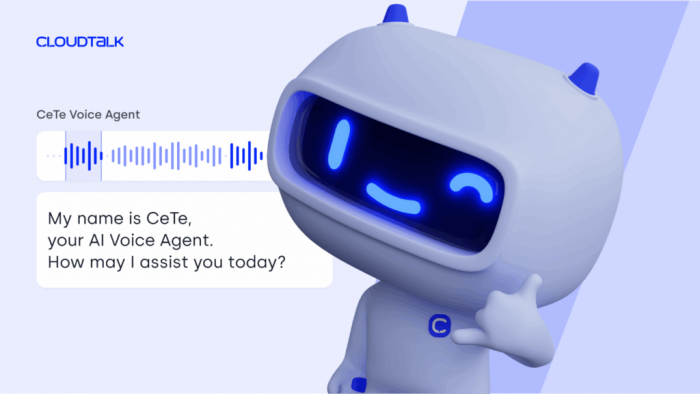
CloudTalk is a cloud‑based VoIP call center platform that now offers AI voice agents to automate inbound and outbound calls. It targets sales and support teams that already use or want a modern cloud phone system.
Key features
● AI voice agent embedded in a VoIP/contact center suite.
● Call routing, analytics, and productivity tools for sales and support.
● Integrations with CRMs and helpdesks common in SMB/SME stacks.
Best for
Teams that want AI voice automation inside a full VoIP/contact center platform rather than assembling separate tools.
Pros
● Single platform for telephony plus AI automation.
● Good fit for outbound sales and inbound support teams.
● Practical feature set tailored to call centers.
Cons
● AI features are embedded in the broader platform, so not as API‑centric as pure dev tools.
● Pricing for AI capabilities can be layered on top of core seat plans.
Pricing
Uses typical cloud call‑center pricing (per‑user or per‑seat) plus AI voice agent costs that may follow per‑minute or add‑on models.
6. Talkdesk AI (Autopilot)
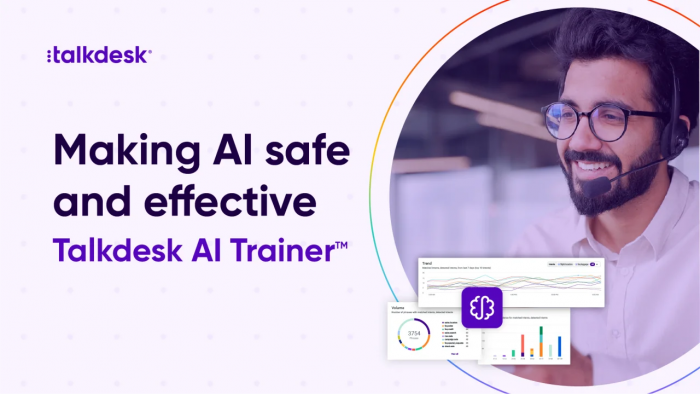
Talkdesk is a full AI contact center platform; its Autopilot product powers AI virtual agents for voice and digital channels. It is designed for enterprises that want to automate self‑service while integrating tightly with human agents.
Key features
● Talkdesk Autopilot for AI voice and digital self‑service.
● Talkdesk Navigator for AI‑powered routing and prioritization.
● Quality Management and Interaction Analytics for QA and coaching.
Best for
Enterprises standardizing on a single, AI‑driven contact center platform with both automation and agent‑assist tools.
Pros
● End‑to‑end contact center stack with strong AI components.
● Rich analytics and quality management layers.
● Human‑in‑the‑loop tools (AI Trainer) for continuous improvement.
Cons
● Overkill for very small teams or simple IVR replacement.
● Pricing and implementation usually involve enterprise contracts.
Pricing
Enterprise‑style subscription with contact center licenses; AI voice agents are typically priced as add‑ons, often using hybrid subscription plus usage models.
7. Floatbot.AI

Floatbot.AI is a no/low‑code platform that helps businesses build AI voice agents with frameworks like Agentic Flow and multi‑agent orchestration. It emphasizes real‑time data and knowledge‑base integrations plus multilingual support.
Key features
● No/low‑code builder for AI phone agents.
● Real‑time app and knowledge‑base integration, including privately hosted LLMs.
● Multilingual voice support (100+ languages) and orchestration across 50+ LLMs and speech models.
Best for
Teams that want to build AI voice agents without heavy coding, especially when data privacy and custom models matter.
Pros
● Visual flow building suitable for non‑developers.
● Flexible model orchestration and hosting options.
● Strong multilingual coverage.
Cons
● Advanced configuration can still get complex for non‑technical users.
● Pricing is not fully transparent; often leans toward mid‑market/enterprise buyers.
Pricing
Typically packaged as platform subscriptions plus usage (minutes/calls), aligned with standard AI voice agent pricing patterns.
8. Twixor Voice AI

Twixor is a conversational automation platform whose Voice AI offering focuses on orchestrating end‑to‑end voice journeys for enterprises. It is built for visual workflow design, escalation, and omnichannel coverage.
Key features
● No‑code AI voice workflow orchestration for inbound and outbound journeys.
● Multilingual, accent‑aware voice automation.
● Live agent escalation, CRM‑synced summaries, and omnichannel/telephony flexibility (PSTN, VoIP, WebRTC).
Best for
Enterprises that want a visual, all‑in‑one platform for voice journeys with robust escalation and compliance.
Pros
● Powerful orchestration and escalation features.
● Scales to thousands of concurrent calls.
● Compliance‑conscious (SOC 2, GDPR).
Cons
● Strong enterprise focus may not suit small businesses.
● Likely requires onboarding and implementation support.
Pricing
Enterprise‑oriented, with custom quotes and volume‑based usage; aligns with hybrid subscription and per‑minute billing for large deployments.
9. Spitch
Spitch is a voice‑centric platform with virtual assistants, speech analytics, and voice biometrics, aimed at secure and compliant voice automation. It serves enterprises and public sector organizations with high regulatory requirements.
Key features
● Virtual assistants for automated customer service.
● Speech analytics and agent assist features.
● Voice biometrics for authentication and fraud prevention.
Best for
Enterprises and public sector entities that need secure, compliant voice automation and analytics.
Pros
● Strong focus on security and biometrics.
● Combines automation with analytics and agent assist.
● Suitable for regulated industries.
Cons
● Custom, enterprise‑level engagement; not a self‑serve SMB tool.
● May require integration projects and professional services.
Pricing
Custom enterprise pricing based on deployment scope, including virtual assistants, analytics, and biometrics modules.
10. Cognigy (Voice Gateway & Virtual Agents)
Cognigy is a well‑known enterprise conversational AI platform whose Voice Gateway enables AI‑driven telephony and voice agents. It is designed to orchestrate complex voice and digital journeys and integrate with existing contact center stacks.
Key features
● Cognigy Voice Gateway for telephony orchestration and AI voice agents.
● Dialogflow‑style visual flow building and agent design.
● Integrations with contact center platforms and back‑office systems.
Best for
Large organizations that want a flexible, platform‑level solution to build and manage AI voice agents across multiple channels and systems.
Pros
● Powerful orchestration with rich integrations.
● Supports both self‑service and agent‑assist scenarios.
● Suitable for global contact centers with complex needs.
Cons
● Platform complexity and implementation requirements are higher than lightweight tools.
● Pricing is generally enterprise and custom.
Pricing
Typically sold as an enterprise conversational AI platform license with additional usage‑based costs for telephony and AI minutes.
Final Verdict
The “best” AI voice agent in 2026 depends less on raw model quality and more on what you need to automate: support, sales, or full‑stack contact center operations. If you’re a developer‑led team, platforms like Retell AI and Vapi AI give you the control to design custom flows, while tools like Robylon, CloudTalk, Floatbot, and Twixor shine if you want faster, more visual deployment for support and CX teams.
Enterprises with global scale and heavy compliance needs will likely gravitate toward PolyAI, Talkdesk, Spitch, or Cognigy, where governance, analytics, and integrations are as important as voice quality. For your article, you can layer on pricing graphs (e.g., subscription vs per‑minute hybrids) using current figures from each vendor site to show how costs scale by minutes, calls, or agents.
Post Comments
Be the first to post comment!

Table of Content
- Introduction
- Key Features to Look For in AI Voice Tools
- Top 10 AI Tools for AI Voice Agents in 2026
- 1. Robylon AI
- 2. Retell AI
- 3. Vapi AI
- 4. PolyAI
- 5. CloudTalk AI Voice Agent
- 6. Talkdesk AI (Autopilot)
- 7. Floatbot.AI
- 8. Twixor Voice AI
- 9. Spitch
- 10. Cognigy (Voice Gateway & Virtual Agents)
- Final Verdict