Table of Content
- Why Topic Research Feels Harder Than It Used To
- How Writers Actually Decide What to Write Next
- Seeing Questions the Way Readers Do
- Finding Topics That Aren’t Already Decided
- Stopping Yourself From Writing the Same Article Twice
- Thinking in Topics Instead of Posts
- Optimizing Without Flattening the Writing
- What This Looks Like in Real Use
- The Uncomfortable Truth
For years, blog topic research followed a familiar pattern. You checked search volume, glanced at keyword difficulty, picked something that looked manageable, and wrote the post. Sometimes it worked. Often, it didn’t. And most of the time, you didn’t know why.
In 2025, that uncertainty has only grown. Search results are messier. Forums rank next to brands. AI summaries collapse entire articles into a paragraph. Writing more content doesn’t guarantee traction anymore, it just increases the cost of being wrong.
AI tools entered this space claiming to make things easier. Most didn’t. A few, used carefully, made one thing clearer: which ideas weren’t worth writing at all.
That’s the real value of AI in blog topic research and SEO today — not speed, not automation, but fewer bad decisions.
Why Topic Research Feels Harder Than It Used To

The problem isn’t that good topics are gone. It’s that signals are harder to interpret.
Search intent overlaps. One query can mean five different things. Two keywords that look distinct often rank for the same pages. At the same time, Google increasingly rewards sites that look like they understand a topic broadly, not ones that publish isolated posts.
So the real challenge now is structural. You’re trying to answer questions like:
Should this be one article or three?
Is this topic actually winnable for my site?
Am I adding clarity, or just more noise?
No single tool answers those questions. But the right combination makes the wrong answers harder to justify.
How Writers Actually Decide What to Write Next

Most blogs that survive updates don’t chase keywords. They follow a quieter process.
They start by understanding how people phrase problems, not how tools label keywords. Then they look for places where search results already feel thin or confused. Only after that do they worry about optimization.
This is where some AI tools fit naturally — not as authorities, but as lenses.
Seeing Questions the Way Readers Do
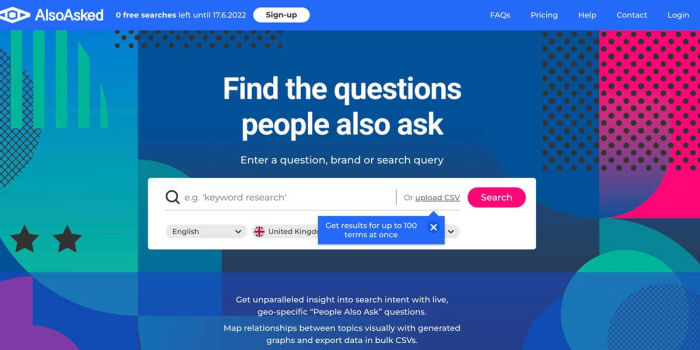
One of the fastest ways to ruin an article is to outline it around keywords instead of questions. That mistake usually comes from relying too heavily on volume-driven tools.
Tools like AlsoAsked expose a different layer of intent. Instead of listing keywords, they show how questions branch and evolve inside Google’s own results. When you see those paths, it becomes obvious which sections belong together and which deserve separate posts.
Used sparingly, this keeps outlines grounded in real curiosity. Used aggressively, it creates bloated content. The tool doesn’t know when to stop — that’s still your job.
Finding Topics That Aren’t Already Decided
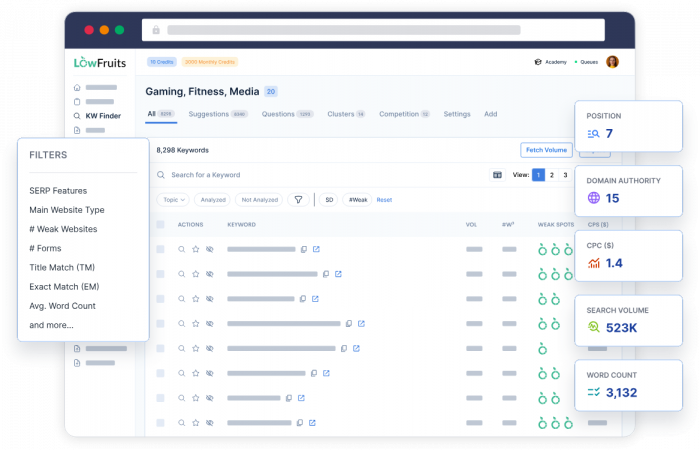
A lot of “low competition” keywords aren’t actually low competition. They’re just low clarity. The SERPs are filled with Reddit threads, half-answered forum posts, and thin blogs that Google keeps rotating.
LowFruits is useful not because it guarantees wins, but because it exposes this pattern quickly. When you see who’s ranking — and why — it becomes easier to tell whether an article would actually improve the result set or just join the pile.
This changes how you evaluate ideas. You stop asking “Can I rank?” and start asking “Is this SERP unfinished?”
That shift alone saves more time than any content generator.
Stopping Yourself From Writing the Same Article Twice
One of the most expensive mistakes in blogging is unintentional duplication — publishing multiple posts that compete for the same intent.
Tools like Keyword Insights reduce this by clustering keywords based on shared ranking pages, not superficial similarity. When multiple queries pull up the same URLs, it’s a strong signal they belong in one article.
This sounds obvious until you see how often it’s ignored. Many editorial calendars are inflated simply because nobody checked whether Google already treats those keywords as the same problem.
Clustering doesn’t make content better. It just prevents unnecessary work.
Thinking in Topics Instead of Posts
Some tools push you to zoom out further.
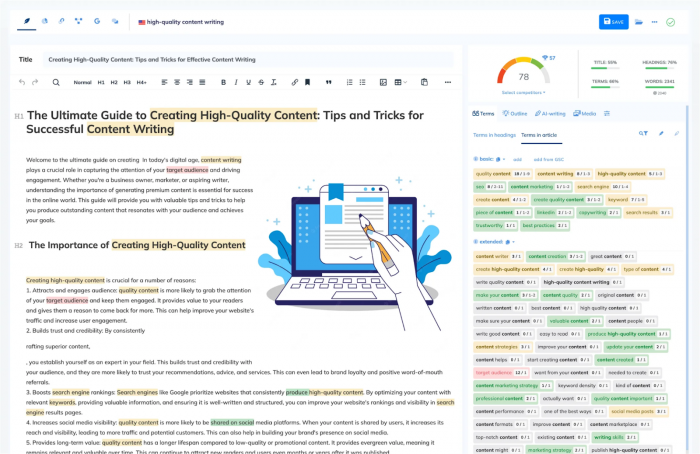

Platforms like NeuronWriter and Contadu focus less on individual articles and more on whether your site covers a subject thoroughly enough to look credible. They surface missing concepts, related entities, and gaps that don’t show up in basic keyword lists.
This approach isn’t for everyone. If you publish occasionally, it can feel like overthinking. But for blogs that rely on search traffic long-term, topical coherence matters more than hitting arbitrary word counts.
Authority isn’t built by writing more. It’s built by writing connected things.
Optimizing Without Flattening the Writing
On-page SEO tools are where many articles lose their voice.

Surfer SEO is a good example. It reflects what’s already ranking and shows how closely your draft aligns. Used carefully, it’s a useful reference. Used obsessively, it turns writing into pattern matching.
The danger isn’t the tool — it’s the behavior. When writers chase scores, clarity usually suffers.
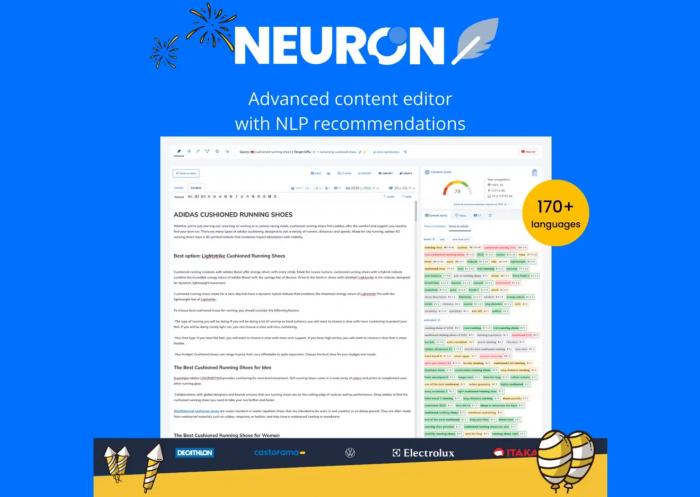
NeuronWriter’s editor tends to push writers toward covering concepts rather than repeating terms, which makes it slightly more forgiving. It’s less polished, but harder to over-optimize by accident.

Frase adds another layer by explicitly considering how content is consumed by AI systems. Its guidance often nudges writers toward clearer explanations and better structure. That doesn’t guarantee visibility in AI answers, but it does discourage vague filler.
None of these tools fix weak ideas. They only expose them faster.
What This Looks Like in Real Use
Most people don’t need a full stack. They need one way to understand questions, one way to judge opportunity, and one way to sanity-check their drafts.
Everything beyond that should justify its existence by saving time or preventing mistakes.
If a tool makes you write more without making you think less, it’s probably noise.
The Uncomfortable Truth
The best AI tools for blog topic research and SEO optimization don’t make content better. They make bad content harder to rationalize.
They surface gaps. They expose weak assumptions. They force you to confront whether an article actually adds value to what already exists.
What they don’t do — and never will — is decide what’s worth saying.
That part is still on you.
Post Comments
Be the first to post comment!