Table of Content
- 1. Saleshandy: When Cold Outbound Is Your Lifeblood
- 2. Apollo.io: If You Want Data + Outreach in One Place
- 3. Einstein: For Teams Living in Salesforce
- 4. Gong: When You Want to Know What Actually Happens on Calls
- 5. Fireflies.ai: If You Just Want Calls Captured and Summarized
- 6. Lavender: Turning Every Rep into a Better Email Writer
- 7. Salesloft: Orchestrating Multi‑Channel Cadences
- 8. Clari: Seeing the Whole Revenue Picture
- How These Tools Fit Together in a Real Sales Stack
- Final Verdict
Talk to any high‑performing sales leader and you’ll notice a pattern: the teams hitting quota most consistently are not just hiring better reps, they’re quietly running an AI‑powered tech stack underneath every step of the sales cycle. Lead scoring, list building, cold outreach, call notes, forecasting, and even email coaching are now handled by intelligent systems that free humans to do what they do best: build relationships and close.
But the “AI for sales” space is crowded. Some tools automate outbound, some analyze calls, others live at the forecast and revenue level, and a few focus on enabling reps inside the inbox. Below is a more strategic walkthrough of eight standout AI tools, grouped by the real problems they solve, with pricing and “who it’s for” clearly spelled out so you can build a sensible stack instead of collecting random tools.
1. Saleshandy: When Cold Outbound Is Your Lifeblood
Official Website: https://www.saleshandy.com/
Outbound teams care about two things above all: getting into inboxes and getting replies. Saleshandy focuses squarely on those jobs.
Saleshandy gives you multi-step email campaigns, reply detection, auto follow‑ups, and inbox rotation so you can safely send much higher volumes than from a single account. Its AI layer helps craft and personalize email copy at scale, reducing the time reps spend staring at a blank compose window. Deliverability features like warm‑up and domain protection are built in, which is crucial if outbound is your main acquisition engine.
The upside: it feels built for SDRs and lean teams that need to ship campaigns fast without becoming deliverability experts. The downside: it is fundamentally email‑centric; if you want deeply integrated calling, LinkedIn steps, or enterprise‑level reporting, you may eventually outgrow it.
Pricing starts around 25 USD per user per month, with higher plans adding more sending accounts, volume, and advanced features. That makes it approachable for startups and small sales teams who need serious outbound without enterprise pricing.
Best fit: scrappy sales teams and founders running heavy cold email campaigns who want AI help with copy and follow‑ups, but don’t yet need a huge, multi-channel engagement platform.
2. Apollo.io: If You Want Data + Outreach in One Place
Official Website: http://Apollo.io
Many sales teams want fewer tabs, not more. Apollo.io is compelling because it blends B2B contact data, enrichment, and outreach in a single platform.
Inside Apollo, you can filter millions of contacts by firmographic and technographic criteria, build highly targeted lists, enrich your CRM with fresh data, and launch email and call sequences from the same interface. AI comes in when you generate first‑draft emails, subjects, and personalization based on each prospect’s profile and signals.
The big advantage is that you don’t have to pay separately for a data provider and a sequencer. The compromise: as an “all‑in‑one,” Apollo may not be the absolute best in every subcategory when compared side‑by‑side with specialist tools, and you’ll want to monitor data accuracy and credit usage closely.
Paid plans usually start at about 49 USD per user per month when billed annually, with more expensive tiers (79/119 USD+) unlocking more credits, advanced features, and team capabilities. There’s typically a free tier with limited usage.
Best fit: outbound B2B teams that want one main environment for “find → enrich → contact” with AI helping to bridge the gap between data and messaging.
3. Einstein: For Teams Living in Salesforce
Official Website: https://www.learneinstein.com/
If your CRM is Salesforce and it’s the heart of your revenue operation, bolting AI on top of something else often creates more friction than value. This is where Salesforce Einstein comes in.
Einstein doesn’t feel like a separate product; it sits across your Salesforce data and quietly scores leads and opportunities, flags at‑risk deals, suggests next actions, and enhances forecasts. Because it uses your actual historical performance to train its models, the lead and opportunity scoring tends to match your reality more closely than generic scoring rules. When combined with Salesforce’s other products, you also get features like conversation insights and auto‑generated summaries.
The catch is that Einstein inherits everything good and bad about your Salesforce instance. If your data hygiene is poor, AI will reflect that. And pricing is clearly enterprise‑oriented: basic AI add‑ons often start somewhere around 50–75 USD per user per month and can climb higher into the hundreds per user per month for broader AI bundles and advanced capabilities. Many configurations require a custom quote.
Best fit: mid‑market and enterprise sales organizations already deep in Salesforce, looking to boost lead scoring, forecasting, and pipeline health without managing yet another standalone tool.
4. Gong: When You Want to Know What Actually Happens on Calls
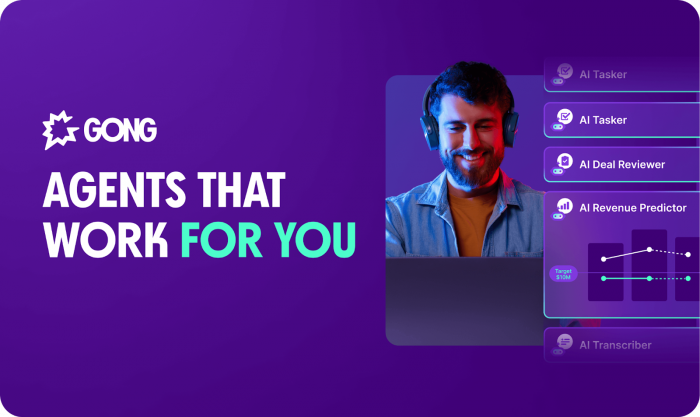
Official Website: https://www.gong.io/
Most sales leaders have had that moment: the forecast looks good, but deals slip anyway. Gong tackles this problem by showing you, in detail, what’s really happening in conversations.
Gong records and transcribes sales calls, emails, and other interactions, then applies AI to detect patterns: how often competitors come up, how pricing is discussed, who is actually in the deal, whether next steps were agreed, and more. It builds per‑deal timelines, highlights risk indicators, and lets leaders drill into specific calls or snippets instead of guessing why deals are stuck. Reps can search their own and others’ calls, share clips with colleagues, and use top‑performer patterns as a playbook.
The pay‑off is better coaching, more accurate deal inspection, and fewer “surprises” at quarter‑end. The trade‑off is that it’s overkill for very small teams, implementation requires buy‑in (call recording, compliance, habit change), and pricing is on the higher side.
Gong generally runs on quote‑based pricing, but market chatter often places it in the low to mid hundreds of dollars per user per year at minimum, with typical deals higher depending on seats and modules.
Best fit: mid‑sized and large B2B sales orgs that run many discovery/demo calls and want serious conversation intelligence and coaching, not just a simple recorder.
5. Fireflies.ai: If You Just Want Calls Captured and Summarized
Official Website: https://fireflies.ai/
Not every team can afford a full conversation‑intelligence platform, but almost every rep hates taking notes while trying to listen. Fireflies.ai is the “lighter” AI notetaker that addresses this everyday pain.
You connect Fireflies to your calendar; its assistant joins your calls, records them, transcribes the audio, and generates searchable transcripts. After the meeting, you get AI‑generated summaries, bullet‑point action items, and key topics. Reps can quickly copy those into follow‑up emails or CRM notes, and managers can dip into specific calls when needed without watching the whole replay.
It’s a huge time saver for one‑to‑one meetings, demos, and internal syncs. The limitation is that it doesn’t offer the same depth of deal intelligence and coaching analytics as Gong‑level tools; think “notes and summaries” rather than “full revenue intelligence.”
Paid plans generally start around 10 USD per user per month, with tiers that add longer storage, advanced search, and more integrations. There’s often a free or limited plan for light usage.
Best fit: small to mid‑sized sales teams that simply want AI to handle note‑taking and summaries on calls, boosting rep productivity without heavy implementation or enterprise cost.
6. Lavender: Turning Every Rep into a Better Email Writer
Official Website: https://www.lavender.ai/
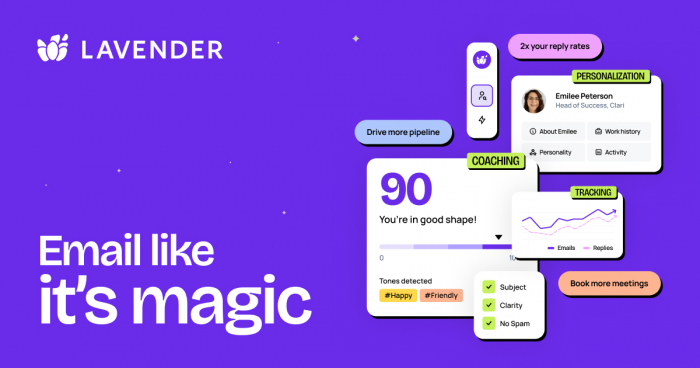
Lavender takes a very focused approach: it lives in your inbox and turns into a real‑time email coach for sales.
Install the extension, and as you write cold emails in Gmail, Outlook, or integrated platforms, Lavender scores your draft for length, clarity, tone, personalization, and spam risk. It suggests specific edits, rewrites sentences, and even proposes better openers or CTAs. The AI can pull in relevant personalization hints from the prospect’s profile, helping reps avoid generic templates.
This is massively useful for teams who already have a cadence tool but struggle with inconsistent email quality. Over time, reps learn what “good” looks like by seeing their score improve with each revision.
On the flip side, Lavender does not send or sequence emails; it's not a replacement for your outreach platform. If you want one tool that does everything from list building to calling, this isn’t it.
Solo plans typically start around 29 USD per user per month, with team packages priced higher but adding analytics and coaching dashboards for managers.
Best fit: outbound‑heavy teams that already have a CRM and sequencer, but want AI guidance directly inside the inbox to lift response rates and train reps on better cold email craft.
7. Salesloft: Orchestrating Multi‑Channel Cadences
Official Website: https://www.salesloft.com/
If your sales motion is mature and you want to operationalize a consistent, multi-channel process, Salesloft is one of the default choices in sales engagement.
Salesloft lets you design cadences that blend emails, calls, social touches, and tasks. Reps enroll leads and accounts, then follow the prescribed steps each day. The platform tracks activity and engagement, surfaces performance dashboards, and increasingly uses AI to recommend subject lines, templates, and next steps based on what’s working across the team.
The strength here is structure and visibility. Reps never wonder whom to contact next; leaders get a clear picture of pipeline activity and what’s moving the needle. Over time, AI helps optimize the cadences themselves.
The flipside is complexity and cost rolling out Salesloft is a project, not a quick signup, and pricing is geared toward teams, not solo users.
Pricing is quote‑based, but user reports often place starting points in the low hundreds of dollars per user per month, depending on modules chosen and contract details.
Best fit: established B2B teams that want a standardized, process‑driven outreach engine across email, phone, and social with AI nudging them toward better cadences and content over time.
8. Clari: Seeing the Whole Revenue Picture
Official Website: https://www.clari.com/
At the top of the stack sits Clari, a revenue intelligence and forecasting platform used by leadership, RevOps, and finance as much as by sales managers.
Clari pulls data from your CRM, email, calendar, and call tools, then uses AI to generate a live view of your pipeline: which deals are advancing, which are stuck, where activity is missing, and how all of that affects your forecast. It highlights risk on individual opportunities, flags sandbagging or overconfidence, and helps leaders see reality weeks before numbers show up in the P&L.
This gives executives and sales leaders a much more reliable read on “are we really going to hit this number?” than spreadsheets and anecdotal updates. The trade‑off is that frontline reps don’t “live” in Clari the way they do in a sequencer; it’s more of a leadership and RevOps tool. It also comes with enterprise‑grade pricing and implementation.
Real‑world deployments often land in the tens of thousands of dollars per year for the org, variable by size and modules. All details are quote‑based.
Best fit: mid‑market and enterprise B2B companies with sizeable pipelines, where forecast accuracy, early risk detection, and unified revenue visibility are high‑stakes problems.
How These Tools Fit Together in a Real Sales Stack
No single AI tool “does it all,” and if it claims to, it probably does none of it especially well. In practice, strong teams combine:
● One or two tools closer to the rep (Saleshandy or Apollo for outbound; Lavender for email craft; Fireflies or Gong for calls).
● One engagement or cadence layer when the team is large enough (Salesloft).
● One intelligence/forecasting layer for leadership (Clari or a CRM‑native AI like Einstein).
That’s where the compounding effect appears: AI finds better targets, writes better emails, documents better conversations, and offers better forecasts all feeding each other through your CRM.
Final Verdict
AI is no longer a gimmick in sales; it’s the quiet infrastructure that lets small teams act like big ones and big teams operate with far more clarity and precision. The safest way to adopt it is not to chase trends, but to start with your biggest bottleneck, be it outbound volume, call follow‑up, forecasting, or coaching and add one or two tools that directly target that gap. Once you see measurable gains in time saved and revenue generated, expanding your AI stack stops being an experiment and becomes a logical next step in how your sales org grows.
Post Comments
Be the first to post comment!
Related Articles