Branding used to be a slow, expensive problem. You hired a designer, went through rounds of revisions, argued about fonts, and waited weeks for something that still might not feel right.
For small businesses in 2025, the constraint isn’t ambition — it’s time, money, and momentum. You need a name, a logo, and a basic message quickly enough to start selling, but not so generic that you disappear into the noise.
AI branding tools stepped into that gap. Not as replacements for designers, but as starting points — ways to move from “nothing” to “something usable” in hours instead of weeks.
The mistake is expecting them to do more than that.
What AI Branding Tools Actually Do Well (and What They Don’t)
Most AI branding tools are good at combining existing patterns, not inventing new ones. They pull from massive datasets of logos, names, and slogans, then remix them based on your inputs.
That makes them effective for:
● Early exploration
● Directional decisions
● Narrowing options quickly
It also explains why so many AI-generated brands feel interchangeable. Without human judgment, these tools tend to average toward what already exists.
Understanding that limitation upfront makes the tools far more useful — and far less frustrating.
AI Logo Generators: Speed Over Originality
Logo generators are often the first thing founders try. They promise instant visuals, and technically, they deliver. The real question is whether those visuals can survive beyond a website header.
Looka: Consistency Over Creativity
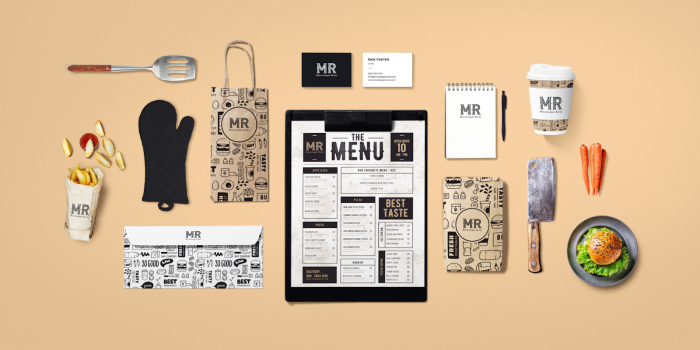
Looka is popular because it doesn’t just generate logos — it generates systems. Colors, fonts, layouts, and brand kits all arrive together, which is valuable when you’re starting from zero.
The logos themselves are usually clean and serviceable, but rarely distinctive. That’s not a flaw so much as a design choice. Looka optimizes for coherence and ease of use, not conceptual risk.
For businesses that need to look professional quickly — especially online-first ones — that trade-off is often acceptable.
Canva: Logos Inside a Larger Design Ecosystem
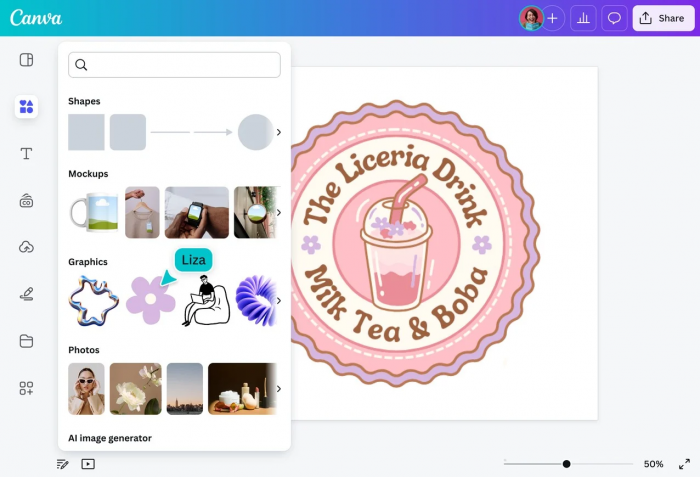
Canva’s AI logo generation lives inside a much bigger toolset. That’s its main advantage.
You’re not just generating a logo; you’re immediately placing it on social posts, flyers, pitch decks, and packaging. For non-designers, that continuity matters more than uniqueness.
The downside is predictability. If your prompts are vague, the results often look like thousands of other Canva-made brands. Transparent backgrounds and print-ready exports sit behind the Pro plan, which nudges serious use toward paid tiers.
Canva works best when branding is one task among many, not a standalone identity exercise.
Brandmark: Iteration-Focused Logos With a Cost Barrier
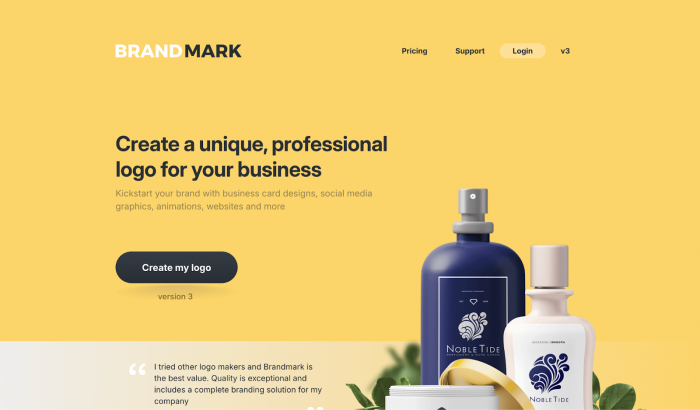
Brandmark is built for founders who want to push variations further instead of picking from a first batch of ideas. Unlike tools that cap edits or hide refinements behind templates, Brandmark allows unlimited adjustments to layout, colors, and typography.
That freedom often results in logos that feel less templated, but it comes with a clear trade-off: there is no free download. You commit financially before you can fully test how the logo performs across real-world use cases.
Brandmark makes sense when you already have a direction in mind and want to refine it without hiring a designer. It’s less suitable for early exploration or casual experimentation.
VistaPrint: Logos Designed for Physical Use First
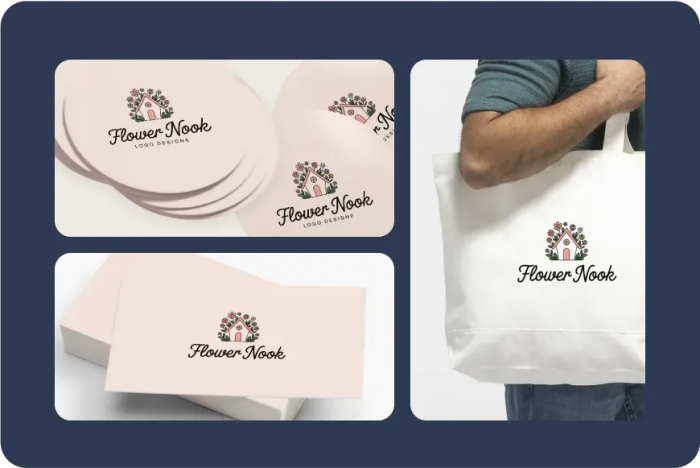
VistaPrint’s logo generator is optimized for a specific outcome: print reliability. The tool is trained on real small business logos and prioritizes formats that work on cards, signage, packaging, and merchandise.
Customization options are limited compared to other generators, but the outputs tend to scale cleanly across physical materials without breaking or losing clarity. That practicality is the point.
VistaPrint works best for businesses that already know they will print their logo extensively and want fewer surprises when moving from screen to paper.
AI Name Generators: Fast Ideas, Slow Decisions
Naming is where AI tools feel most impressive — and most misleading.
They can generate hundreds of options in seconds. What they can’t do is tell you which ones will age well, avoid legal trouble, or resonate culturally.
Namelix: Pattern Recognition at Work
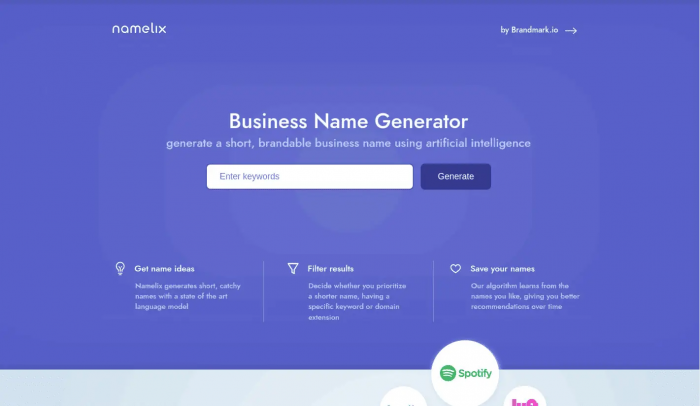
Namelix focuses on short, brandable names. Over time, it adapts to preferences you save, which improves suggestions within a session.
It’s useful for breaking creative blocks and surfacing combinations you wouldn’t think of manually. Domain checks are built in, which speeds up elimination.
What it doesn’t handle is trademarks. That step still requires manual verification, and skipping it is one of the most common mistakes small businesses make after using AI naming tools.
Shopify and Others: Names With a Destination
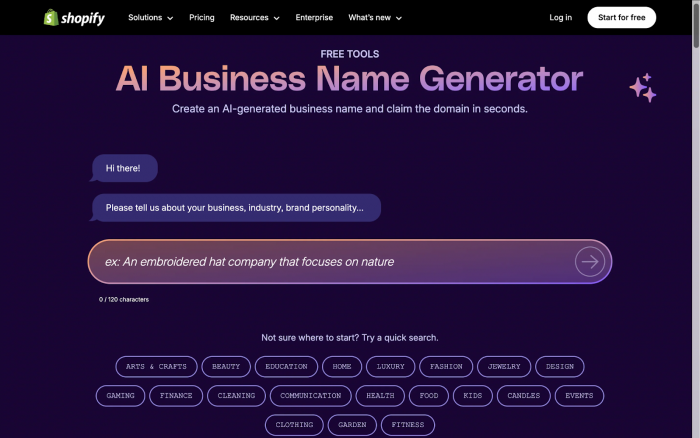
Shopify’s name generator is tightly coupled with e-commerce. The suggestions skew toward retail-friendly language, and domain availability is front and center.
That bias is useful if you’re launching a store quickly. It’s less helpful if your business doesn’t fit standard product categories.
Tools like Zoviz and Zyro expand into multi-language or SEO-friendly naming, but the core limitation remains the same: availability does not equal suitability.
AI can suggest names. It cannot judge meaning.
AI Slogan Generators: The Most Fragile Layer
Slogans are deceptively hard. They need to sound natural, reflect positioning, and avoid clichés — all areas where AI struggles.
Merlio and Copy.ai: Directional, Not Final
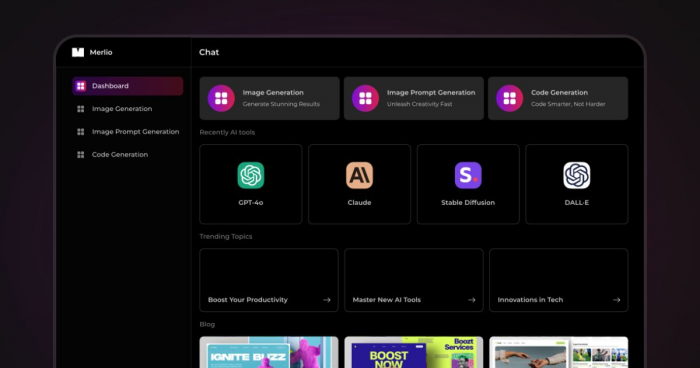
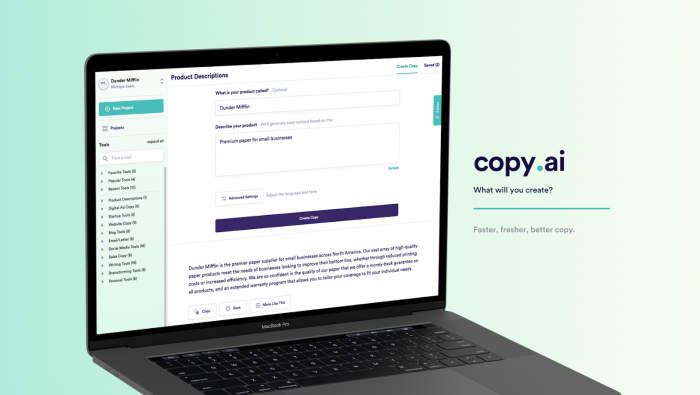
Tools like Merlio allow tone, audience, and intent customization, which improves relevance. They’re useful for exploring angles: serious vs playful, descriptive vs aspirational.
But slogans generated without specific context often sound like slogans — polished, empty, interchangeable. That’s why many businesses end up using them as internal language rather than public-facing taglines.
Canva, Jasper, and Ahrefs: Convenience Over Depth
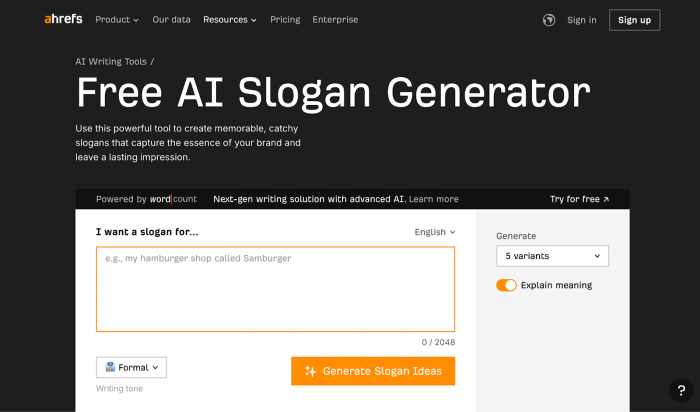
Canva and Jasper integrate slogan generation into broader content workflows. Ahrefs frames slogans through an SEO lens, which can help align messaging with search intent.
None of these tools reliably produce lines you’d want to print on a storefront without editing. Their value is in prompting thought, not delivering finished copy.
The Real Risk Isn’t Bad Branding — It’s Forgettable Branding
AI branding tools don’t usually produce terrible results. They produce forgettable ones.
For many small businesses, that’s still better than having nothing. But it’s not a finish line.
The best AI tools for small business branding are useful because they reduce friction, not because they create identity. They get you moving. They don’t tell you who you are.
That part still takes judgment, iteration, and a willingness to say, “This isn’t quite it yet.”
And no tool can automate that.
Post Comments
Be the first to post comment!