If you treat BitNation-Blog.com as just “another crypto blog,” you’ll miss the real story. It’s more interesting to read it as a carefully staged crypto classroom: the boards are clean, the sections are labeled, the teachers are smiling but the curriculum is thinner than the brochure suggests.
Walking into the “BitNation classroom”

Imagine you enter a small, neatly organized school for crypto.
On the hallway signs you see:
● Cryptocurrency
● Trading
● Latest
● Contact Us
And at the entrance, a big slogan on the wall: “Dive into Cryptocurrency, Master Trading, Stay Updated.”
Nothing about this looks amateur:
● The Home page behaves like a lobby with posters for everything the school claims to teach—coins, strategies, regulation, even how blockchain is changing sectors like gambling and cross‑border payments.
● A “Few Words About Us” panel explains that the place is for “seasoned traders and beginners” alike, promising “valuable insights” on the crypto world.
● Doors lead off to neatly labeled rooms: a cryptocurrency concepts room, a trading workshop, a news corner, and a faculty wall with names and roles.
The first impression is: this is not a random blog; this is a content product that tries to feel like a mini media institution.
Room 1: Cryptocurrency – the glossy textbook section
Push open the Cryptocurrency door and you land in the “concepts” room.
Here, BitNation-Blog.com:
● Talks about cryptocurrency as “the future of digital finance,” emphasizing decentralization, transparency, and the blockchain rails that carry it.
● Breaks down classics like Bitcoin, then extends into altcoins, stablecoins, and thematic areas like crypto’s role in iGaming or regional adoption.
● Mixes news‑flavored posts (Bitcoin regulation, market shifts) with evergreen explainers (“how many cryptocurrencies exist?”) that anchor newcomers.
From a reader’s point of view, this room has clear strengths:
● The language is forgiving: concepts are explained in everyday terms, with simple step‑by‑step reasoning instead of dense math.
● The structure is predictable: definition → why it matters → where it’s used → what to watch next.
But if you flip through enough of these “textbooks,” patterns start to show:
● You rarely see hard data charts, market‑cap tables, volume heatmaps, or links to on‑chain analytics.
● Many explanations lean on familiar narratives: “crypto is the future,” “blockchain is transparent,” “Bitcoin changed everything,” without pushing into uncomfortable nuance or conflicting evidence.
This room teaches the vocabulary of crypto fluently. It does not, however, behave like a research library.
Room 2: Trading – motivational posters instead of a trading floor
Next door is the Trading room, and the tone shifts slightly.
The slogans on the walls look like this:
● “Crypto markets run 24/7.”
● “Volatility is both risk and opportunity.”
● “Master strategies, manage risk, trade smarter.”
The curriculum, as BitNation-Blog.com lays it out:
● Explains that crypto trading never sleeps, so traders must be alert to news, regulation, and market signals.
● Encourages readers to learn basic risk management, strategy building, and mindset (“don’t chase hype blindly”).
● Frames both day trading and long‑term holding as viable paths if approached intelligently.
On paper, this sounds like a proper workshop. In practice, it often feels more like motivational posters with lecture notes:
● Articles describe volatility, risk, and strategy in broad strokes rather than walking through specific trades or backtested set‑ups.
● There’s limited use of concrete scenarios—for example, “here’s where you might enter, here’s why your stop is here, here’s the risk:reward math.”
● The tone sometimes leans toward “you can do this” more than “here are three ways you could get wrecked if you don’t respect risk.”
So this room is valuable for mindset orientation, but if you’re expecting a real trading desk with playbooks and metrics, you’ll quickly hit its ceiling.
Room 3: Latest – a newsfeed in a hall of mirrors
At the far end of the hallway is the “Latest” section—the news corner.
Here, BitNation-Blog.com:
● References regulatory moves, policy debates, and market events that “shape the future of cryptocurrency.”
● Uses topical hooks such as “the future of crypto in the United States by 2026” or region‑specific pieces like crypto trading in Myanmar to show global reach.
● Blurs the boundary between strictly time‑bound updates and evergreen essays written in a timely tone.
From a distance, this looks like a decent newsfeed. Up close, you’ll notice:
● Some posts are genuinely about current developments; others are evergreen explainers wearing newsy headlines.
● The commentary tends to stay in interpretation‑light territory—“here’s what this might mean” rather than “here’s how this fits into a larger data‑driven trend.”
For a reader, the practical takeaway is: this corner is good for directional awareness, not for building a precise timeline of events or regulatory risk map.
The faculty wall: names, roles, and the missing plaque
Back in the lobby, you find the faculty wall, the About Us page.
BitNation-Blog.com doesn’t hide behind “editorial team” as a blank label. It introduces specific people:
● Kelly Tomson – author, focusing on crypto and tech topics.
● Peggy L Carlton – social media strategist, handling the public voice.
● Samuel Wilson – publishing lead, steering content operations.
● Kuti – influencer program manager, dealing with collaborations.
This is more than most anonymous crypto blogs offer:
● It shows an attempt to humanize the brand—“these are the people making editorial choices.”
● It signals functional separation: publishing, social media, influencer work are distinct, not one anonymous admin.
What’s notably absent from the wall is a clear plaque reading:
● “This is the legal entity running the school.”
● “Here’s where it’s registered, and here is the company ID.”
Independent reviewers who went looking for that plaque mention three issues:
● The company name and registration details are not obviously presented alongside the team.
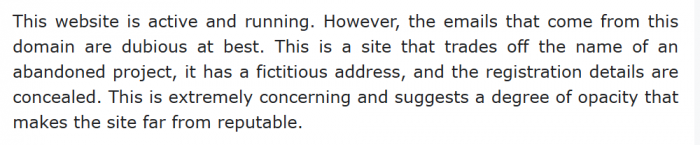
● The postal‑style address associated with the project (for example, “2345 Vyntheris Road, Qylarith, WV 13829”) struggles to match verifiable real‑world locations.
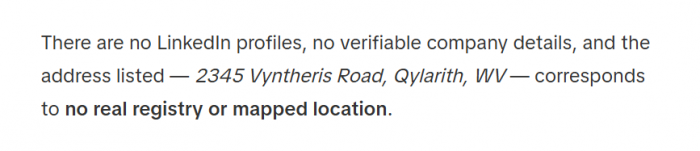
● Team names are hard to connect to a rich external footprint (e.g., long histories of writing elsewhere, visible public profiles in the industry).
The result is a faculty wall that looks personable but still leaves you wondering: who exactly owns this school, and where is their office?
Paperwork drawer: contact, T&C, and privacy
Next to the lobby desk is a tidy drawer labeled “paperwork.”
Inside, BitNation-Blog.com keeps:
● Contact forms and emails reachable through Contact Us and contact‑information pages, inviting readers and potential partners to get in touch.
● Terms & Conditions that outline:
- How content can be used.
- The fact that articles are not personalized financial advice.
- User responsibility for any decisions based on the site’s information.
● A Privacy Policy describing data handling, cookies, and standard web practices.
From a UX perspective, this is comforting. Many scammy, throwaway sites don’t bother with this level of paperwork.
From a trust perspective, you should still see it as:
● Necessary, but not sufficient.
● A minimum standard that must be paired with real‑world verifiability of owners, not a substitute for it.
In other words, the drawer is neatly labeled—but you still need to know who bought the filing cabinet.
The experience layer: why it feels more trustworthy than it is
If we step back and look at the “school” as a whole, the user experience is arguably BitNation-Blog.com’s single biggest asset.
What works in its favor:
Design
● Clean layout, modern typography, and consistent card‑style article blocks.
● Pleasant reading experience on both desktop and mobile, with fast loading and tidy spacing.
Navigation
● Clear signs to concept (Cryptocurrency), application (Trading), and context (Latest).
● Internal links that naturally shepherd you from “what is crypto?” to “how might this play out in a specific country or sector?”.
Tone
● Welcoming to both “seasoned traders and beginners,” lowering the intimidation factor that many crypto sites unintentionally raise.
Because of this, BitNation-Blog.com feels more authoritative than its underlying structures justify. Polished UX is doing a lot of reputational lifting.
The catch: the same polished UX wraps everything, even content that blurs education with promotion, such as pieces on blockchain gambling or speculative themes. There is no strong visual cue telling you, “This is a neutral explanation” versus “This might be nudging you toward high‑risk behavior.”
Putting it in context: where it fits in a serious reader’s stack
To know how seriously to take BitNation-Blog.com, you have to compare it to the rest of the crypto information universe.
Relative to heavyweight crypto publications and research platforms, this blog:
Wins on:
● Approachability: easier language, shorter articles, clearer structure for newcomers.
● On‑ramp value: useful for building basic mental models before diving into formal reports or on‑chain dashboards.
Loses on:
● Transparency: no clearly front‑and‑center corporate entity or robust masthead.
● Methodology: limited visible use of primary data, citations, and explicit frameworks.
● Editorial separation: education and potentially promotional or gambling‑adjacent themes live side by side, styled the same way.
Relative to the broader “Bitnation” naming ecosystem (Bitnation.co, governance experiments, similarly branded entities):
● This is not the original governance project or a direct continuation of older Bitnation efforts; it’s a separate content site using the same name area.
● That reuse can confuse readers into granting borrowed trust—assuming that all “Bitnation”‑branded things share the same history and seriousness when they don’t.
So the sensible placement is: BitNation-Blog.com is not your research terminal; it’s the introduction wing of the library.
How to actually use BitNation-Blog.com without getting burned
Seen as a tool, BitNation-Blog.com works best when you decide in advance what it is allowed to do for you and what it is not.
You can safely let it:
Teach you the language
● Use the Cryptocurrency room as a glossary built in article form: learn what coins, volatility, mining, and regulation mean in human terms.
● Use the Trading room to understand broad concepts like risk, strategy, and time horizon.
Give you narrative context
● Let the Latest section help you follow overarching stories: how different countries are approaching crypto, how iGaming is experimenting with blockchain, how regulation shapes the mood.
You should not let it:
● Become your sole basis for trades, investments, or compliance decisions.
● Replace transparent, data‑driven, or regulated sources when actual money is on the line.
● Override basic security habits—especially around unsolicited emails or aggressive offers linked to any crypto‑branded site.
If you treat BitNation-Blog.com like the friendly teacher who explains the chapter before you go read the textbook yourself, you’ll get its benefits without absorbing its blind spots.
One‑sentence verdict
BitNation-Blog.com is a well‑staged crypto classroom which is great for learning the language and getting oriented, but not the place you should trust as your final exam answer key.
Post Comments
Be the first to post comment!




Table of Content
- Walking into the “BitNation classroom”
- Room 1: Cryptocurrency – the glossy textbook section
- Room 2: Trading – motivational posters instead of a trading floor
- Room 3: Latest – a newsfeed in a hall of mirrors
- The faculty wall: names, roles, and the missing plaque
- Paperwork drawer: contact, T&C, and privacy
- The experience layer: why it feels more trustworthy than it is
- Putting it in context: where it fits in a serious reader’s stack
- How to actually use BitNation-Blog.com without getting burned
- One‑sentence verdict
- Comments
- Related Articles