Table of Content
- Act 1: Meeting the “AI Teammate”
- Act 2: Teaching Blaze To Sound Like You
- Act 3: From Blank Calendar to Full Content Pipeline
- Act 4: The Feature Arsenal - What’s Actually Inside?
- Act 5: Money, Plans, and Whether It’s Worth Paying For
- Act 6 : Data Handling and Privacy: How Safe Is Your Content With Blaze AI?
- Act 7: The Crowd’s Verdict - Users Behind the Curtain
- Act 8 : The Honest Strengths and Weak Spots
- Act 9 : if Not Blaze then What
- Act 10 : So Should You Hand Blaze Your Marketing Keys?
Imagine hiring a marketer who never sleeps, never complains about “creative blocks,” and doesn’t care whether you’re posting on LinkedIn at 9 a.m. or TikTok at midnight. That’s the fantasy Blaze AI is selling: a tireless teammate who can dream up campaigns, write your content, design basic visuals, schedule everything, and then quietly learn from what worked and what flopped.
The question is not “Can Blaze AI write a post?” Any AI can do that now. The real question is: can it reliably run your content machine without turning your brand into generic noise?
This review dissects Blaze AI from every angle, how it thinks, how it writes, how it behaves under pressure, how it charges you money, and what its current users really whisper about it.
Act 1: Meeting the “AI Teammate”
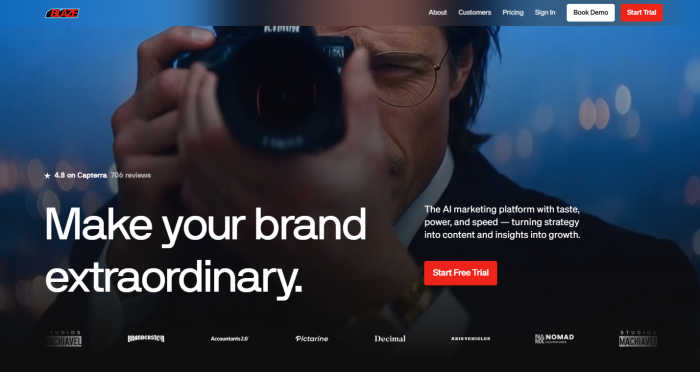
Blaze AI is not positioned as a toy writer or a casual “idea generator.” It bills itself as an AI marketing platform that wants to live at the center of your operations, part strategy assistant, part writer, part scheduler, part analyst. You connect your channels, show it who you are, and it tries to keep your online presence alive without needing to be poked every day.
This already sets Blaze apart from simple “AI doc” tools. Instead of dumping text into a blank document, you’re expected to build a system around it: decide who you’re talking to, what you’re selling, and what kind of voice you want the internet to hear. Blaze is the machinery, your job is to feed it a clear direction.
Who is Blaze secretly rooting for?
● Founders who know they should “do content” but keep postponing it.
● Creators who want to be present on six platforms but only have the energy for one.
● Agencies and freelancers trying to stretch themselves across too many clients with too few hours.
If your core struggle is consistency and volume rather than not knowing what you offer, Blaze is speaking your language.
Act 2: Teaching Blaze To Sound Like You
Before Blaze writes a single word, it wants to listen. You don’t just pick “casual” or “professional” from a dropdown and pray. You can feed it:
● Your website copy
● Your emails and newsletters
● Past social posts
● Sales pages and landing pages
Blaze uses this material to build a working model of your brand voice: how formal you are, how long your sentences run, how hard you push CTAs, whether you like metaphors or prefer blunt statements. The goal is simple: stop sounding like a generic AI and start sounding like a slightly robotic version of you.
You can keep multiple voices in the same account handy if you’re an agency or a creator with multiple brands. Blaze doesn’t just store these as “presets”; it treats them like distinct personalities to switch between when generating content for different projects.
Does it nail your voice perfectly? Not always. But compared to the usual “make it witty” kind of settings in lighter tools, the nuance is noticeably higher once you’ve invested in feeding it real samples.
Act 3: From Blank Calendar to Full Content Pipeline
Now the real test: can Blaze go from “we have nothing planned” to “here’s your next month of content” without melting down?
Step 1: Ideation and Strategy
You start with a goal: launch a product, nurture leads, stay top-of-mind, rebuild a dead Instagram, or push a new newsletter series. You tell Blaze your audience, your product, and what you want more of (traffic, signups, sales, brand awareness).
Blaze supports your content planning by giving ideas for blog or video topics, suggesting engaging social media angles and hooks, recommending campaign themes or series, and advising on how often to post and what content formats to use.
Is it a full marketing playbook? No. But it’s often enough to turn “we should post something” into a concrete list of campaign ideas you can edit and approve.
Step 2: Drafting the Actual Content
Once you lock in a few ideas, you jump into the editor.
This is where Blaze becomes less of a strategist and more of a worker:
● You pick a format: blog, LinkedIn post, X thread, Instagram caption, email, ad, or script.
● You give it a brief: topic, audience, key message, desired tone, CTAs.
● Blaze spits out your first draft.
The editor is built to feel familiar: headings, sections, inline prompts like “shorten,” “simplify,” “more playful,” “more formal.” You can regenerate sections or entire drafts, and you can paste in reference text for it to mimic.
For long‑form content (blog posts, newsletters), Blaze is decent at maintaining coherence across sections, especially once you’ve nudged it a bit. It still benefits from human editing for nuance, but it gets you out of first‑draft hell faster than a blank document ever will.
Step 3: Repurposing Without Losing Your Mind
Where Blaze becomes more interesting is its appetite for repurposing.
Take one anchor asset—say, a 2,000‑word blog post. Blaze can turn that into:
● A Twitter/X thread summarizing the key points
● A LinkedIn post focusing on the “lesson” angle
● A carousel concept for Instagram
● A short email newsletter teaser
● A few ad variations for retargeting
You can further adapt the tone per platform. Want LinkedIn to sound strategic and X to sound casual and punchy? Blaze will try to honor that split.
This is the part solo marketers often rave about: instead of rewriting the same idea for every platform, you spend your energy reviewing and tightening outputs, not inventing from scratch.
Step 4: Scheduling and Shipping
Once you’re happy with the copy and visuals, you drop everything into Blaze’s content calendar.
The calendar acts as the central hub of the system, showing your posts organized by day and channel. It allows you to easily drag and reschedule content, update the status of each item as Draft, Scheduled, or Posted, and publish directly to supported platforms or export workflows when needed.
It’s not as obsessively deep as the most advanced social schedulers, but it’s far from an afterthought. For most small teams, the killer factor isn’t having 100 scheduling features; it’s having creation and scheduling tightly coupled so nothing gets lost between tools.
Act 4: The Feature Arsenal - What’s Actually Inside?
If you tore Blaze down to its main components, you’d find five big rooms.
1. The Writer’s Room
This is where Blaze lives as a copy tool. You get templates and custom prompts for:
● SEO blog posts, landing pages, and articles
● Platform‑specific social posts
● Email campaigns and sequences
● Ads and product descriptions
● Scripts and promotional material
The focus is not just “write something,” but “write something structured for this exact purpose.” That alone makes it more efficient than throwing open-ended prompts at a raw model.
2. The Visual Corner
Blaze doesn’t pretend to replace a full design studio, but it does help you stop publishing link‑only posts.
You can generate basic images using AI prompts, apply your brand colors and fonts for consistency, and create simple banners and social media graphics.
It’s targeted at practical marketing assets, not gallery‑level art. For a lot of brands, that’s enough: you just need something clean, branded, and on‑message.
3. The SEO Desk
For written content, Blaze provides a helpful set of SEO tools, including keyword suggestions, guidance on keyword placement, headline and meta description ideas, and tips to improve structure and readability.
You still need your own keyword strategy and external research if SEO is a major growth pillar. But Blaze protects you from the biggest sins: publishing text that is unstructured, unreadable, or completely oblivious to search intent.
4. The Collaboration Hub
Blaze treats content as a team sport, even for small teams.
Inside a workspace you can:
● Invite team members
● Assign or comment on drafts
● Track status via views and the calendar
It’s less complex than using a dedicated project management tool, but infinitely more organized than “random Google Docs + DMs.”
5. The Analytics Balcony
After content goes live, Blaze tracks its performance by showing what was published and where, along with basic engagement signals and insights into which topics or formats perform better.
Over time, it uses this data to nudge your strategy, suggesting more of what historically resonated and less of what flopped. If you need full‑funnel data, revenue attribution, multi‑touch journeys, you still sync with other analytics tools. Blaze is about content performance, not CFO dashboards.
Act 5: Money, Plans, and Whether It’s Worth Paying For
Blaze is not pretending to be a freemium toy you forget you ever signed up for. It wants to be a core subscription in your stack.
The basic pattern looks like this:
● A free or trial option to test workflows and see if you like living in the UI.
● Creator‑level plans for solo users and small businesses.
● Team/Pro style tiers for small teams and agencies.
● Higher tiers for heavier automation and multiple brands.
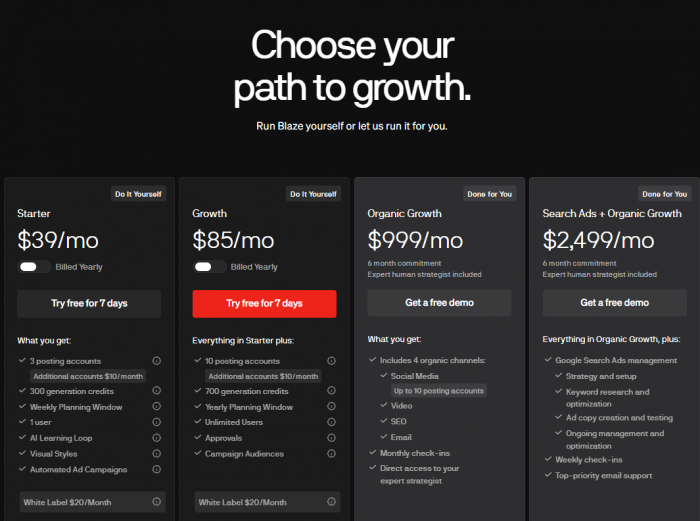
The big question isn’t just “Is it cheap?” but “Is it cheaper than stitching together three other tools that do this separately?”
If you currently pay for a generic AI writer, a social scheduler or a light design tool for simple graphics, Blaze can sometimes replace all three with one subscription and one workflow. The math becomes compelling when your bottleneck is the complexity of juggling tools, not just raw subscription cost.
On the other hand, if you only need a writer or only need a scheduler, a narrower tool will probably be cheaper. Blaze pays off best when you actually use the full stack.
Act 6 : Data Handling and Privacy: How Safe Is Your Content With Blaze AI?
Any tool that drafts posts and connects to your accounts sits close to the core of your business, so data privacy matters. Blaze AI acts as a marketing co-pilot, but it also processes the information you provide brand documents, campaign drafts, connected social accounts, and marketing copy.
In practice, Blaze handles data in three main ways:
1. Operational use: Your prompts, drafts, assets, and performance data are processed to generate content, learn your brand voice, and support scheduling or analytics features.
2. Storage and retention: Your content and account data remain on Blaze’s infrastructure while your workspace and projects are active, allowing you to revisit, edit, or reuse past campaigns.
3. Product improvement: Aggregated and anonymized usage data may be used to improve features and suggestions over time, typically following standard data-minimization practices.
For most marketers, the key question isn’t whether a platform reads your content, but how that data is handled and who can access it. A few good practices include:
● Avoid sharing highly sensitive information (passwords, private customer records, legal documents).
● Keep critical internal documents in secure systems and only share necessary content with Blaze.
● Periodically review Blaze’s privacy policy and terms for updates on data handling.
If you work in regulated industries like healthcare, finance, or legal, it’s best to use Blaze strictly as a content-creation assistant, not as a place to store regulated data. A safe workflow is to prepare compliant messaging internally, use Blaze for drafting or repurposing, and perform a human compliance check before publishing.
Rule of thumb: treat anything you enter into an AI marketing platform as professional but not confidential, fine for campaign drafts, but not for sensitive internal information.
Act 7: The Crowd’s Verdict - Users Behind the Curtain
Marketing sites tell stories; user reviews tell secrets. Blaze is no exception.
The praise tends to cluster around:
● Time saved: people feel they finally caught up to their content calendar.
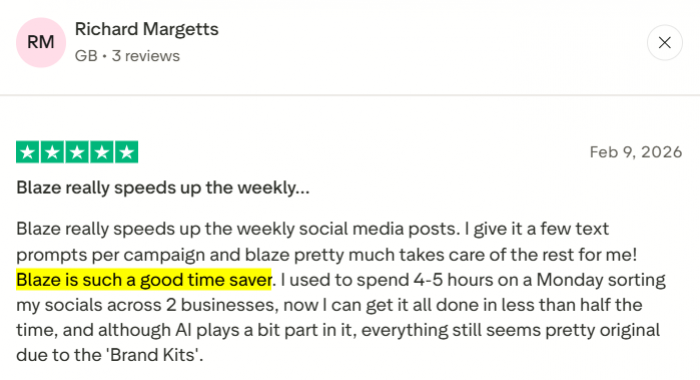
● Ease of use: non‑technical founders and marketers aren’t intimidated by the UI.
● Automation: the “I don’t have to remember to post” effect is very real.
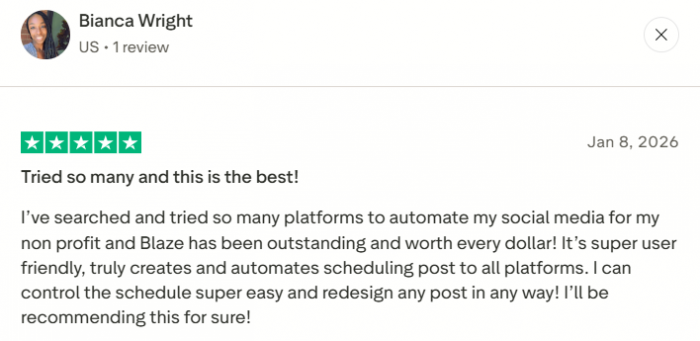
● Voice alignment: many users feel outputs start sounding surprisingly close to their real tone once trained.
The complaints, on the other hand, revolve around:
● Performance hiccups: occasional slowness or awkward navigation moments.
● Imperfect obedience: complex instructions sometimes need multiple passes and manual cleanup.
● Pricing friction: for some, the higher tiers feel painful once the novelty wears off.
● Trust questions: a few critics point out that some glowing reviews look suspiciously generic, so it’s wise to read beyond just the average rating.
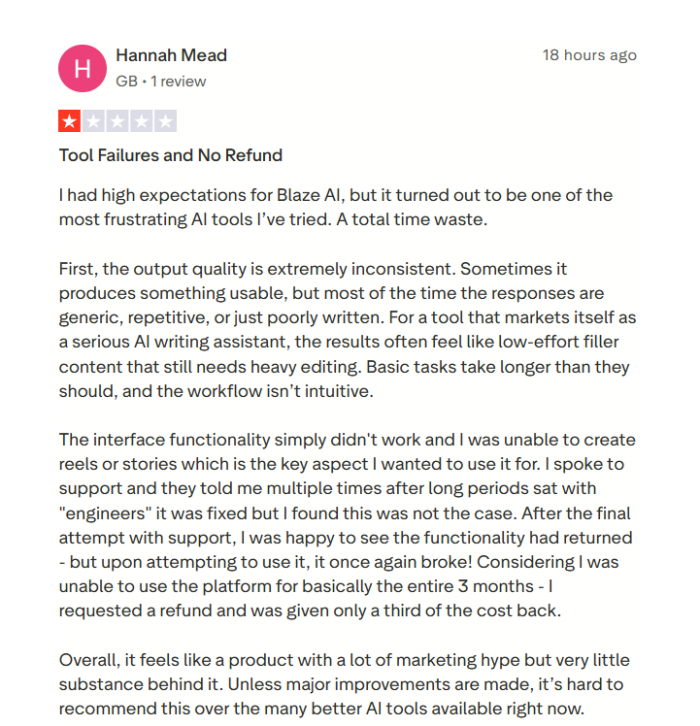
In other words: Blaze doesn’t escape the usual AI caveats. It accelerates your work dramatically, but it doesn’t make you irrelevant.
Act 8 : The Honest Strengths and Weak Spots
If Blaze AI were in a job interview for “full‑time marketing assistant,” this is what its resume would look like.
Strengths
● End‑to‑end flow: It covers ideation, draft creation, repurposing, scheduling, and basic analytics under one roof.
● Consistent brand voice: With enough training samples, your content stops sounding like “AI mush” and starts sounding like a recognizable personality.
● Practical for non‑techs: The interface, templates, and workflows are designed for marketers, not prompt engineers.
● Huge leverage for small teams: You can behave like a much bigger brand without a matching payroll.
Weaknesses
● Not a strategist: Blaze can suggest ideas and themes, but it doesn’t replace the foundational thinking about who you are and why anyone should care.
● Analytics are shallow for data‑obsessives: Great for directional decisions; not enough if you live in dashboards.
● Social features vs pure‑play tools: Dedicated social suites can still beat Blaze for ultra‑advanced workflows and collaboration.
● Pricing vs narrow needs: If all you really use is the blog writer or the scheduler, you’re overpaying for unused potential.
Act 9 : if Not Blaze then What
Blaze AI vs Key Alternatives
| Tool | Core focus | Best for | Key strengths | Main limitations vs Blaze AI |
| Blaze AI | AI marketing autopilot (strategy + content + scheduling) | Small–mid businesses, agencies, e‑com brands | End‑to‑end automation, brand‑voice AI, multi‑channel content + posting | Higher price than lightweight tools; needs clear strategy to shine |
| Buffer | Simple social media scheduling | Solo creators, very small teams | Very clean scheduler, low learning curve, affordable plans | Limited AI, basic analytics, minimal workflow automation vs Blaze |
| Hootsuite | Enterprise social management & listening | Large enterprises, complex social teams | Deep social listening, team controls, broad enterprise feature set | Expensive; AI feels bolt‑on; weaker native AI content workflows |
| Publer | Affordable social scheduling with power‑user features | Agencies and power users on a budget | Strong scheduling, bulk upload, recycling, multi‑brand workspaces | Minimal AI generation and workflow automation vs Blaze |
| Ocoya | Social media creation + scheduling | Budget‑conscious users wanting simple AI posts | Solid captions/graphics, easy to use, lower price points | Lighter workflows, basic analytics, weaker brand‑voice learning |
| Enji | Consultant‑backed strategy + AI execution | Small businesses wanting guided strategy | Human‑trained strategy layer, cheaper entry pricing (~$19–$29) | Less “set‑and‑forget” automation; Blaze goes further on hands‑off posting |
Act 10 : So Should You Hand Blaze Your Marketing Keys?
Blaze AI is best thought of not as a magic button but as a capable junior marketer. It never forgets deadlines, doesn’t mind creating variations or repurposing content, and can handle much of the repetitive work once it’s properly guided. It still needs your strategy and feedback, but it helps keep content workflows moving smoothly.
For solo creators managing multiple channels, small businesses wanting consistent online presence without hiring a full team, or freelancers and agencies handling several simple but important brands, Blaze AI can feel like an essential workflow layer rather than just another subscription. However, if you need deep analytics, strict legal workflows, highly specialized social tools, or expect AI to manage messaging perfectly without supervision, it may feel limiting or not worth the cost.
Blaze doesn’t erase the need for humans in marketing. It erases a lot of the drudgery. Used wisely, it can give you back hours every week and let you spend that time where humans still win: understanding your audience, refining your offer, and telling stories only you can tell.
Post Comments
Be the first to post comment!