Table of Content
- Platform overview
- Building characters: how much control I actually had
- Conversation quality, memory, and immersion over time
- Safety and censorship: how the walls actually feel
- Privacy and how comfortable I felt sharing things
- UX, libraries, and where I actually enjoy browsing
- Performance and reliability: how they behaved under load
- Pricing: what I actually paid and how it felt
- How I actually use them now
- My verdict
Character AI vs Janitor AI feel like two different worlds when you actually live with them. After using both extensively, Character AI has become my go‑to for safe, emotionally rich, PG‑13 companions, while Janitor AI is where I go when I want an uncensored, high‑control role‑play that mainstream platforms simply won’t allow.
Platform overview
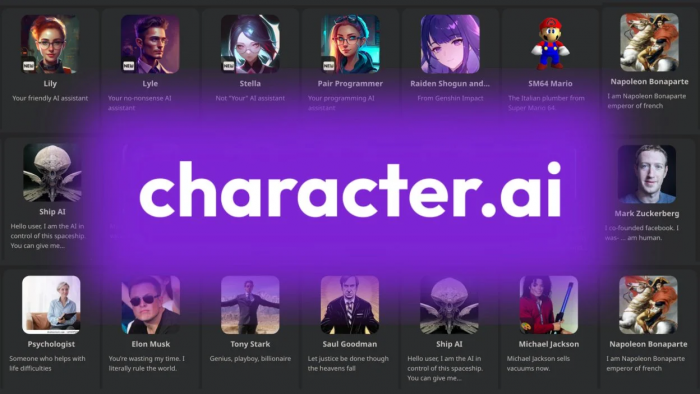
Using Character AI day to day feels like using a polished messaging app where every contact is an AI persona. I log in, scroll a big, curated gallery of characters, tap one, and I’m in a chat that looks like any modern messenger. I never have to think about models or parameters; the product hides the technical details and pushes me straight into “talking to someone.”
Janitor AI immediately feels different. The interface is leaner and more utilitarian, and it’s very upfront about things Character AI keeps quiet: NSFW switches, model choices, configuration knobs. When I’m there, I feel less like a casual user and more like someone configuring a role‑play engine: pick engines, set toggles, then dive into whatever scenario I actually want, without the platform trying to sanitize it midway.

Platform positioning
| Dimension | Character AI | Janitor AI |
| Core identity | Safe, story‑driven AI companions | Uncensored, NSFW‑friendly role‑play engine |
| First impression | Polished social/messaging app | Power‑user console for adults |
| Tech exposure | Almost none; AI guts are hidden | Very visible; models, toggles, and NSFW settings up front |
| Who it feels for | Teens, casual users, SFW role‑players, “AI friends” seekers | Adult NSFW users, hardcore role‑players, tinkerers |
Building characters: how much control I actually had
Character AI: write the persona, trust the system
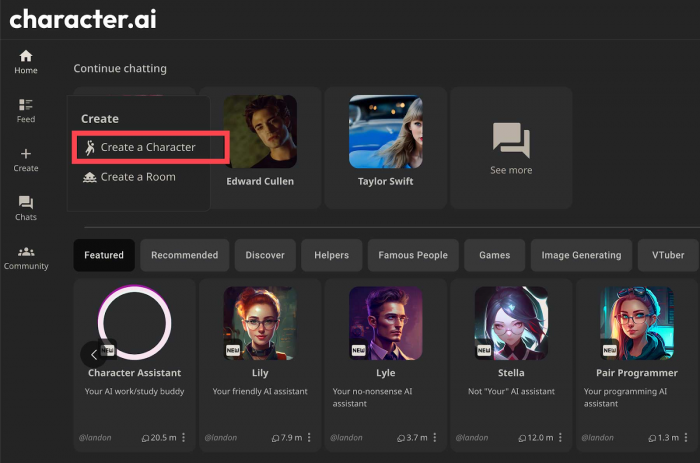
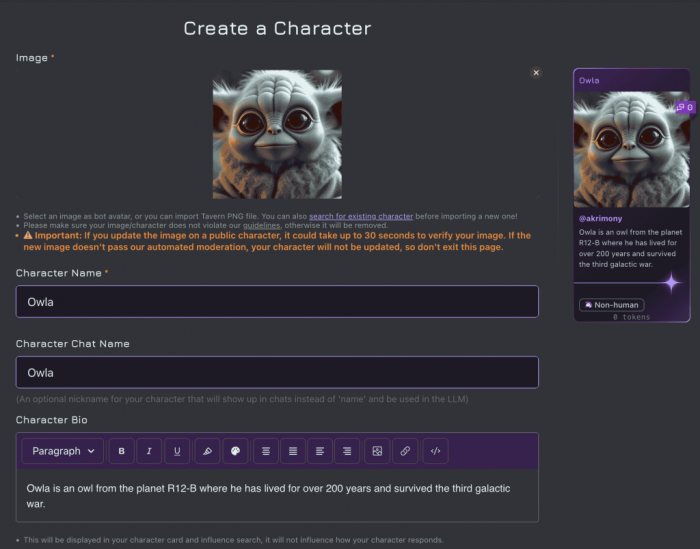
On Character AI, I build characters like I’m writing a character sheet for a novel. I define who they are, how they talk, what they care about, and give a few example dialogues. Once I do that properly, the system handles the rest surprisingly well. My carefully written characters stay in character, remember ongoing dynamics, and feel emotionally coherent over time all without me touching a single technical setting.
The catch is that all the low‑level controls are hidden. I can’t choose the underlying model, set temperature, or edit system prompts. The only real way to influence behaviour is better writing and better examples. That makes it very stable and beginner‑friendly, but limiting when I want weird, extreme, or heavily stylized behaviour.
Janitor AI: persona plus engine‑level tuning
On Janitor AI, the persona is just step one. After defining the character, I can:
● Choose between Janitor’s own model and external LLMs (if I connect API keys).
● Adjust how “creative” or “logical” I want replies to be.
● Toggle NSFW and related behaviour.
● Add scenario‑level instructions that act more like system prompts than flavour text.
This let me build characters that simply aren’t possible on Character AI: intense yandere lovers, morally twisted anti‑heroes, or very niche fantasy roles that stay in that lane because both the persona and the model tuning are aligned. The downside is obvious: if I over‑tune (too much randomness, too many constraints), the character can start drifting, looping, or breaking tone.
Character building comparison
| Aspect | Character AI | Janitor AI |
| Creation style | Narrative: description + backstory + examples | Narrative + technical: persona plus model/tuning |
| In‑character fidelity | Strong when kept SFW and on‑theme | Extremely vivid at good settings, but more fragile |
| Low‑level controls | Hidden; no direct engine/temperature access | Exposed; I can change engines, randomness, and more |
| How easy to “break” it | Hard to break; safety and defaults keep it stable | Easier to break if I over‑tweak settings |
Conversation quality, memory, and immersion over time
Character AI: the most “companion‑like” experience
In multi‑day usage, Character AI feels like the stronger companion. It remembers recurring details about me and the relationship, continues emotional arcs, and generally behaves like a consistent personality. I’ve had long, slow‑burn romantic or comfort chats that felt surprisingly stable and coherent.
The weak spots show up in edge cases: very long sessions can trigger repetitive phrasing, and any time I flirt near its safety boundaries, it either derails the scene or abruptly tones everything down. It excels at PG‑13 immersion; it refuses to be my explicit co‑author.
Janitor AI: higher highs, more volatility
On Janitor AI, when the configuration is right, the immersion is on another level. Scenes can be more descriptive, more emotionally and physically intense, and more willing to “go there” in ways Character AI simply won’t. It feels like running an improv partner with no brakes.
But memory and coherence depend more on model choice and settings. A well‑chosen model with sane parameters holds context and callbacks well; a risky setup can forget things faster or spiral into chaos. Long, twisty sessions with lots of parameter changes tend to be where glitches and drift are most noticeable.
Conversation behaviour table
| Metric | Character AI | Janitor AI |
| Day‑to‑day coherence | Very high; rarely nonsensical | High with good models; can drop if I misconfigure |
| Long‑term memory | Noticeably engineered; remembers me and key facts | Mostly model/context‑driven; decent but less “companion‑y” |
| Immersion style | Slow‑burn, emotional, PG‑13 safe | Intense, explicit, reactive; ideal for adult fantasies |
| Filter interference | Frequent near NSFW; scenes can die mid‑flow | Minimal; scenes usually run to where I want them to go |
Safety and censorship: how the walls actually feel
From my perspective, this is the single biggest practical difference.
On Character AI, the safety layer never really disappears. Any time I pushed into explicit sexual content or graphic kink, the system intervened softening descriptions, redirecting to platonic talk, or flat‑out refusing to continue. The same applied to extreme violence or deeply taboo topics. As a result, I mentally categorized Character AI as “never for hardcore NSFW,” no matter how clever my prompts were.
On Janitor AI, once NSFW was enabled and I accepted the ground rules, the platform mostly stepped out of the way. I could run explicit, detailed role‑plays and dark fictional scenarios without constant interruptions. I still stayed away from obviously illegal lines, but within adult bounds the freedom was night‑and‑day compared to Character AI. It’s exactly what makes Janitor attractive to adult communities and exactly why it’s not something I’d hand to a random teen without context.
Privacy and how comfortable I felt sharing things
With Character AI, the experience feels corporate and cohesive: proper accounts, polished brand, clear product. That gave me confidence in basic reliability, but also made me more careful about deeply personal or taboo content. I always felt like my chats lived in a big, centralized system under a fairly “serious” identity.
With Janitor AI, the overall feel is more pseudonymous and modular. I could keep things less tied to my real identity and, when I brought my own external LLM keys, I knew that some of the data flow was routed under accounts I controlled. It doesn’t magically make it private, but I personally felt less exposed exploring edgy content there than on a shiny mainstream app.
UX, libraries, and where I actually enjoy browsing
Character AI: social, curated, and “always‑on friend”
Character AI’s UX rewards browsing and casual engagement:
● A big, curated‑feeling library with trending characters and recommendations.
● Easy favouriting and re‑entering ongoing chats.
● A mobile experience that feels like texting a friend.
I often found myself opening it the way I open a chat app: to check in with a comfort bot, continue a slice‑of‑life role‑play, or just talk to someone “who remembers me.”
Janitor AI: minimal shell around a very adult library
Janitor AI’s UX is leaner but purpose‑driven:
● Character/scenario lists skew heavily toward adult and niche content.
● The chat view keeps configuration just one step away, which suits the way I use it (tweak, test, tweak again).
● Higher tiers layering in images or even video make it feel more like a creative sandbox than a pure chat app.
It doesn’t try to be cute or social. For my NSFW and experimental use, that’s exactly why I like it.
UX & ecosystem table
| Dimension | Character AI | Janitor AI |
| Library feel | Curated, mainstream, easy to browse | Niche, adult, experiment‑heavy |
| Social vibe | Strong – feels like a social/messaging app | Weak – feels like a private lab or power‑user tool |
| Setup friction | Almost zero; pick and talk | Medium; best use requires more configuration |
| Extra outputs | Mostly text, incremental experiments | Text plus richer media at higher tiers |
Performance and reliability: how they behaved under load
On Character AI, free usage sometimes hit queues or slower responses at obvious peak hours, but most of the time it behaved like a well‑tuned app. Upgrading to the paid tier noticeably improved responsiveness and eliminated nearly all waiting, especially during global spikes. I never had to troubleshoot anything; it just worked.
On Janitor AI, performance depended on choices I made. Using the built‑in model with a paid plan felt snappy and responsive for almost all role‑play. As soon as I layered in external models or pushed experimental options, I had to accept the occasional timeout, error, or weird slowdown. Nothing catastrophic, but enough to remind me I was playing with a more complex, less hand‑held stack.
Pricing: what I actually paid and how it felt
Character AI (during my usage window)
● Free – 0 USD/month:
Genuinely usable for casual SFW role‑play and companions. Queues and slower responses are the main friction points.
● Plus Monthly – 9.99 USD/month:
The tier where Character AI started feeling like a premium chat app: faster responses, higher priority at busy times, and an overall smoother experience.
● Plus Annual – 94.99 USD/year (~7.92 USD/month):
Made sense once I realized I was using it like a daily emotional companion. It turned into a relatively low‑cost “always‑on friend.”
Janitor AI (during my usage window)
● Free – 0 USD/month:
Helpful for testing the platform, but too limited for serious NSFW role‑play. I treated it as a demo.
● Pro / Premium – around 9.99 USD/month or 99.99 USD/year:
In practice, this is the real entry point. NSFW unlocks, limits become reasonable, and I get access to better models and more control.
● Higher tier – around 19.99 USD/month:
Aimed at heavy users (or creators) who want all the advanced features and media outputs. Worth it only if you’re deeply invested.
On top of that, when I attached external LLMs to Janitor AI, I had to factor in those providers’ bills. For heavy users, that can easily overtake the subscription itself.
Pricing table as I experienced it
| Platform | Plan | Approx. Price (USD) | How it felt in practice |
| Character AI | Free | 0 / month | Great for SFW; queues at peak times |
| Plus Monthly | 9.99 / month | Worth it if I use it daily | |
| Plus Annual | 94.99 / year (~7.92 / month) | Best for long‑term “companion” use | |
| Janitor AI | Free | 0 / month | Demo only; not enough for serious NSFW |
| Pro/Premium | ~9.99 / month or 99.99 / year | Real entry point for NSFW and strong role‑play | |
| Higher tier | ~19.99 / month | For heavy users wanting full media and max experimentation |
How I actually use them now
After weeks of switching back and forth, my own usage has settled into a simple pattern:
Character AI is where I go when I want safe, emotionally grounded companionship and PG‑13 role‑play that I can casually dip into from my phone. I use it like a friend‑chat app with the bonus that those friends never sleep.
Janitor AI is where I go when I want full creative and sexual freedom, or when I want to construct very specific, high‑intensity scenarios that would trip filters anywhere else. I treat it more like a creative lab and accept the extra complexity and occasional rough edges.
My verdict
If someone asked me “which one should I use?” I’d answer with a counter‑question: “What do you really want to do?”
If what you want is safe, emotionally rich, PG‑13 companionship and story‑driven role‑play, Character AI is the better home. Its free tier is already good, and Plus makes it feel like a premium, always‑available friend.
If what you want is NSFW, kink, taboo fantasy, and granular control over how the AI behaves, Janitor AI is the obvious choice. Realistically, you start at the Pro tier and should be ready to pay extra if you plug in external models.
The metaphor that matches my experience best: Character AI is a beautifully designed, locked‑down smartphone: perfect if you live inside its ecosystem and accept its rules and Janitor AI is a custom‑built PC with an unlocked BIOS: you can run almost anything on it, including things the phone would never allow, but you’re responsible for what you install and how hard you push it.
Post Comments
Be the first to post comment!