Table of Content
- Act 1: So, What Exactly Is This “AI Gym”?
- Act 2: Who Is This Really Built For?
- Act 3: Inside the Coursiv Machine – Features That Actually Matter
- Act 4: The Money Talk – Pricing, Trials, and the Fine Print
- Act 5: Refunds, Guarantees, and How Honest Is the Policy?
- Act 6: Data, Privacy, and the Trust Question
- Act 7: What the Crowd Is Actually Saying
- Act 8: Pros, Cons, and Non‑Negotiable Gotchas
- Act 9: Coursiv vs Popular AI Learning Alternatives
- Act 10 : So Should You Join This “AI Gym” or Not?
Imagine you wake up one morning, open LinkedIn, and realize everyone seems to have quietly picked up “AI skills” while you were still copy‑pasting prompts from YouTube shorts. Somewhere in that FOMO spiral, Coursiv.io pops up and promises: “Give me 15 minutes a day and I’ll turn you into an AI‑savvy professional.”
This is the point where a normal review says “Coursiv is an online learning platform that…” and puts you to sleep. Let’s not do that. Let’s dissect Coursiv like a product you’re actually about to stake your money, time, and data on.
Act 1: So, What Exactly Is This “AI Gym”?
Coursiv calls itself a “personal AI gym” – not a course marketplace, not a coding bootcamp, but a place where non‑technical humans go to repeatedly lift small AI “weights” every day until it stops feeling scary and starts feeling like muscle memory.
Instead of 20‑hour video epics, you get:
● Short, text‑first micro‑lessons you can finish between meetings.
● Daily challenges that make you do something with AI (write an email, plan content, automate a task).
● A guided path that adapts to your goals: “get better at work,” “start a side hustle,” “stop feeling like a dinosaur around AI.”
This all runs inside a web app plus mobile apps (“Coursiv: AI Tools Mastery”) on Android and iOS, so your “AI workout” can happen on the metro, at your desk, or on the sofa.
Act 2: Who Is This Really Built For?
Let’s be blunt: if you already spend your evenings fine‑tuning prompts for multiple models and debating model weights on X, Coursiv is not built for you.
The product is clearly optimized for three groups:
● Absolute beginners who feel genuinely intimidated by AI and just want someone to hold their hand and say, “Click here, type this, here’s what happens.”
● Non‑technical professionals (marketing, HR, ops, sales, admin) who want to plug AI into email, reports, campaigns, and day‑to‑day workflows.
● Freelancers and creators who want AI to help with content, client work, and some extra income streams.
If you’re a developer or data scientist looking for deep models, math, or serious code – Coursiv is not pretending to be your tribe.
Act 3: Inside the Coursiv Machine – Features That Actually Matter
This is where the marketing tagline stops and the mechanics start.
1. The “Guided Path” Brain
When you sign up, Coursiv doesn’t throw a Netflix‑style carousel of random courses at you. It starts with a goal interview: What do you want – better productivity, more income, or just basic AI literacy?
From there, it assembles guides and challenges – multi‑day sequences where each day is a small, consumable block and a concrete task:
● Day 1: Understand what the tool does.
● Day 2: Use it on one real task from your job.
● Day 3: Build a repeatable template.
You’re not just “watching a video”, you’re being nudged into real repetition – exactly how a gym trainer would get you to repeat movements until they become automatic.
2. Lessons: Less TED Talk, More Guided Action
Coursiv’s lessons are deliberately short, text‑heavy, and example‑rich, not cinematic documentaries. Typically you:
● Read a concept explained in plain English with screenshots and prompts.
● See how it plays out in a real scenario (a campaign, a report, a YouTube script).
● Run a task – often inside or alongside an AI tool – and mark it done.
● Get a quick quiz or check‑in to lock the idea in.
Users repeatedly praise it for being “easy to follow” and “non‑intimidating” – which is exactly what you want if you’re starting from zero.
3. 30+ AI Tools, Not Just “How to Use ChatGPT”
Coursiv leans heavily on the promise to “learn 30+ AI tools in 30 days.” Its coverage typically includes ChatGPT-style models and writing assistants, image generators similar to Stable Diffusion tools, and productivity helpers designed for summarising, researching, and automating routine tasks. It also features tools aimed at marketing, SEO support, script creation, and content calendar management.
Reviewers point out that the big win isn’t just listing tools, but showing what to do with them in your work context, client calls, marketing campaigns, email, and admin.
4. Certificates and “Proof of Work”
Coursiv knows you want receipts. You can earn up to eight certificates across its main tracks if you actually finish the relevant challenges and assessments.
They’re not university degrees – but they are:
● Concrete proof you’ve completed structured AI training.
● LinkedIn‑friendly badges for “AI tools mastery” and related themes.
● A gentle way to show employers and clients, “I’m not just winging it with AI.”
5. Freelancing and Career Angles
Coursiv’s support docs talk openly about giving you “all the resources you need to succeed as a freelancer,” from hands‑on learning to advice and certifications. Some guides are laser‑focused on turning AI skills into sellable outcomes: creating content packages, automating client tasks, or using AI in service delivery.
Features in one quick glance
| Area | What Coursiv actually does |
| Paths & challenges | Multi‑day AI “workouts” customised to your goals. |
| Lesson format | Short, text‑driven, example‑rich micro‑lessons. |
| AI tools | 30+ tools across writing, images, productivity, marketing |
| Practice | Built‑in or linked AI playgrounds to try prompts immediately. |
| Assessment | Quizzes and completion tracking for each guide. |
| Certificates | Up to 8 certificates across AI skill tracks. |
| Career focus | Freelancing‑ and job‑oriented guides and examples. |
Act 4: The Money Talk – Pricing, Trials, and the Fine Print
Now to the part most ads gloss over on purpose.
Coursiv uses recurring 4‑week subscriptions with promotional entry deals layered on top. You’ll typically see:
● A discounted first period – often in the ~10–19.99 USD equivalent range, depending on the campaign and region.
● A standard recurring price that jumps after the intro period, commonly somewhere around 29–39 USD per 4 weeks.
● Auto‑renewal every 4 weeks until you cancel.
You can subscribe either directly on the website or through the mobile app stores, which matters a lot for how refunds and billing disputes work.
Pricing snapshot
| Item | Reality check |
| First payment | Often low promo price; feels like a “trial,” but technically a subscription. |
| After promo | Jumps to standard 4‑week price (around high‑20s to high‑30s USD).moutjs+1 |
| Billing | Automatic 4‑week renewal unless you cancel. |
| Where you pay | Web checkout or via app store (Apple/Google). |
A noticeable chunk of negative reviews exist because people didn’t realise the “trial‑ish” first payment was not a one‑off. That’s not unique to Coursiv, but it’s a pattern you should be conscious of.
Act 5: Refunds, Guarantees, and How Honest Is the Policy?
Coursiv does offer a money‑back guarantee on eligible website plans – but it’s not “no questions asked.” It’s more like, “Did you actually show up to the gym before asking for a refund?”
If you buy on the website, you can request a refund within 30 days if you meet minimum activity requirements.
Those requirements look like this:
● 1‑week plan: at least 3 consecutive days used and 2 guides or 70% of content completed.
● 4‑week plan: at least 7 consecutive days used and 4 guides or 80% completed.
● 12‑week plan: at least 10 consecutive days used and 4 guides or 80% completed.
For EU residents, there’s also a 14‑day right of withdrawal, as per digital consumer laws.
If you pay via Apple, your refund fate is in Apple’s hands – Coursiv explicitly sends you to Apple’s “request a refund” flow instead of handling it directly.
Bottom line: the policy is transparent if you read it, but strict if you don’t show up and engage.
Act 6: Data, Privacy, and the Trust Question
Here’s the other layer of trust most people forget to check: what data are you giving away?
Coursiv’s privacy documentation says it can collect personal data such as age, gender, email, and payment‑related details, plus device and usage data like IP address, device type, and language. account management and course delivery, as well as analytics, performance tracking, and ad measurement and personalization.
On the positive side, you can request an export of your personal data to see what the platform stores, and you can also request deletion of your personal data (subject to legal retention rules).
On the caution side, you are still handing over a meaningful profile of your behaviour, demographics, and financial interactions. Reading the privacy terms isn’t optional if you care about maintaining good digital hygiene.
Act 7: What the Crowd Is Actually Saying
If Coursiv were a scam, it would be very hard to sustain the volume of social proof it currently has.
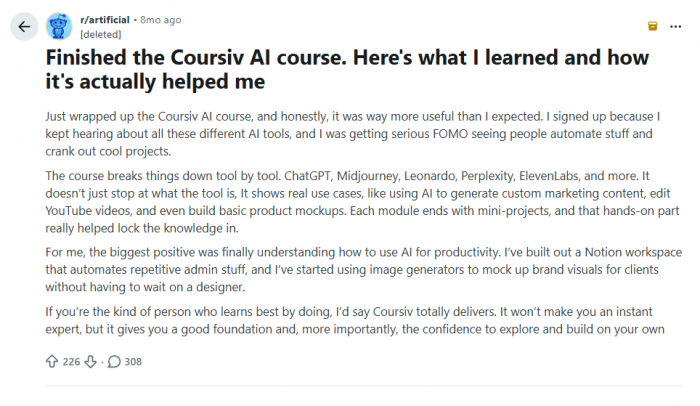
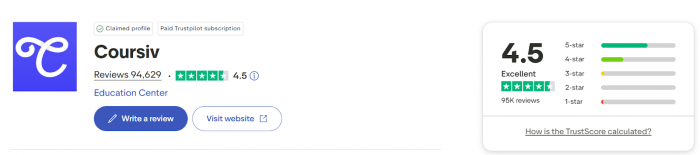
A 2026 breakdown mentions over 800,000 learners and more than 68,000 Trustpilot reviews, with an average rating around 4.4 / 5. The main Trustpilot pages show a 4‑plus‑star rating with tens of thousands of reviews across regions.
The love letters
Positive reviewers talk about:
● The interface: “intuitive,” “easy to navigate,” “clear structure.”
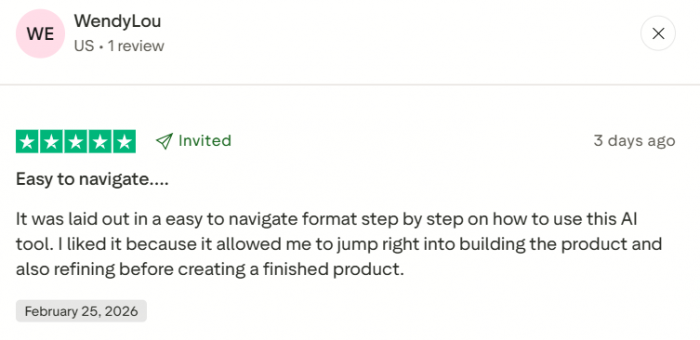
● The teaching style: simple, no jargon, very step‑by‑step.
● The format: short lessons that fit into commuting, lunch breaks, or evenings.
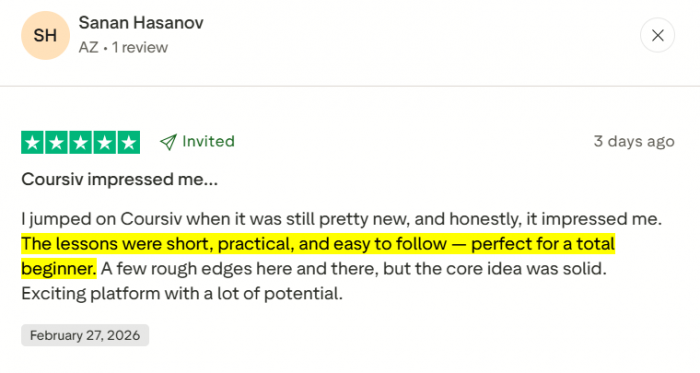
● The impact: feeling more confident at work, finally having a clue how to use AI beyond “write me a poem.”
The angry ones
Critical or negative reviews cluster around:
● Auto‑renewal and “surprise” charges after the first period.
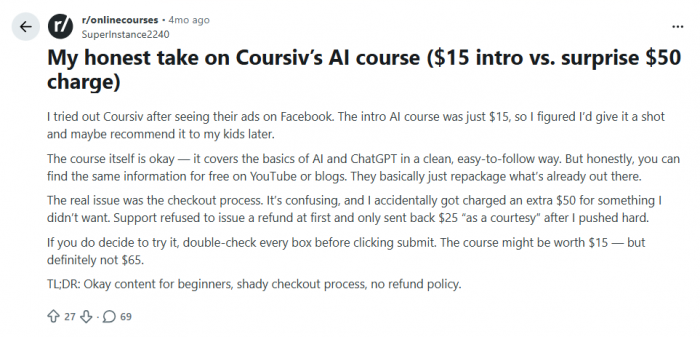
● Friction in refunds when users didn’t meet the usage criteria or waited too long.
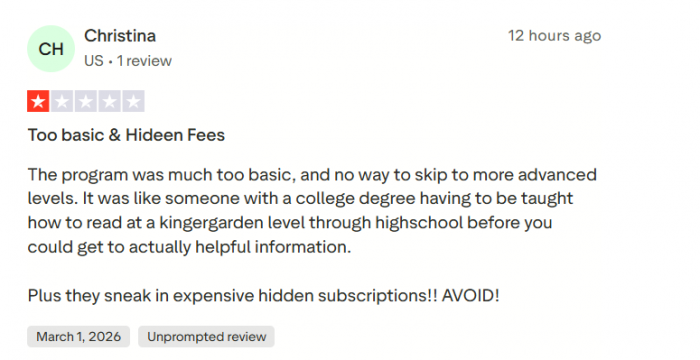
● Content being too basic for those who already know their way around AI tools.
Reddit and YouTube reviewers often land on a nuanced verdict: good structure, solid for beginners, but marketing can lean more toward “AI will change your income forever” than “AI will make your work 30–50% more efficient if you actually apply it.” reddit
Act 8: Pros, Cons, and Non‑Negotiable Gotchas
Where Coursiv really shines
● Beginner‑centric experience: It’s engineered for people who don’t eat AI for breakfast – plain language, gentle ramp‑up, lots of examples.
● Habit‑first design: The “AI gym” metaphor isn’t just branding; daily micro‑lessons and challenges genuinely push you into repetition.
● Tool breadth plus practice: You don’t just hear about 30+ tools – you actively test them in context.
● Certificates and portfolio‑friendly tasks: You come away with visible proof and practical outputs, not just “I watched a playlist.”
● Huge social proof and visible support presence: You can see responses to reviews, detailed help docs, and a large, vocal user base.
Where it stumbles
● Subscription psychology: The promo‑then‑jump pricing plus auto‑renew is fertile ground for misunderstandings if users skim the checkout screen.
● Not made for pros: Advanced AI users will likely feel under‑challenged pretty quickly.
● Refund friction for passive users: “I barely used it, give me my money back” is not how their guarantee is designed.
● Marketing optimism vs. real‑world outcomes: You still have to do the work; the app is a gym, not a magic pill.
Gotchas you should never ignore
● Read the billing terms. That first “cheap” payment is usually the front door to an ongoing subscription.
● If you want the refund guarantee, treat it like a challenge: show up for consecutive days and finish the required guides.
● If you buy through Apple or Google, remember you’re now living under their refund rules.
● If privacy matters to you, note that the platform collects a fair amount of personal and behavioural data – but at least gives you deletion and access levers.
Act 9: Coursiv vs Popular AI Learning Alternatives
| Dimension | Coursiv | Coursera (beginner AI) | Udemy AI Courses | Skillshare AI + Productivity | Free YouTube / Free AI Courses |
| Format | Daily micro‑lessons and challenges; “AI gym” habit style | Structured university‑style courses with modules and assignments | Long, one‑off video courses, often 5–25+ hours | Short creative and productivity classes | Mix of standalone videos and free MOOCs |
| Duration | 14–28 day paths at 5–15 minutes per day | Typically 4–6 weeks per course | Self‑paced; often many hours per course | 1–3 hours per class | Anything from 10 minutes to full multi‑week programs |
| Pricing | Recurring subscription with promo entry offers | Subscription or per‑course fee | One‑time payment per course | Subscription for full library | Mostly free (time is the main cost) |
| Best for | Beginners and busy professionals wanting guided daily AI practice | Learners wanting recognised certificates and theory + practice | Self‑motivated learners who like deep video courses | Creatives wanting practical workflow hacks | Self‑directed learners happy to build their own path |
| Practice | Built‑in tasks and prompt flows tied to each lesson | Depends on course; some projects, some mostly quizzes | Varies by instructor; projects but no unified practice space | Class projects done in external tools | 100% self‑designed practice |
| Mobile use | Strong mobile app, built for on‑the‑go learning | Mobile app, but many courses feel desktop‑first | Mobile app; long videos less snackable | Mobile‑friendly short lessons | Depends on creator/platform (YouTube is good on mobile) |
| Credential | Platform certificates (good for CV/LinkedIn, not academic) | Recognised brand/university certificates | Platform completion certificates | Internal badges; portfolio‑oriented | Usually none; portfolio only if you create work |
| Depth | Broad, applied, beginner‑first overview of many tools | Deeper conceptual foundations and structured tracks | Can be very deep on specific topics | Medium depth, workflow‑focused | Highly mixed, from shallow to expert‑level |
Act 10 : So Should You Join This “AI Gym” or Not?
Here’s the simplest way to think about Coursiv: if you’re early in your AI journey, feel overwhelmed, and know you won’t build your own learning plan from scattered free content, it can be a legitimately useful training ground. If you already use AI daily and want cutting-edge depth, it will likely feel more like warm-up stretches. And if you dislike subscriptions and rarely read billing terms, it may frustrate you regardless of how good the lessons are.
A pragmatic way to approach it is to grab the lowest-risk offer you can find, read the refund and billing page carefully, and set a calendar reminder a few days before renewal. Treat the first 7–10 days like a focused AI bootcamp rather than casual browsing. If by then you feel more competent, faster at work, and more comfortable using multiple AI tools, the subscription may justify itself. If not, you’ve still tested the platform, learned something new, and gained insight into your own learning preferences.
Post Comments
Be the first to post comment!
Related Articles