Table of Content
- 1. Klaviyo – E‑commerce Growth Powerhouse
- 2. ActiveCampaign – Automation Brain for Complex Journeys
- 3. Mailchimp – All‑rounder With Smart Optimization
- 4. MailerLite – Lean Email Suite With Built‑In AI Writer
- 5. Encharge – AI‑first Automation for SaaS and Funnels
- 6. SmartWriter – Hyper‑Personalized Cold Outreach at Scale
- 7. Lavender – AI Coach for Better Sales Emails
- 8. GetResponse – Conversion‑focused Funnel + AI Stack
- Quick View: Which Tool Fits Which Use Case?
- How to Choose the Right AI Email Marketing Tool
- Final Verdict
AI has quietly become the engine room of modern email marketing, turning “batch and blast” newsletters into adaptive, behaviour‑driven conversations that can run (and optimize) themselves. With average email ROI still hovering around 40+ dollars for every dollar spent, the teams winning are those combining solid strategy with smart AI tools for targeting, copy, timing and testing.
Below is a practitioner‑friendly breakdown of eight of the best AI tools for email marketing right now, with each one playing a different role in your stack.
1. Klaviyo – E‑commerce Growth Powerhouse
Klaviyo is built from the ground up for e‑commerce brands that live and die by customer lifetime value, repeat purchases and average order value. Its AI is woven into the platform, not bolted on as a side feature.
What Klaviyo’s AI does particularly well is prediction and personalization at scale: it can estimate a customer’s next purchase date, churn risk and expected order value, then feed that directly into your flows (win‑back, replenishment, VIP offers). You also get AI‑powered product recommendation blocks that change for every recipient based on browsing and purchase behaviour, plus smart send‑time optimization so emails land when each user is most likely to open.
Best for: DTC and online stores on Shopify, WooCommerce, Magento or BigCommerce that want revenue‑first automation rather than just “email blasts.”
2. ActiveCampaign – Automation Brain for Complex Journeys
If you need deep multi‑step journeys that blend email, CRM and even sales pipelines, ActiveCampaign is one of the most sophisticated options with serious AI under the hood.
Its predictive sending looks at each subscriber’s behaviour and automatically times emails for maximum engagement, while predictive content lets the platform choose which content block variant to show each person based on what’s worked for similar profiles. On the CRM side, AI assigns win probabilities to deals and generates sales forecasts, letting marketing and sales teams prioritize the right leads and campaigns.
Pricing to note: real AI power (predictive sending, advanced automation) typically starts from mid‑tier plans and above, so it suits growing businesses more than hobby lists.
3. Mailchimp – All‑rounder With Smart Optimization
Mailchimp remains the “default” email tool for many small businesses, and in recent years it has layered in meaningful AI features on top of its familiar interface.
The Content Optimizer studies your previous campaigns and suggests subject lines, send times and content tweaks based on what historically drives opens and clicks for your audience. Its Creative Assistant uses generative AI to help with layouts and design elements that match your brand, while predictive segmentation flags subscribers who are most likely to buy or churn so you can target them differently.
Mailchimp shines when you want one platform that does email, light automation and basic AI recommendations without a huge learning curve, especially for smaller e‑commerce operations integrating via Shopify or WooCommerce.
4. MailerLite – Lean Email Suite With Built‑In AI Writer
MailerLite has evolved from a minimalist newsletter tool into a compact email marketing platform with a strong AI writing assistant built in.
Its AI can generate and rewrite email copy, subject lines and even repurpose sent campaigns into social posts, which is handy if you’re a lean team repurposing content across channels. Beyond writing, MailerLite’s AI helps analyse your automation performance and tidy up old drafts, giving practical suggestions on what to improve in workflows or content to lift engagement.
Because advanced AI features unlock in higher‑tier plans, MailerLite is attractive for creators, solo marketers and small businesses that need serious tools but want to keep pricing straightforward.
5. Encharge – AI‑first Automation for SaaS and Funnels
Encharge positions itself as an AI‑driven marketing automation platform that scores highly in user reviews for simplicity and smart workflows.
It focuses on behaviour‑based journeys: onboarding sequences, trial‑to‑paid nudges, feature adoption campaigns and churn‑prevention flows, with AI helping you decide who should receive what at which moment. Smart sending, enhanced automation and AI writing assistance are bundled into its advanced plans, making it a strong pick if you run SaaS funnels or product‑led growth motions.
Ideal for: B2B SaaS marketers who want to connect product data, CRM and email into one logic‑driven system without building everything manually.
6. SmartWriter – Hyper‑Personalized Cold Outreach at Scale
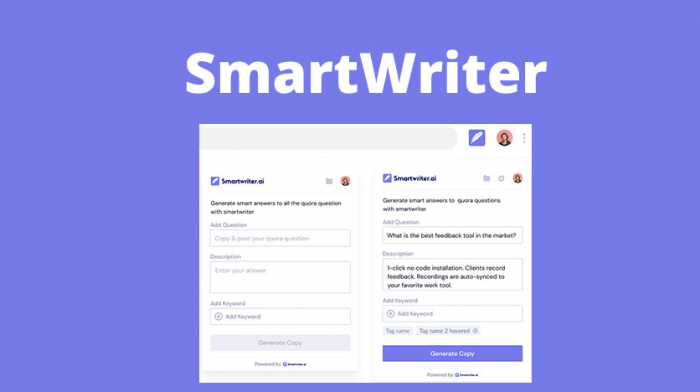
While many tools on this list focus on lifecycle campaigns, SmartWriter is laser‑focused on AI‑powered personalization for outbound and cold campaigns.
You upload a leads list and SmartWriter automatically generates highly personalized first‑touch and follow‑up emails in bulk, pulling context from LinkedIn profiles, company websites, Google reviews or broader web data. This makes it possible to keep emails feeling one‑to‑one while operating at serious volume, which is difficult to achieve manually for outbound sales teams or agencies.
It stands out when your bottleneck is “writing hundreds of tailored intros that don’t sound like templates,” rather than managing complex automations.
7. Lavender – AI Coach for Better Sales Emails
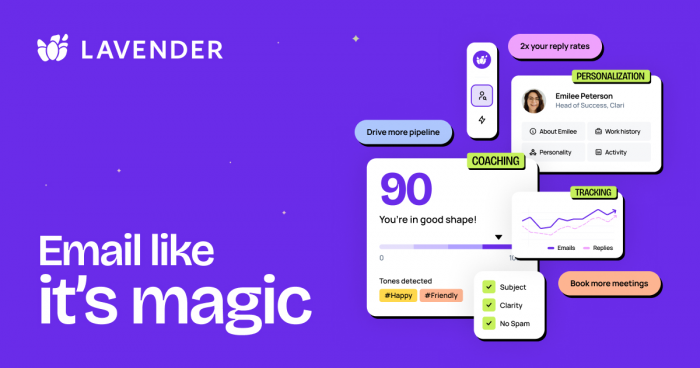
Lavender plays a different role: it’s essentially an AI coach that sits inside your inbox and helps you write better emails faster, especially for sales and outreach.
It analyses your email in real time and scores it for tone, clarity, length and personalization, then suggests improvements to sound more human and relevant. Combined with integrations into common CRMs and email clients, it becomes a writing companion that nudges your team toward best‑practice cold and warm email copy rather than a full marketing automation suite.
Use Lavender when your main goal is to improve reply rates and human quality of messages, not to orchestrate entire customer journeys.
8. GetResponse – Conversion‑focused Funnel + AI Stack

GetResponse blends email marketing, automation, landing pages and webinars, backed by AI features aimed at performance marketers.
It offers AI support across flows (from email sequences to webinars), predictive sending, A/B testing for workflows and detailed reporting that shows which paths convert best. You also get a 30‑day free trial, with core email marketing (unlimited emails, autoresponders, segmentation) on entry plans and more advanced automation and scoring on higher tiers tailored for larger lists and more complex funnels.
It’s especially compelling if you want to run full campaigns emails, landing pages, signup forms and webinars without stitching together multiple tools.
Quick View: Which Tool Fits Which Use Case?
| Tool | Best For | Standout AI Strength |
| Klaviyo | E‑commerce stores | Predictive LTV, product recommendations |
| ActiveCampaign | Advanced automation + CRM | Predictive sending & content, forecasting |
| Mailchimp | Small business all‑in‑one | Content optimization, predictive segments |
| MailerLite | Creators and lean teams | AI copywriter + performance insights |
| Encharge | SaaS and product‑led growth | Behaviour‑based flows with AI assistance |
| SmartWriter | Cold outreach at scale | Deep personalization from web data |
| Lavender | Sales teams improving replies | Real‑time email coaching and scoring |
| GetResponse | Funnel‑driven marketers | AI‑enhanced workflows and reporting |
How to Choose the Right AI Email Marketing Tool
Think of your AI email tool as a long-term partner, not a quick fix. The best choice depends on your goals, workflow, and growth stage, not just flashy AI features.
Start by defining your main objective. If you’re focused on e-commerce revenue, tools with predictive recommendations work best. For SaaS or B2B outreach, prioritize tools that specialize in personalization and reply optimization. Matching the tool to your use case prevents unnecessary complexity.
Next, decide how much automation you need versus copy support. For advanced workflows and customer journeys, choose platforms with built-in AI automation. If your main challenge is writing emails faster, an AI writing assistant can complement your existing setup without requiring a full switch.
Budget matters early. Many advanced AI features are locked behind higher-tier plans, so estimate costs as your contact list grows. Look at long-term pricing, not just entry-level plans.
Integrations are critical. AI is only as good as the data it uses, so ensure your tool connects smoothly with your CRM, e-commerce platform, or other data sources.
Finally, test usability. Use free trials to build a real campaign and evaluate how easy it is to create workflows, generate content, and understand reports. Good support and documentation also make a big difference as you scale.
Final Verdict
There’s no single “best” AI email marketing tool, it depends on your business and growth stage. E-commerce brands usually do best with a mix of strong automation and an AI writing tool, while SaaS and B2B teams benefit from lifecycle platforms paired with personalization tools. Smaller businesses should start simple and add AI tools as needed. In most cases, a lean, modular stack of 1–2 core platforms plus a few focused AI tools works best and scales with your funnel.
Post Comments
Be the first to post comment!