Releasing software without a safety net is a gamble most teams can't afford. A single undetected bug in production can damage user trust, delay roadmaps, and cost far more to fix than it would have during development. That's where continuous testing changes the equation. Instead of treating testing as a final checkpoint before release, it becomes a constant, built-in part of your delivery process. This article breaks down what continuous testing really means, how it directly strengthens release confidence, and what practices and pitfalls you need to understand to make it work.
What Is Continuous Testing and Why It Matters
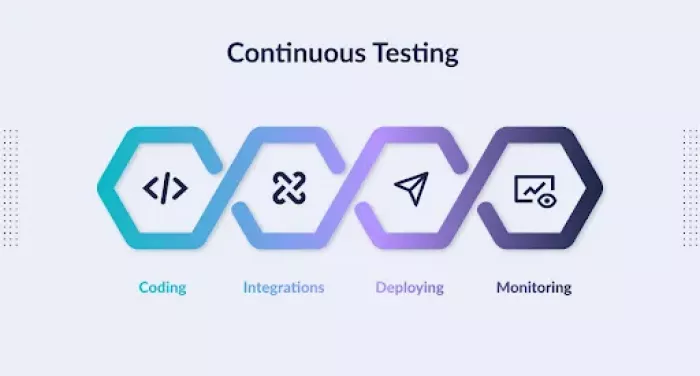
Continuous testing is the practice of running automated tests at every stage of the software delivery lifecycle, not just at the end. It integrates quality checks directly into development workflows so that feedback on code changes arrives almost immediately. Rather than waiting for a separate QA phase to surface problems, your team gets real-time signals about whether new code breaks existing functionality or introduces new risks.
This approach matters because the cost of defects rises sharply the later they are found. A bug caught during development takes minutes to fix. That same bug discovered after a release can take days and drag in multiple teams to resolve. Continuous testing keeps that cost in check by moving quality verification as close to the point of code creation as possible.
For organizations that want to implement continuous automated testing successfully, it's not just about adding more test scripts; it requires a cultural shift where quality is everyone's responsibility, not the sole domain of a testing team. Developers, QA engineers, and operations staff all play a role in maintaining the health of the test suite and acting on the feedback it produces. The result is a development environment where confidence in every build is backed by evidence, not assumption.
The Direct Link Between Continuous Testing and Release Confidence
Release confidence is essentially your team's ability to say, with reasonable certainty, that a new version of your software is ready for users. Continuous testing builds that certainty by providing a continuous stream of evidence about code quality throughout the development process.
Consider what happens without it. A team finishes a sprint, hands code over to QA, and then waits. Issues pile up. Some get fixed: others get deprioritized. By the time a release decision is made, no one is fully sure what was actually verified. The confidence that exists is largely based on hope rather than data.
With continuous testing, every code commit triggers a suite of automated checks. Regressions surface within minutes. Broken builds get flagged before they affect other team members. Over time, this creates a documented history of test results that your team can reference when making release decisions. You move from guessing to knowing.
Plus, continuous testing supports faster release cycles. Teams that test continuously tend to release more frequently because they've removed the bottleneck of a long manual testing phase. More frequent releases, in turn, mean smaller changes per deployment, which further reduces risk. It's a reinforcing cycle where better testing practices lead to safer, more predictable releases.
Core Practices That Make Continuous Testing Effective
Shift-Left Testing and Early Defect Detection
Shift-left testing is the practice of moving test activities earlier in the development lifecycle. Instead of writing tests after features are built, your team writes them alongside or even before the code. This approach catches defects at the cheapest possible stage, before they have a chance to spread through the codebase or reach users.
Practically, shift-left testing means developers run unit tests on their local machines before pushing code. It means code reviews include a check on test coverage. It means acceptance criteria are defined with testability in mind from the very start of a user story. Each of these habits, applied consistently, reduces the number of defects that reach later stages of the pipeline.
The broader benefit is a healthier codebase over time. Teams that catch issues early tend to accumulate less technical debt because they fix problems when they are still small and isolated. As a result, your codebase stays cleaner, your test suite stays more relevant, and your team spends less time firefighting.
Integrating Automated Testing Into CI/CD Pipelines
A CI/CD pipeline is the backbone of any continuous testing strategy. By integrating your automated test suite directly into the pipeline, you make quality verification a mandatory step in the path from code commit to deployment. No change moves forward unless it passes the defined set of tests.
To do this well, your pipeline should include multiple layers of testing: unit tests for speed and precision, integration tests to verify how components interact, and end-to-end tests to confirm that user-facing workflows function correctly. Each layer serves a different purpose, and together they provide broad coverage without redundancy.
It's also worth investing in test execution speed. A pipeline that takes two hours to complete discourages frequent commits and slows the entire team down. Parallelizing test runs, pruning obsolete tests, and separating fast feedback loops from slower regression suites all help keep the pipeline responsive. The goal is to give your team actionable feedback fast enough that they can act on it without breaking their development flow.
Common Challenges and How to Overcome Them
Even with the best intentions, continuous testing initiatives run into real obstacles. One of the most common is flaky tests, which are automated tests that pass and fail inconsistently without any change to the code. Flaky tests erode trust in the test suite. If your team starts ignoring test failures because they assume it's just another flaky test, the entire value of continuous testing collapses.
To address flakiness, treat it as a first-class defect. Track which tests fail intermittently, isolate the root cause (often timing issues, test data dependencies, or environment inconsistencies), and fix or remove the offending tests promptly. A smaller, reliable test suite is far more valuable than a large, unreliable one.
Another frequent challenge is inadequate test coverage in legacy systems. If your application has been around for years without a strong testing culture, adding continuous testing retroactively can feel like an uphill battle. But you don't need to achieve full coverage overnight. Instead, focus on covering the highest-risk areas first: the features users rely on most and the parts of the codebase that change most frequently. Build from there.
Finally, organizational resistance can slow adoption. Developers who are unaccustomed to writing tests may see it as extra work rather than a time-saver. The best counter to this is demonstration. Show your team the data: how many defects were caught before reaching users, how much faster releases have become, and how much time was saved by not chasing production incidents. Concrete results tend to shift perspectives more effectively than policy mandates.
Conclusion
Continuous testing transforms software releases from high-stakes events into routine, low-risk deployments. By integrating quality checks throughout development, detecting defects early, and building a trustworthy automated pipeline, your team gains the kind of release confidence that comes from evidence rather than optimism. The challenges are real, but each one is solvable with the right habits and a commitment to treating quality as a shared, ongoing responsibility.
Post Comments
Be the first to post comment!
Related Articles