OpenAI has begun rolling out app integrations inside ChatGPT, allowing users to connect third party services directly within a chat and complete everyday tasks using natural language. The feature, introduced through OpenAI’s Apps SDK in late 2025, marks a shift toward what the company describes as conversational actions rather than simple question answering.
Instead of switching between apps, users can now ask ChatGPT to help plan a meal, build a playlist, or set up a ride, then hand off the final step to the connected service.
What the New Integrations Do
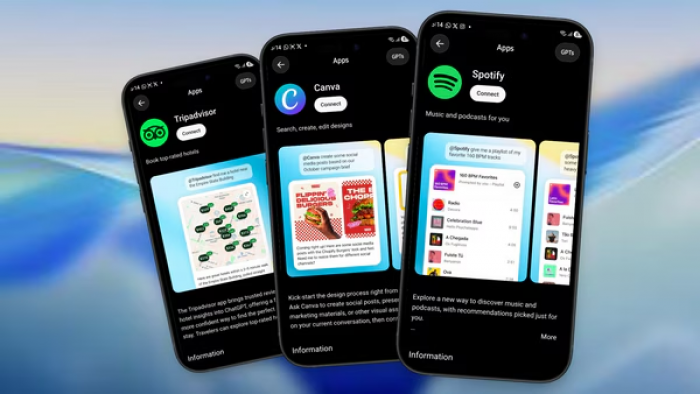
The integrations let ChatGPT act as a front end for supported apps. Users can describe what they want in plain language, and the assistant translates that request into actions inside the connected service.
Early partners include DoorDash, Spotify, Uber, Booking.com, Canva, Coursera, Target, and Zillow. Each integration focuses on a specific category such as food delivery, music discovery, travel planning, or shopping.
The system does not complete payments inside ChatGPT yet. Instead, it prepares orders or plans and then redirects users to the native app to finish checkout.
How to Enable App Integrations in ChatGPT
To start using integrations, users must first connect their accounts.
Open ChatGPT and sign in. From the Settings menu, go to Apps and Connectors. A directory lists all available integrations. Selecting an app prompts a secure sign in using OAuth, where users review what data the app will share with ChatGPT.
Once connected, apps can be invoked in two ways. Users can begin a prompt with the app’s name, such as “Spotify, make a workout playlist,” or ChatGPT may suggest an app when it fits the conversation.
Connections can be removed at any time in Settings, although data already shared during previous sessions may still be retained under existing privacy policies.
Ordering Groceries With DoorDash
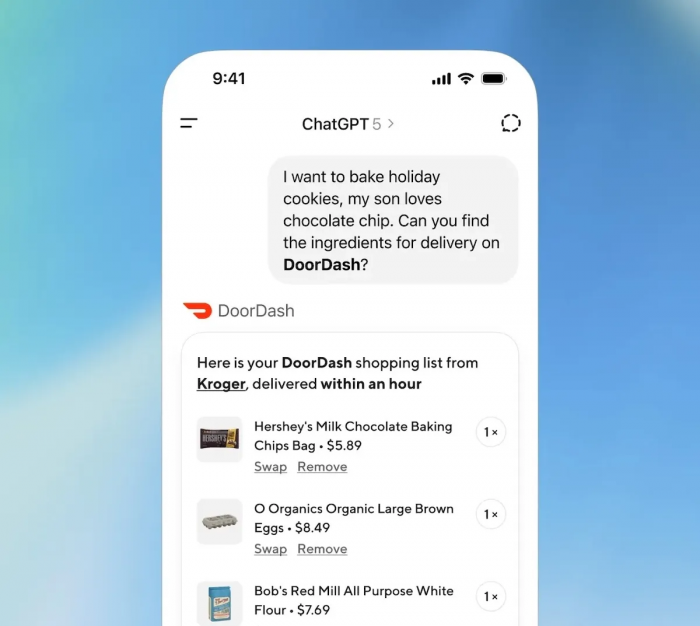
The DoorDash integration focuses on grocery shopping rather than restaurant delivery.
Users typically begin by asking ChatGPT for a recipe or meal plan. When DoorDash is invoked, the assistant converts ingredients into a shoppable grocery list from participating retailers such as Kroger, Safeway, or Wegmans. Items appear directly in the chat for review and adjustment.
Checkout then moves to the DoorDash app. As of now, the feature is limited to the United States and does not support non grocery orders.
Creating Playlists With Spotify
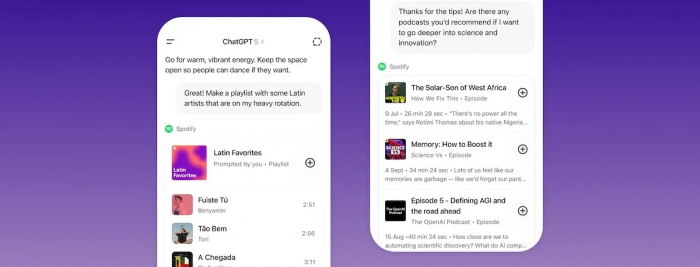
Spotify’s integration centers on personalized music discovery.
After linking an account, users can ask ChatGPT to create playlists based on mood, genre, or recent listening habits. Premium subscribers can generate fully custom playlists, while free users typically receive suggestions based on existing Spotify collections.
ChatGPT can also add or remove tracks from a user’s library before opening Spotify for playback. Full audio streaming does not occur inside ChatGPT, and Spotify does not share raw audio data with OpenAI.
Booking Rides Through Uber
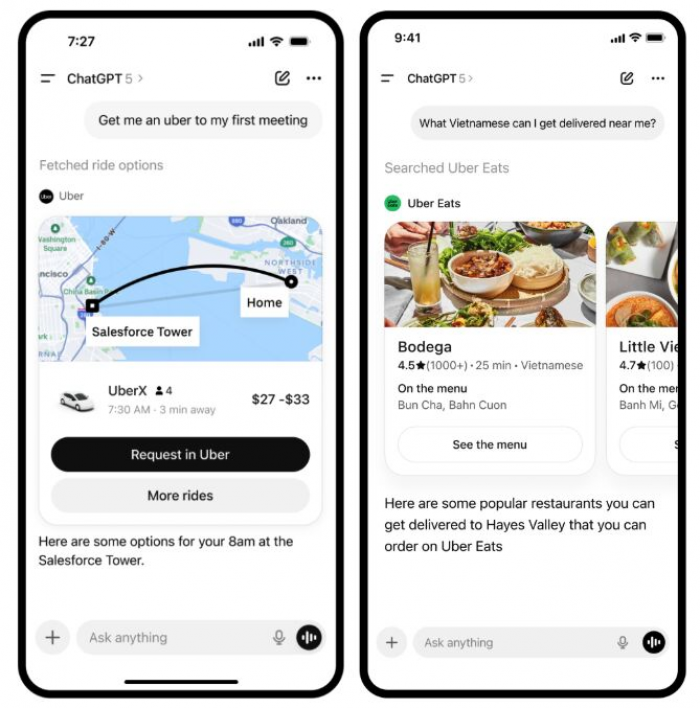
The Uber integration allows users to plan rides conversationally.
By describing a trip in chat, users can view route options and ride types such as UberX or Black. Once details are confirmed, the request is completed in the Uber app, where payment occurs.
The feature currently supports on demand rides only in the United States. Scheduled rides and international bookings are not available yet. A related Uber Eats option lets users browse nearby restaurants before switching to the Uber Eats app to pay.
Other Notable Integrations
| App | What It Does | Key Limits |
| Booking.com | Hotel and flight suggestions | Booking completed off platform |
| Canva | Generates designs and slide decks | Manual edits often required |
| Coursera | Recommends online courses | Enrollment handled externally |
| Target | Builds curated shopping lists | US beta only |
| Zillow | Searches home listings | US and Canada only |
These apps appear when called by name or suggested by ChatGPT during relevant conversations.
Privacy and Regional Limits
The integrations require data sharing, which has raised privacy questions. For example, Spotify may share listening history, while Uber requires location access. OpenAI states that users are informed of permissions during setup, but privacy advocates note that data retention policies vary by partner.
Geographic availability is another constraint. Most integrations are currently limited to the United States and Canada. Users in the European Union and United Kingdom do not yet have access due to regulatory considerations.
Some users have also reported early glitches, including incomplete carts or design errors, reflecting the preview nature of the rollout.
What Comes Next
OpenAI says additional partners such as OpenTable, PayPal, and Walmart are planned for 2026. The company has also signaled upcoming features like more granular data controls, a dedicated app directory, and tools that could allow instant checkout in future versions.
For now, the integrations offer a glimpse of how ChatGPT is evolving from a standalone assistant into a hub that connects everyday digital services through conversation.
Post Comments
Be the first to post comment!