Table of Content
- From Documents to Applications: The Structural Shift
- CPU Scheduling and Main Thread Contention
- Memory Pressure and Lifecycle Instability
- Rendering Pipelines and GPU Strain
- Network Complexity and Latency Chains
- Battery Consumption as a Systemic Outcome
- Storage, Caching, and Data Overhead
- Browser Fragmentation and Engine Limitations
- Security Layers and Performance Trade-offs
- WebAssembly, AI, and the Next Wave of Complexity
- User Experience as a Function of Hardware Reality
- Rethinking Complexity: Where the Web Goes Next
- Closing Perspective
The modern web did not become complex overnight. It evolved quietly, layer by layer, as developers pushed browsers to behave more like full-fledged application platforms. What began as simple document rendering has turned into a dynamic runtime environment capable of powering everything from social feeds to enterprise dashboards. On Android devices, this evolution carries a cost that is often underestimated.
The reality is that when a user opens a webpage today, they are not just loading content. They are initiating a chain of computations, network negotiations, rendering tasks, and background processes that compete for limited hardware resources. This tension between capability and constraint is where the true story of web complexity on Android begins.
From Documents to Applications: The Structural Shift
To understand the impact, it is important to first recognize how fundamentally the web has changed. Traditional websites were server-driven. The browser’s role was largely passive, responsible for displaying pre-rendered content. Modern web experiences have inverted that model.
Today’s websites rely heavily on client-side execution. Frameworks like React, Angular, and Vue shift significant responsibility onto the device itself. Instead of receiving a fully constructed page, the browser receives instructions and must assemble the interface in real time. This includes fetching data, constructing the DOM, attaching event listeners, and managing state transitions.
On Android devices, especially those in the mid-range segment, this architectural shift transforms browsing into a compute-intensive task. The browser is no longer a viewer. It is an interpreter, an executor, and often a bottleneck.
CPU Scheduling and Main Thread Contention

One of the most critical and least visible impacts of web complexity lies in how it interacts with the CPU. Every modern webpage competes for the main thread, the core execution pathway responsible for handling user input, rendering, and script execution.
When a page loads large JavaScript bundles, the CPU must parse, compile, and execute them before meaningful interaction can occur. This creates a phenomenon known as main thread blocking. On Android devices, where CPU cores vary widely in performance and efficiency, this leads to inconsistent responsiveness.
The problem deepens during interaction. Scrolling, tapping, and navigating often trigger additional computations. If the main thread is already occupied, input events are delayed. This is why a page may appear visually complete but still feel sluggish or unresponsive.
On high-end devices, this delay may be measured in milliseconds. On budget or older Android phones, it becomes perceptible, sometimes frustratingly so.
Memory Pressure and Lifecycle Instability
Memory is another critical constraint where web complexity reveals its impact. Modern webpages maintain large in-memory structures, including DOM trees, JavaScript objects, cached assets, and runtime states.
Android’s memory management system is aggressive by design. When available RAM drops below certain thresholds, the system begins reclaiming memory by terminating background processes. Browsers, which often hold multiple tabs and active sessions, become prime targets.
The result is a browsing experience that feels unstable. Tabs reload unexpectedly. Context is lost. Switching between apps becomes disruptive. These are not isolated issues but systemic responses to memory pressure.
Even when crashes do not occur, the process of garbage collection introduces micro-pauses. These pauses accumulate, leading to subtle stutters in animations and interactions. The user perceives this as “lag,” but it is often the result of underlying memory churn.
Rendering Pipelines and GPU Strain
Visual complexity has increased significantly in modern web design. Smooth animations, layered effects, and real-time transitions are now standard expectations. While these enhancements improve aesthetics, they place additional load on the GPU.
Android devices vary widely in graphical capability. High-end GPUs handle complex rendering tasks efficiently, but lower-tier hardware struggles to maintain consistent frame rates. This discrepancy creates a fragmented experience where the same website behaves differently across devices.
Rendering is not a one-time task. Every scroll, every animation frame, and every layout change requires recalculation and redraw. When combined with JavaScript-driven updates, the rendering pipeline becomes a continuous workload.
Over time, sustained GPU usage contributes to thermal buildup. Android devices respond by throttling performance to maintain safe temperatures. This introduces a gradual degradation in responsiveness, particularly during extended browsing sessions.
Network Complexity and Latency Chains
It is tempting to attribute slow web experiences to network speed alone, but the structure of network requests plays an equally important role. Modern webpages often rely on dozens of external resources, including APIs, analytics scripts, ad networks, and content delivery systems.
Each request introduces latency. More importantly, many of these requests are interdependent. A script may need to load before another can execute. A layout may depend on data fetched from a remote server. These chains create delays that are not always visible in loading indicators.
On Android devices operating in variable network conditions, this complexity amplifies inconsistency. A page may load quickly on one network and stall on another, not because of bandwidth limitations but because of the number and sequencing of requests.
The experience becomes unpredictable, which is often more frustrating than consistently slow performance.
Battery Consumption as a Systemic Outcome

Battery drain is not caused by a single factor but by the accumulation of multiple processes working simultaneously. CPU activity, GPU rendering, and network communication all contribute to energy usage.
Webpages that continuously update content, play media, or track user interactions maintain a persistent workload. Unlike native applications, which can be optimized for power efficiency at the system level, web pages operate within the constraints of the browser environment.
On Android devices, this leads to noticeable battery impact during prolonged browsing. Users may not associate the drain with a specific webpage, but the underlying cause often lies in resource-intensive web interactions.
This is particularly evident in scenarios involving infinite scroll interfaces or media-heavy platforms, where the page never truly reaches an idle state.
Storage, Caching, and Data Overhead
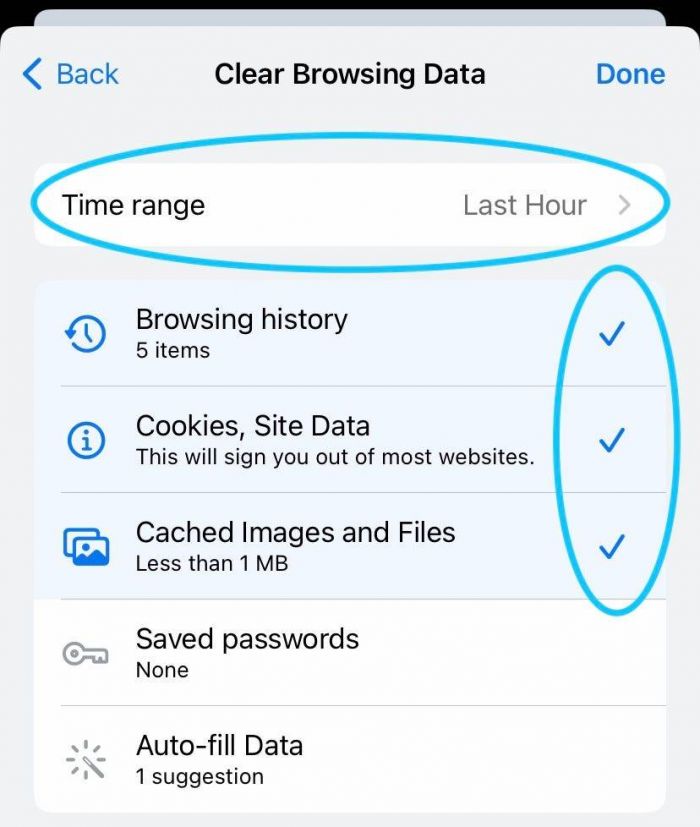
An often overlooked aspect of web complexity is its impact on storage and data usage. Modern browsers cache assets to improve performance, but this caching comes with trade-offs.
Large web applications store significant amounts of data locally, including scripts, images, and offline resources. Over time, this can consume substantial storage space on Android devices.
In addition, repeated data fetching and background synchronization contribute to higher mobile data consumption. For users on limited data plans, this becomes a tangible cost.
Service workers, while enabling offline capabilities, add another layer of complexity. Poorly managed caching strategies can lead to outdated content, redundant downloads, or inconsistent behavior.
Browser Fragmentation and Engine Limitations
Android’s diversity extends beyond hardware into software environments. Different devices may run different browser engines or versions, each with its own performance characteristics and limitations.
Even within the same browser family, variations in optimization can lead to inconsistent execution of web code. Features that perform well on one device may degrade on another due to differences in engine behavior or hardware acceleration support.
This fragmentation complicates development and directly impacts user experience. Developers may optimize for modern environments, but a significant portion of Android users operate outside those ideal conditions.
Security Layers and Performance Trade-offs
Modern web experiences incorporate multiple layers of security, including HTTPS encryption, sandboxing, and permission controls. While essential, these layers introduce additional processing overhead.
Encryption and decryption of network traffic require CPU cycles. Sandboxing isolates processes but increases memory usage. Permission checks and security validations add latency to certain operations.
On powerful devices, these costs are negligible. On constrained Android hardware, they contribute to the cumulative load that defines overall performance.
WebAssembly, AI, and the Next Wave of Complexity
The next phase of web evolution is already underway. Technologies like WebAssembly are enabling near-native performance within the browser, while AI-driven features are introducing new computational demands.
Real-time language processing, image generation, and interactive AI interfaces are beginning to appear directly within web applications. These capabilities promise richer experiences but also raise the baseline requirements for hardware performance.
For Android devices, this means the gap between high-end and low-end experiences may widen further. Devices that struggle with today’s web complexity may find it even more challenging to keep up with emerging workloads.
User Experience as a Function of Hardware Reality
Ultimately, web complexity does not exist in isolation. It is experienced through the lens of the device in hand. On a flagship Android phone, modern web applications can feel seamless and powerful. On a budget device, the same applications may feel heavy and restrictive.
This divergence shapes user behavior. Users adapt by avoiding certain websites, limiting multitasking, or favoring lightweight alternatives. In some cases, they shift toward native apps that offer more predictable performance.
The web, despite its universality, delivers unequal experiences based on hardware capability.
Rethinking Complexity: Where the Web Goes Next
There is a growing recognition within the development community that complexity must be managed, not just expanded. Performance metrics are gaining prominence. Techniques like server-side rendering, code splitting, and edge computing aim to reduce client-side burden.
However, the fundamental tension remains. As the web becomes more capable, it also becomes more demanding. The challenge is not to eliminate complexity but to distribute it intelligently.
For Android devices, this means finding a balance where advanced functionality does not come at the expense of accessibility and efficiency.
Closing Perspective
Web complexity is not merely a technical characteristic. It is a defining factor in how users experience the internet on Android devices. It influences speed, responsiveness, battery life, and even long-term device usability.
The conversation is no longer about whether the web should be powerful. It already is. The question is how that power is delivered across a fragmented ecosystem where millions of devices operate under vastly different constraints.
The future of the mobile web will depend on how well this balance is maintained. Not through more features alone, but through a deeper understanding of the systems that bring those features to life.
Post Comments
Be the first to post comment!
Related Articles



Millions Still Use Softonic But Should You?
Corey Robson . Feb 27, 2026