I didn’t discover Muke AI because I was actively looking for it. It showed up the way many fringe AI tools do, quietly referenced on AI directories, loosely categorized on “AI discovery” websites, and often accompanied by vague or cautious descriptions. The more I saw it mentioned, the more curious I became, not because of the features themselves, but because of what its popularity says about the current state of generative AI.
This review isn’t written from the perspective of a fan or a critic. It’s written from the perspective of someone trying to understand why tools like this exist, how they feel to encounter, and what they reveal about where AI is going.
First Encounter: A Site That Doesn’t Pretend to Be Something Else
One of the first things that struck me about Muke AI is that it doesn’t try to disguise its intent behind productivity language. There’s no framing around “creativity,” “workflow optimization,” or “professional output.” The platform feels intentionally direct.
The interface is minimal, almost stripped down. There’s no onboarding tutorial, no long explanation of AI ethics, no storytelling about innovation. Instead, it feels like the site assumes you already know why you’re there.
That design choice alone tells you a lot.
This isn’t a platform built to earn long-term trust or loyalty. It’s built for immediacy, curiosity, and one-off interactions.
The Core Experience: You Trigger the Model, Then Step Back
Using Muke AI doesn’t feel like collaborating with a tool. It feels like activating a machine and watching what it decides to do.
There’s very little sense of creative authorship. You don’t guide the process in detail. You don’t fine-tune outputs. You don’t iterate meaningfully. You upload an image, the system processes it, and you receive a result.
That’s it.
This hands-off approach is clearly intentional. The platform isn’t designed for artists, designers, or creators who want control. It’s designed for users who want results without effort, even if those results feel unpredictable.
The Types of Transformations That Define the Platform
Based on how Muke AI is described across directories and listings, and how users talk about it, the platform’s identity is shaped by a few specific capabilities:
- Automated clothing-removal or “nudify” style image generation
- Face-swapping features involving other images or personas
- AI-generated portraits with adult or fantasy aesthetics
- Body-focused visual modifications
What’s important here is not what these tools do, that’s already well-documented across the AI space, but how casually they are packaged. There’s very little friction, very little context, and very little explanation.
The experience feels less like editing and more like pressing a button to see what happens.
Who This Tool Seems to Be For (And Who It Clearly Isn’t)
Muke AI doesn’t feel built for professionals, even those working in adult entertainment or digital art. There’s no sense of precision, repeatability, or quality control that professionals usually require.
Instead, the platform seems aimed at:
- Curious individuals exploring AI boundaries
- Users driven by novelty rather than utility
- People experimenting anonymously with generative tech
Traffic data from third-party analytics platforms supports this. Usage is globally distributed, with strong activity in regions where experimental AI tools often spread through directories and forums rather than official marketing channels.
This isn’t an “adopt into your workflow” tool.
It’s a “try it once, maybe twice” tool.
Speed Over Substance: The Trade-Off You Feel Immediately
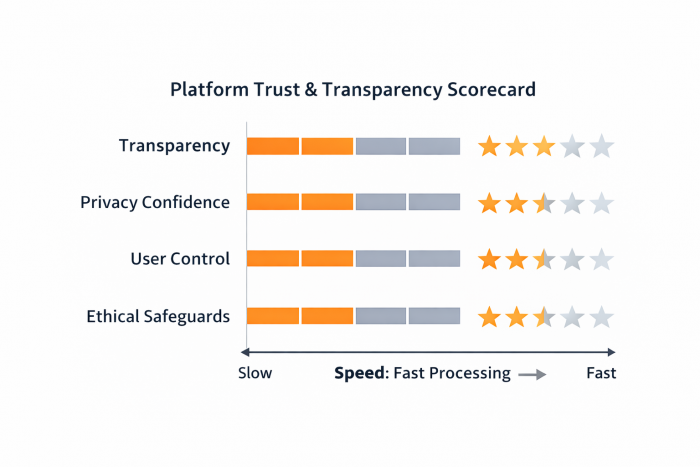
One thing Muke AI does well, technically, is speed. Outputs are generated quickly, reinforcing the sense that this is about instant gratification rather than thoughtful creation.
But speed comes at a cost.
Results can feel inconsistent. The lack of control means outcomes sometimes feel disconnected from the input image. There’s also no real feedback loop, no explanation of why a result looks the way it does.
As a user, you’re left reacting rather than directing.
Pricing and Access: Designed to Convert Curiosity
Muke AI follows a familiar pattern seen across many fringe AI tools:
- Limited free access to spark interest
- Constraints that appear quickly
- Paid tiers promising higher-quality or unrestricted outputs
What’s noticeable is the lack of transparency around long-term pricing structure. That usually signals a platform still experimenting with monetization rather than committing to a stable SaaS model.
It feels transactional, not relational.
Privacy, Consent, and the Feeling of Unease
This is the section where my experience became more reflective, and honestly, more uncomfortable.
Any platform that processes real human photos, especially in intimate or altered contexts, raises unavoidable questions:
- Are images stored?
- Are they deleted immediately?
- Could outputs be reused or leaked?
- How much responsibility lies with the user vs. the platform?
Publicly available answers to these questions are limited. While most AI directories include consent disclaimers, the platform itself doesn’t offer deep transparency.
That doesn’t automatically mean wrongdoing, but it does mean users are operating largely on assumption rather than certainty.
Trust Signals: Neutral, Not Reassuring
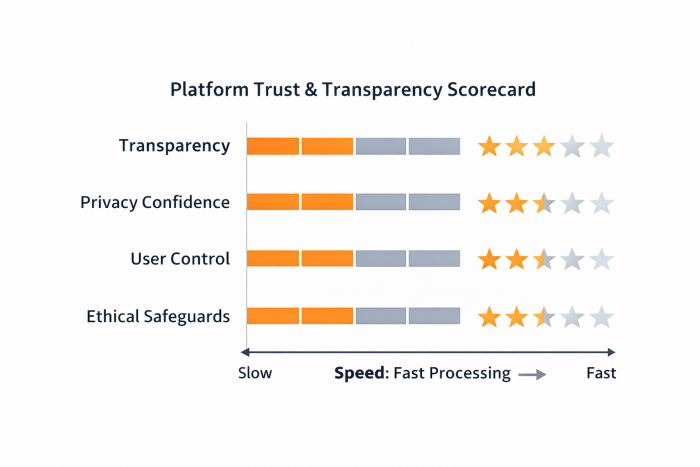
Reputation-checking and safety-monitoring sites don’t label Muke AI as outright dangerous. But they also don’t provide strong reassurance.
The platform sits in a gray zone:
- Not obviously malicious
- Not meaningfully transparent
- Not backed by visible leadership or long-term roadmap
This is common among experimental AI services, especially those operating in ethically sensitive categories.
A Naming Confusion Worth Clearing Up
During research, I repeatedly noticed confusion between Muke AI and Mureka AI.
They are entirely different:
Muke AI → AI image manipulation, NSFW-adjacent tools
Mureka AI → AI music generation and audio creation
They are not affiliated, and assuming they are related leads to misunderstandings about purpose and capability.
What Muke AI Represents More Than What It Delivers
After stepping back, what stayed with me wasn’t the features themselves, it was what the platform symbolizes.
Muke AI is a reminder that:
- AI capability is advancing faster than governance
- Access is easier than accountability
- Many tools exist not because they solve problems, but because they can
It’s less a product and more a snapshot of a moment in AI history, one where experimentation runs ahead of reflection.
Review Scorecard
| Category | Score | Notes |
| Ease of Access | ⭐⭐⭐⭐☆ (4/5) | Browser-based, fast, no setup |
| User Control | ⭐⭐☆☆☆ (2/5) | Very limited creative agency |
| Output Consistency | ⭐⭐☆☆☆ (2/5) | Results vary, little predictability |
| Transparency | ⭐⭐☆☆☆ (2/5) | Minimal public disclosure |
| Privacy Confidence | ⭐⭐☆☆☆ (2/5) | Heavy reliance on user trust |
| Ethical Safeguards | ⭐⭐☆☆☆ (2/5) | Largely disclaimer-based |
| Overall Experience | ⭐⭐⭐☆☆ (3/5) | Technically impressive, emotionally mixed |
Overall Impression:
Muke AI is functional, fast, and revealing, but not reassuring.
Final Reflection
I wouldn’t describe my experience with Muke AI as positive or negative. I’d describe it as clarifying.
It clarified how far AI image generation has come and how much responsibility is still being negotiated. It also highlighted the growing gap between what AI can do and what platforms are prepared to explain, justify, or stand behind.
Muke AI isn’t a tool you grow attached to.
It’s a tool that makes you think, sometimes uncomfortably, about the direction of generative AI itself.
Post Comments
Be the first to post comment!
Related Articles



Dopple AI Explained: The Dopple AI Problem
Lesley Nicole . Jan 23, 2026
Table of Content
- First Encounter: A Site That Doesn’t Pretend to Be Something Else
- The Core Experience: You Trigger the Model, Then Step Back
- The Types of Transformations That Define the Platform
- Speed Over Substance: The Trade-Off You Feel Immediately
- Pricing and Access: Designed to Convert Curiosity
- Trust Signals: Neutral, Not Reassuring
- What Muke AI Represents More Than What It Delivers
- Review Scorecard
- Final Reflection
- Comments
- Related Articles