Table of Content
The internet is filled with business blogs promising growth hacks, marketing insights, and investment guidance. FurtherBusiness.com positions itself as a modern business and digital-insights platform, but a closer look at its digital footprint reveals a more specific role in today’s content ecosystem.
This article provides a transparent, evidence-based evaluation of FurtherBusiness.com, covering legitimacy, safety, content quality, SEO intent, ownership signals, and long-term reliability, so readers and businesses can decide how (and whether) to use it.
What Is FurtherBusiness.com?

FurtherBusiness.com operates as a multi-category content hub covering:
- Business insights
- Finance and investment topics
- Marketing and sales strategies
- Tools, software, and online platforms
- Gaming and casino-related content
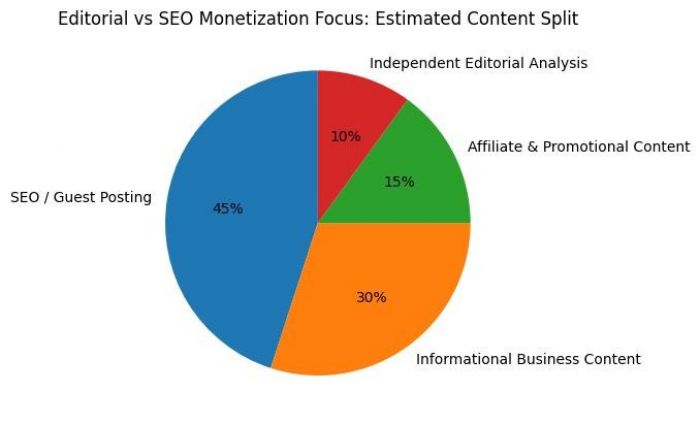
At a surface level, it looks like a conventional business blog. However, its publishing structure, article patterns, and outbound-link behavior indicate that it functions primarily as a guest-posting and SEO-driven platform, rather than an independent editorial newsroom.
This does not automatically make it unsafe or illegitimate, but it does define how the site should be evaluated and used.
Legitimacy Status: Is FurtherBusiness.com a Real Website?
Yes, FurtherBusiness.com is a real, functional, and active website.
It is not a phishing domain, fake storefront, or malware-delivery site.
When evaluating whether FurtherBusiness.com is legitimate, it is important to separate technical legitimacy from institutional authority. From a technical and operational standpoint, FurtherBusiness.com is a real, active, and functioning website. It is not a phishing domain impersonating another brand, nor does it behave like a fake storefront or malware-delivery page. The website loads properly over HTTPS, which indicates encrypted communication between the user and the server. Its pages are indexed in Google, its navigation is consistent across sections, and its articles follow a structured publishing format. Contact pages and basic policy documents are present, and new content appears to be published with regular frequency. All of these are standard indicators of a genuine, operating content platform.
However, legitimacy in this context does not automatically equate to professional accreditation or institutional authority. FurtherBusiness.com is not a regulated financial institution, nor is it a licensed investment advisory service operating under financial regulatory oversight. It does not present itself as a legally registered brokerage, compliance-driven advisory firm, or certified accounting body. It is also not positioned as a primary journalism outlet with a named editorial board, investigative reporters, or formal newsroom standards. These distinctions matter because readers often equate the word “legitimate” with “expert-verified” or “official,” which are very different standards.
What FurtherBusiness.com represents, based on available signals, is a legitimate content-publishing platform. It functions as a digital media property that produces and hosts informational articles across business, finance, and related topics. As such, it can be considered real and operational. However, it should not be interpreted as an authoritative source of expert-reviewed financial, legal, or regulatory guidance. Readers should approach its material as general informational content rather than certified professional advice, especially when making important business or investment decisions.
Safety Analysis: Is FurtherBusiness.com Safe to Browse?
From a technical and user-safety perspective, the site is low-risk.
Safety indicators:
- No known malware injections
- No forced downloads or redirects
- No phishing forms or fake login prompts
- HTTPS encryption is enabled
- Pages behave normally in standard browsers
There is no evidence that visiting FurtherBusiness.com poses a security threat to users’ devices or personal data.
Important distinction:
“Safe to browse” does not equal “reliable for critical decisions.” Safety refers to malware and scams, not content accuracy.
SEO and Digital Footprint Analysis
This is where FurtherBusiness.com’s true role becomes clearer.
SEO-Driven Characteristics:
- High frequency of guest-style articles
- Multiple unrelated niches (business, casinos, nicotine products, AI, tools)
- Repetitive keyword structures
- Outbound links embedded contextually in articles
- DoFollow backlink availability
- Consistent publishing velocity without author specialization
These are classic indicators of an SEO monetization platform—often called:
“Guest-post network site”
“Content hub for backlinks”
“SEO farm” (neutral industry term, not an accusation)
Domain Authority:
Approximate DA: ~30–35
Indicates a mid-tier SEO site
Useful for link-building, but not elite authority
Content Quality and Editorial Depth
What the site does well:
- Articles are readable and structured
- Content is generally beginner-friendly
- Topics are framed in a neutral, informative tone
- UI is clean and consistent
- No obvious AI hallucinations or broken pages
Where it falls short:
- Limited original research
- No investigative reporting
- Few primary data sources
- Content depth depends on the guest contributor
- Minimal critical analysis in finance-related posts
Most articles function as explainers or overviews, not deep technical or analytical pieces.
Sponsored and Pay-to-Publish Model
A significant portion of FurtherBusiness.com’s content appears to be paid or sponsored guest posts, even when not explicitly labeled.
Implications:
- Quality varies by contributor
- Some articles prioritize promotion over education
- Neutral tone may mask marketing intent
- Readers must verify claims independently
This is not uncommon in SEO-driven publishing, but it requires caution, especially for:
- Investment advice
- Gambling platforms
- Health-adjacent products
- Financial tools
Ownership and Transparency Review
Observed transparency gaps:
- No visible editorial board
- No named leadership team
- No physical office address
- Generic contact information
- Privacy-protected domain records
This anonymity is common in SEO-focused networks, but it reduces accountability and trust compared to established publications.
This does not indicate wrongdoing, but it does limit credibility for high-stakes topics.
Casino, Gaming, and High-Risk Content Presence
A notable portion of the site focuses on:
- Online casinos
- Gaming platforms
- Betting-related content
These categories are:
- Highly monetized
- SEO-competitive
- Often associated with affiliate marketing
This reinforces the conclusion that FurtherBusiness.com prioritizes traffic and backlink value over editorial specialization.
Reputation and Spam Association Risk
FurtherBusiness.com occasionally appears:
- In blog comment sections
- In SEO backlink lists
- In automated link-building footprints
This is a reputational risk, not a safety risk.
Why it matters:
- Excessive SEO usage can weaken trust signals
- Google algorithm updates may penalize over-optimized networks
- Long-term stability depends on content quality controls
Summary Table: Quick Evaluation
| Category | Assessment |
| Legitimacy | Legitimate content platform |
| Safety | Safe to browse |
| Primary Purpose | SEO & guest posting |
| Content Quality | Medium |
| Transparency | Low |
| Editorial Authority | Limited |
| SEO Value | Moderate |
| Risk Level | Low for browsing, medium for reliance |
Final Verdict: Is FurtherBusiness.com Worth Using?
FurtherBusiness.com does not exhibit the behavioral patterns typically associated with scams, malware distribution, or fraudulent storefronts. The website functions normally, loads securely, and operates as a live publishing platform. There are no visible indicators of phishing attempts, forced downloads, or deceptive payment traps. From a technical safety perspective, it behaves like a standard content website.
That said, its positioning becomes clearer when viewed through a strategic lens. FurtherBusiness.com is best understood as a functional, SEO-driven content hub. Its structure, topic breadth, and publishing patterns strongly suggest that it operates primarily within the ecosystem of guest posting, backlink partnerships, and traffic monetization. The value it provides appears to revolve around visibility and digital reach rather than investigative reporting or subject-matter authority. In other words, it is optimized for search performance and content distribution rather than expert accreditation.
For readers and digital marketers who understand SEO-based publishing models, the platform can serve a practical purpose. If the goal is backlink exposure, brand mentions, or broad informational visibility, it can function as a distribution channel. Similarly, if someone is browsing for general awareness on business-related topics without expecting deep analytical rigor, the content can offer introductory insight.
However, expectations must remain aligned with reality. The site should not be relied upon when expert-verified financial advice is required, when legal decisions are being made, or when readers expect investigative journalism backed by credentialed professionals. It does not operate as a regulated advisory body or a formal newsroom environment.
The most accurate way to describe FurtherBusiness.com is this: it is useful as a digital publishing tool, but it should not be treated as an authoritative institution.
Post Comments
Be the first to post comment!
Related Articles