Organizations rely on intelligent tools to simplify complex workflows, especially in knowledge-heavy domains like legal services, compliance, and document analysis. One rising platform making waves in this space is Jylo, a versatile enterprise solution that helps teams organise and act on large volumes of unstructured information.
This article breaks down what Jylo does, how it works, and which platforms are considered its key competitors. Whether you’re exploring technology partners or comparing similar solutions, this guide offers clear, unbiased insights backed by reputable sources.
Understanding Jylo: Enterprise-Level Intelligence for Teams
Jylo is a software platform designed to help organisations extract meaning from complex data and documents, support decision-making, and standardise knowledge tasks across teams. Originally developed within a legal tech environment, the company has quickly expanded its capabilities and market reach.
What Jylo Offers
At its core, Jylo provides:
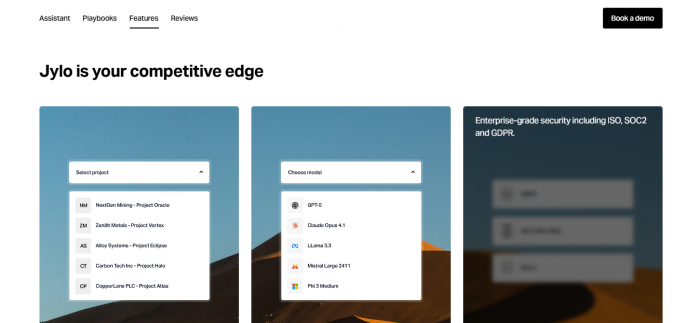
- Organised project workflows, making it easier for teams to standardise tasks and playbooks.
- Flexible model integration, so organisations can use a wide range of processing tools without lock-in.
- Security and governance, with strong compliance features suitable for regulated industries.
These features enable users to work with documents, run custom processes, and manage complex knowledge operations from one central platform.
Real-World Use Cases
Several organisations have adopted Jylo to streamline internal work:
A European human rights body selected the platform to automate document-based processes for over 3,000 users, boosting efficiency while maintaining strict regulatory standards.
Why Jylo Matters for Modern Knowledge Work
In sectors like law, consulting, and corporate compliance, professionals spend significant time consuming and interpreting text, contracts, and research. Tools like Jylo help reduce that burden by transforming unstructured content into actionable insights, allowing teams to focus on higher-value work.
By combining workflow flexibility with enterprise security controls, Jylo positions itself as both a productivity and governance tool, especially valuable for organisations dealing with large bodies of information.
Who Are the Major Competitors to Jylo?
While Jylo is gaining attention in its category, several other platforms offer similar capabilities either through advanced analytics, document handling, process automation, or enterprise knowledge management.
According to industry research, here are some noteworthy competitors:
1. NLPatent

- What it is: A specialised patent research and intelligence platform built for patent professionals and R&D teams.
- What it does: Helps users find, analyse, and monitor patents faster and with deeper insight than traditional search methods.
- Key features: Natural language patent search, customizable monitoring alerts, concept-relevance ranking, and detailed exportable reports.
- Pros: Pinpoints highly relevant breakthrough references and offers context-rich monitoring, boosting efficiency and strategic insight.
- Cons: Focused exclusively on patent workflows, so it’s less useful for general document management or non-IP tasks.
- Pricing: Offers demo and free trial options; enterprise pricing is typically custom and negotiated upon request.
2. Cognitiv+
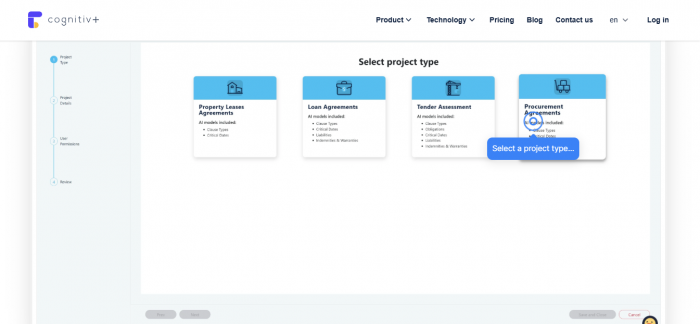
- What it is: A document and contract analytics platform that automates classification and risk extraction from legal and business documents.
- What it does: Speeds up contract review, obligation extraction, and regulatory tracking to support compliance and risk management.
- Key features: Automated document classification, clause and obligation extraction, risk insights, and compliance monitoring.
- Pros: Reduces manual review time drastically (up to several times faster), improves data visibility, and highlights hidden risks.
- Cons: May require upfront configuration for complex industry-specific documents; detailed pricing is not openly published.
- Pricing: Generally custom-based on use case and volume, with enterprise-level arrangements common.
3. Onna
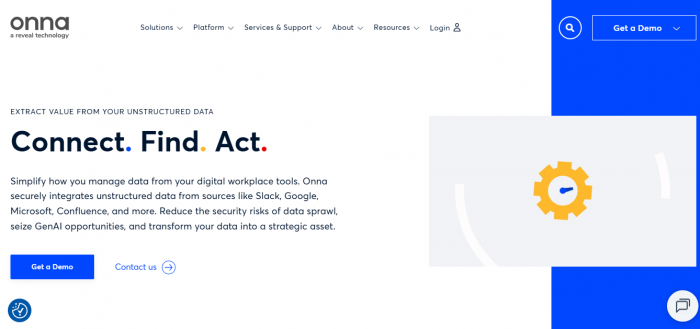
- What it is: A knowledge integration and unified search platform that centralises data from many sources (cloud apps, email, storage).
- What it does: Collects, processes, and indexes organisational data so teams can search and govern information efficiently.
- Key features: Connectors for Slack, Google Workspace, Microsoft 365, advanced search and filtering, eDiscovery, and governance tools.
- Pros: Strong integration breadth with popular business tools, intuitive search experience, helpful for legal holds and investigations.
- Cons: Implementation and initial setup can be technical; some users note integration refresh complexity and limited reporting customisation.
- Pricing: Starts around $5,000/year for basic plans; enterprise pricing can scale significantly based on features.
Quick Comparison Snapshot
| Competitor | Best For | Typical Price | Strength |
|---|---|---|---|
| NLPatent | Patent research workflows | Custom pricing (demo available) | Deep patent insights & alerts |
| Cognitiv+ | Contract/ document review | Custom plans | Advanced obligation extraction |
| Onna | Enterprise data search & governance | ~$5,000/yr+ | Wide app integrations & unified search |
Note: While each competitor overlaps with aspects of Jylo’s platform, they differ in specialisation. Some emphasise legal compliance, others focus on enterprise search or intellectual property intelligence.
How to Choose the Right Platform
Selecting the best tool depends on your specific needs. Consider the following questions before deciding:
🔹 What problem are you solving?
Are you focused on document analysis, project workflows, compliance, or a combination of these?
🔹 Does your organisation need deep enterprise security?
Tools vary in their compliance certifications and security models critical for legal, financial, or government use cases.
🔹 How large is your dataset or user base?
Platform scalability and integration breadth can greatly influence long-term value.
Evaluating these factors will help narrow your options and choose the most suitable platform for your team’s needs.
Final Thoughts
Jylo stands out as a flexible, enterprise-oriented solution for organisations seeking smarter ways to manage and utilise complex information. With strong security practices, customisable workflows, and competitive positioning against established alternatives, it’s worth exploring for teams in legal, compliance, and knowledge-driven environments.
Comparing Jylo with its competitors from patent analysis suites to knowledge search systems reveals a diverse landscape of tools designed to empower professionals and optimise knowledge workflows.
By understanding each platform’s strengths and limitations, you can make a more informed choice and find a solution that best fits your organisation’s mission.
Post Comments
Be the first to post comment!