Table of Content
- What Exactly Is Kupon.ai?
- How Kupon.ai Works in Real-World Use
- Kupon.ai vs Traditional Coupon Sites
- Kupon.ai vs Koupon.ai: Clearing the Confusion
- Is Kupon.ai Legit? A Trust & Safety Assessment
- What Kupon.ai Does Well
- Where Kupon.ai Falls Short
- Who Should Actually Use Kupon.ai?
- Best Alternatives to Use Alongside Kupon.ai
- Takeaway: Is Kupon.ai Worth Using?
Online shopping has never been easier, but saving money while doing it still feels unnecessarily hard. Coupon websites promise instant discounts, yet most shoppers know the frustration: expired codes, misleading banners, and endless pop-ups.
This is the problem Kupon.ai claims to solve.
Rather than acting like a traditional coupon dump, Kupon.ai positions itself as a deal-discovery platform, one that highlights real products already discounted, instead of forcing users to test dozens of codes manually.
But does it genuinely improve the experience? Or is it simply a cleaner version of the same old coupon model?
This article breaks Kupon.ai down properly how it works, what it gets right, where it falls short, and who it’s actually useful for.
What Exactly Is Kupon.ai?
Kupon.ai is not an online store and is not a cashback service.
It doesn’t sell products, collect payments, or guarantee savings.
At its core, Kupon.ai is a deal aggregation and discovery website that:
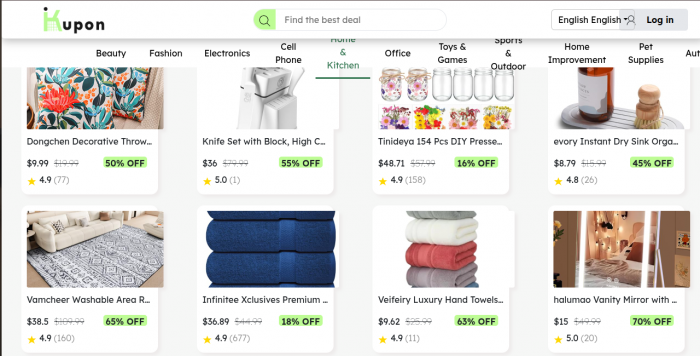
- Curates discounted products from major marketplaces
- Displays those deals in a product-first layout
- Redirects users to the original retailer (usually Amazon) to complete the purchase
The key difference lies in presentation. Instead of showing raw coupon codes with vague descriptions, Kupon.ai shows products with visible price reductions or promotional tags.
In other words, it helps users find discounted items faster, not magically lower prices.
How Kupon.ai Works in Real-World Use
From a user’s perspective, Kupon.ai feels more like browsing a deals feed than visiting a coupon directory.
Here’s the practical workflow:
- Browse or search by product category
Electronics, home items, accessories, and lifestyle products categories are product-led, not brand-led. - View deals attached to actual items
Listings typically show the discounted price or indicate an active offer, reducing guesswork. - Click through to the retailer
Kupon.ai redirects you to Amazon or another marketplace where the item is sold. - Verify the price at checkout
This is crucial: Kupon.ai does not control final pricing. Stock availability, region, and seller can change the deal.
This flow eliminates some friction but does not remove the need for user judgment.
Kupon.ai vs Traditional Coupon Sites
Most coupon websites follow the same old formula:
- Long lists of codes
- No product context
- High failure rates
- Kupon.ai takes a different approach.
| Aspect | Kupon.ai | Traditional Coupon Sites |
|---|---|---|
| Core focus | Discounted products | Coupon text |
| Browsing style | Visual deal feed | Code lists |
| Ease of use | High | Often cluttered |
| Verification | Partial | Inconsistent |
| Checkout control | Retailer | Retailer |
This doesn’t mean Kupon.ai is better in every scenario, but it feels less frustrating for casual shoppers.
Kupon.ai vs Koupon.ai: Clearing the Confusion
Because the names are similar, many users mix them up.
They are not the same platform.
- Koupon.ai focuses more on coupon code discovery and labeling
- Kupon.ai focuses on surfacing discounted products directly
Think of it this way:
- If you want to apply a coupon, Koupon.ai makes sense
- If you want to browse deals, Kupon.ai is more intuitive
Understanding this distinction prevents mismatched expectations.
Is Kupon.ai Legit? A Trust & Safety Assessment
Kupon.ai does not display obvious scam indicators, but it also isn’t a fully transparent, well-documented company.
What works in its favor:
- Secure HTTPS browsing
- No forced sign-ups
- No payment data collection
- Standard redirect behavior
- No malware or phishing warnings
- Where transparency is limited:
- No clear company background or leadership page
- Minimal explanation of how deals are sourced
- No public methodology for “verification.”
This places Kupon.ai in a neutral-positive trust category similar to many modern deal aggregators.
Bottom line: It’s safe to browse and use, but users should always double-check prices.
What Kupon.ai Does Well
1. Product-First Discovery
You see what’s on sale, not just a coupon that might apply.
This saves time and reduces frustration, especially for impulse or seasonal shopping.
2. Cleaner User Experience
No aggressive pop-ups, fake timers, or forced email gates.
This alone makes it more usable than many legacy coupon platforms.
3. Faster Browsing
Because deals are visual and product-based, users can quickly decide whether something is worth clicking.
Where Kupon.ai Falls Short
To be fair, Kupon.ai has real limitations.
x Not all codes work in all regions.
x Deals are mostly limited to major marketplaces (e.g., Amazon).
x Limited transparency on data use and ownership.
❌ No price-history tracking
You don’t know if today’s deal is actually good compared to past pricing.
❌ Limited retailer diversity
Most deals revolve around major marketplaces; niche retailers are underrepresented.
❌ No cashback or stacking
You won’t get extra savings layers like cashback or loyalty rewards.
❌ Savings are not guaranteed
A displayed deal still needs manual verification at checkout.
None of these are fatal flaws but they define Kupon.ai’s ceiling.
Who Should Actually Use Kupon.ai?
Kupon.ai makes sense if you:
- Shop frequently on Amazon
- Prefer browsing deals over chasing codes
- Want a quick way to discover discounted products
- Already verified prices before purchasing
It is not ideal if you expect:
- Guaranteed discounts
- Cashback stacking
- Deep price analytics
- Automated checkout savings
Best Alternatives to Use Alongside Kupon.ai
Kupon.ai works best as part of a stack, not a standalone solution.
Pair it with:
- Price-tracking tools → validate deal quality
- Cashback platforms → add another savings layer
- Browser coupon extensions → auto-apply last-minute codes
- Using Kupon.ai alone is fine. Using it strategically is better.
Takeaway: Is Kupon.ai Worth Using?
After breaking Kupon.ai down piece by piece, one thing becomes clear: it is neither a gimmick nor a game-changer, it’s a practical tool with clearly defined limits.
That said, it does not replace price comparison, cashback platforms, or automated coupon extensions. It doesn’t track price history, it doesn’t guarantee the lowest price, and it doesn’t offer layered savings. Any deal you find still needs to be verified at checkout, and smart shopping habits remain essential.
From a trust perspective, it sits in a neutral-positive category. There are no clear red flags, no aggressive data collection, and no deceptive behavior, but transparency around sourcing and verification could be stronger. This makes it safe to use, but not something to follow blindly.
Used with realistic expectations and paired with other tools, it can genuinely save time and occasionally money. Used on its own, it’s helpful, but incomplete.
Post Comments
Be the first to post comment!
Related Articles