Table of Content
- Leeco AI Overview
- Who Is Leeco AI Designed For?
- Deep Dive: Leeco AI Chrome Extension for Learning & Practice
- Leeco Job Search Autopilot: From Prep to Applications
- Traditional Approach vs Leeco Ecosystem
- User Experience and Workflow
- Pricing and Plans
- Privacy, Permissions, and Data Considerations
- Key Strengths of Leeco AI
- Limitations and Areas to Consider
- Who Will Benefit the Most?
- Final Verdict
Leeco AI is trying to be more than “just another AI tool” ; it wants to be your full pipeline from LeetCode prep to interview‑ready candidate to actively applying (and getting referrals) while you sleep. This review looks at both parts of the ecosystem Leeco AI Chrome learning companion and the Leeco job search autopilot platform and how they fit into a serious developer’s journey.
Leeco AI Overview
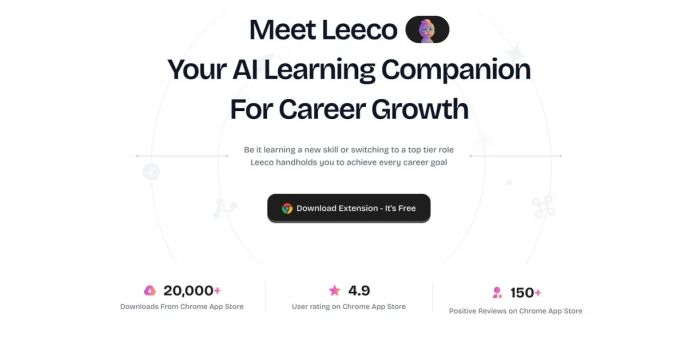
Leeco AI is a browser-based AI mentor that lives inside your workflow instead of in a separate chat window. It attaches itself to your LeetCode sessions, YouTube tutorials, documentation, and blogs, and lets you ask questions, get hints, debug code, and simulate interviews directly on the page you’re working on. The idea is to keep help contextual and in‑flow, rather than forcing you to juggle multiple tabs and tools.
Alongside this, Leeco (the job platform) acts as an “autopilot” for your job search. It scans job boards and career pages, shortlists roles based on your profile, tailors your resume for each role, sends you WhatsApp prompts to approve applications, and even tries to secure referrals from employees inside target companies. Together, the ecosystem claims to cover the full journey:
● Skill building (DSA, coding, core CS concepts).
● Learning support (YouTube, blogs, documentation).
● Mock interviews and feedback.
● Automated job search, personalized resumes, and referrals.
For students, job switchers, and aspiring SDEs, the promise is clear: spend your effort on learning and interviews while the system handles a lot of the surrounding logistics.
Who Is Leeco AI Designed For?
Leeco AI clearly targets tech‑driven audiences who are serious about structured growth rather than casual experimentation. The typical user profiles include:
● College students / fresh graduates preparing for coding interviews, internships, and online assessments.
● Early‑career or mid‑career developers who already know DSA fundamentals but struggle to stay consistent with practice while juggling a job.
● Competitive programmers who use platforms like LeetCode, Codeforces, or similar sites and want fast, contextual hints and explanations while solving.
● Job switchers aiming at product companies, startups, or big tech roles and looking for both a smarter prep flow and a higher‑leverage job search strategy.
If your core pain points revolve around getting stuck on problems, wasting time switching between resources, and being overwhelmed by the job market, Leeco AI is positioned as a focused solution.
Deep Dive: Leeco AI Chrome Extension for Learning & Practice
The Leeco AI Chrome extension is the “learning and practice” face of the ecosystem. It plugs into your browser and modifies how you interact with common learning surfaces like LeetCode, YouTube, and technical blogs.
On‑Page LeetCode & DSA Mentoring
The usual LeetCode flow for most developers is messy: open a problem, get stuck, jump to a YouTube explanation, skim a blog post, check a discussion thread, then maybe paste the problem into a generic chatbot. This works, but it fragments attention and encourages over‑reliance on ready‑made solutions.
Leeco AI takes a different route by embedding an interactive mentor directly alongside the LeetCode problem page. With the extension active, you can:
● Ask for hints instead of full solutions, forcing your brain to stay engaged.
● Paste your code attempt and request a “code review” style explanation of what’s wrong and why it may fail or time out.
● Explore alternative approaches (e.g., brute force vs optimized) while controlling how much detail the AI reveals at each step.
● Practice explaining your thought process and get feedback more in line with an interview environment than a simple Q&A bot.
This creates a more disciplined practice experience:
● Less context switching between different websites and tools.
● Stronger focus on reasoning and approach instead of copy‑pasting answers.
● A closer simulation of the way real interviews unfold: ideas first, code next, complexity and edge cases after.
YouTube & Blog Learning Companion
Modern developers live inside YouTube playlists and long‑form technical blogs, but comprehension often stalls at dense sections or fast‑paced explanations. Traditionally, resolving those doubts means pausing the content and searching elsewhere, leading to distraction.
Leeco AI turns those pages into interactive learning environments by letting you:
● Highlight confusing phrases in captions or text and ask for simplified explanations.
● Request additional examples, analogies, or step‑by‑step breakdowns.
● Get contextual clarifications without leaving the video or article.
This is particularly impactful for:
● Complex subjects like operating systems, networking, DBMS, and system design.
● Learners who benefit from multiple explanations or analogies for the same concept.
● Non‑native English speakers who struggle with accent, speed, or dense terminology.
Instead of interrupting your learning flow and jumping to new tabs, the AI provides in‑place support and encourages deeper engagement with the original content.
Mock Interview Simulations and Feedback
Technical skills are only half the battle; explaining them in real time is the other half. Many candidates practice solving problems silently in isolation and then freeze when they must articulate their reasoning during an interview.
Leeco AI addresses this through mock interview style interactions layered on top of problem solving. Within the browser, you can:
● Simulate timed interview sessions centered on LeetCode‑style questions.
● Practice articulating your approach, choice of data structures, and trade‑offs.
● Receive structured feedback on clarity, structure, completeness, and correctness.
Although this does not replace the nuance of a human interviewer, it helps bridge the gap between silent practice and real‑time performance. Over time, this can make candidates more comfortable with thinking aloud and structuring answers in interview‑friendly ways.
Progress Tracking & Personalized Insights
Most candidates underestimate or overestimate their preparation because they rely on vague impressions: “I’ve done a lot of DP”, “I’m weak in graphs”, “I’ve solved enough easy problems.” Without concrete tracking, it is hard to adjust intelligently.
Leeco AI brings a more data‑driven perspective to coding practice by tracking your activity and distilling it into meaningful patterns, such as:
● Topic coverage (arrays, strings, trees, graphs, dynamic programming, greedy, etc.).
● Difficulty distribution (easy, medium, hard).
● Performance trends over time (attempts, successes, corrections, or time taken).
These insights make it easier to design a focused study plan:
● Double down on weak topics instead of mindlessly solving random questions.
● Balance difficulty levels to gradually push out of the comfort zone.
● Monitor progress over weeks and months rather than days.
For content‑driven learners and serious aspirants, this turns LeetCode practice from a grind into a measurable training regimen.
Leeco Job Search Autopilot: From Prep to Applications
The second major pillar of the Leeco ecosystem is the job search autopilot. Where the extension concentrates on skills and practice, the platform concentrates on visibility and opportunity.
Automated Job Discovery & WhatsApp Alerts
Manual job search usually involves cycling through multiple platforms: LinkedIn, Naukri, Indeed, Glassdoor, and company career pages. It is time‑consuming and easy to miss relevant roles, especially when you’re busy.
Leeco’s autopilot aims to handle this discovery phase automatically. After you define your preferences and upload your resume, the system can:
● Continuously scan relevant job boards and platforms.
● Filter out stale or irrelevant postings.
● Surface roles that match your skills, experience, location, and salary expectations.
● Send alerts and summaries through WhatsApp, turning job discovery into a notification‑driven experience.
The net effect is a shift from “I need to search for jobs” to “I need to review curated suggestions.” This keeps job search active even when you are not manually browsing listings.
One‑Click Intelligent Applications with Tailored Resumes
A common piece of advice from recruiters is to tailor your resume to each job. In practice, most applicants send the same document everywhere because manual customization is time‑intensive.
Leeco attempts to automate much of that tailoring process. For each suitable opening, the platform can:
● Analyze the specific job description and expectations.
● Compare it with patterns from resumes that have historically succeeded in similar roles.
● Generate or suggest a customized version of your resume that emphasizes the most relevant skills, projects, and keywords.
● Share this customized resume with you via WhatsApp or the dashboard and ask for approval before applying.
This transforms resume personalization from an occasional manual effort into a consistent, scalable practice. Over dozens of applications, this targeted alignment can meaningfully influence screening outcomes.
Auto‑Referrals: Increasing the Odds Beyond Cold Applications
Cold applications often have a low response rate because applicant tracking systems and overwhelmed recruiters filter aggressively. Internal referrals are widely recognized as a powerful way to improve visibility, but they are also hard to secure at scale.
Leeco incorporates an auto‑referral mechanism that aims to:
● Identify potential referrers within target companies.
● Craft polite, context‑appropriate referral requests on the candidate’s behalf.
● Reach out to multiple employees rather than relying on a single cold message.
By combining better targeting with higher outreach volume, this increases the chance that at least one employee responds positively. It effectively systematizes an activity that most candidates treat as ad‑hoc and sporadic.
A Unified Command Center for Your Job Search
Tracking applications manually can quickly become confusing: positions applied for, current statuses, pending responses, and referral attempts often live in separate tools or are not tracked at all.
Leeco offers a central dashboard view of your search, allowing you to see:
● Which jobs have been discovered and recommended.
● Which roles you have approved or declined.
● Where applications have been submitted.
● Where referrals have been initiated or responses received.
This consolidated view reduces the mental overhead of managing your job pipeline and supports better decision‑making about where to focus efforts.
Traditional Approach vs Leeco Ecosystem
The value of Leeco AI becomes clearer when compared to the typical manual approach most developers use today.
| Area | Traditional Approach | With Leeco AI / Leeco Ecosystem |
| LeetCode practice | Switch between problem, blogs, videos, generic AI chats | Embedded hints, debugging, and structured guidance in the same tab |
| Understanding concepts | Pause content, open new tabs, search for explanations | Highlight on-page text and ask for instant clarifications |
| Mock interview practice | Occasional peer mocks or paid sessions, often irregular | Built‑in AI‑driven sessions and continuous explanation practice |
| Job discovery | Manually browse multiple job boards and career pages | Continuous automated scanning with curated WhatsApp/job alerts |
| Resume customization | Same generic resume sent to all companies | Role‑specific resume optimization for each relevant posting |
| Referral strategy | Sporadic cold messages and limited manual outreach | Structured, automated referral outreach to multiple potential referrers |
| Tracking progress | Ad‑hoc notes or spreadsheets, often incomplete | Centralized dashboard for practice trends and application lifecycle |
User Experience and Workflow
Onboarding the Chrome Extension
From a user’s perspective, getting started with the Leeco AI extension typically involves:
● Installing the extension from the Chrome Web Store.
● Granting permissions so it can operate on relevant sites like LeetCode, YouTube, and documentation pages.
● Opening supported platforms and interacting with the Leeco AI widget or sidebar that appears.
Once active, it feels less like a separate app and more like an additional “layer” on top of your usual browsing experience. The key change is that help becomes immediate and context‑aware, rather than something you have to manually seek in another window.
Onboarding the Job Autopilot
Setting up the job autopilot usually includes:
● Creating an account on the platform and completing a basic profile.
● Uploading or linking a resume.
● Setting preferences such as desired roles, locations, salary ranges, industries, and remote/on‑site preferences.
● Connecting a WhatsApp number or preferred communication channel for alerts.
After setup, job discovery and application optimization become ongoing processes. You are primarily interacting when making approval decisions or adjusting your preferences.
Pricing and Plans
Leeco AI uses a freemium model, offering a free Chrome extension that lets users try its core learning features across LeetCode, YouTube, and technical blogs. This free tier is sufficient for basic use and getting familiar with the platform.
Paid subscription plans unlock higher usage limits and premium capabilities such as more intensive interview practice and expanded assistance. Pricing, feature caps, and trial terms can vary by region and over time, so it’s best to check the latest details inside the extension or on the official website before subscribing.
Privacy, Permissions, and Data Considerations
A realistic review must address the privacy and data access implications of this type of tool. Because Leeco AI integrates deeply into the browser and job search, the following considerations apply:
● The browser extension can access page content on supported learning and coding sites to provide contextual assistance.
● Usage patterns (such as which pages you view or which elements you highlight) may be processed to improve personalization and functionality.
● The job autopilot requires access to resume data, profile information, and job search preferences to match and apply effectively.
For users, this means weighing convenience and functionality against comfort with data access. Sensible practices include:
● Reading the platform’s privacy policy and data handling statements carefully.
● Avoiding the inclusion of sensitive or confidential code and proprietary information in interactions.
● Using dedicated browser profiles if you prefer to separate work, personal, and experimental tools.
Understanding these trade‑offs is important before embedding any AI assistant deeply into daily workflows.
Key Strengths of Leeco AI
Several aspects of Leeco AI and the wider Leeco ecosystem stand out as core strengths:
● End‑to‑end lifecycle coverage: It does not stop at learning support. The platform connects preparation with real job opportunities, resume improvements, and referrals, aligning closely with the full journey from “learning a topic” to “getting an offer.”
● In‑context learning and support: By embedding assistance inside LeetCode, YouTube, and blogs, it significantly reduces context switching, which can improve focus and retention.
● Job search leverage and time savings: Automated discovery, resume tailoring, and structured referral outreach help candidates extend their reach without investing equivalent manual effort.
● Data‑driven preparation: Progress tracking and topic‑wise insights allow learners to make more rational decisions about where to invest study time instead of relying solely on intuition.
● Unified experience: Progress on the learning side and activity on the job side can reinforce each other, creating a more coherent sense of direction and reducing fragmentation.
Limitations and Areas to Consider
At the same time, there are realistic limitations and caveats that potential users should keep in mind:
● Privacy and permissions: Browser extensions with deep page access and platforms managing resumes and job pipelines inherently raise privacy concerns. Users should be comfortable with the requested access and storage practices.
● Dependence on a single ecosystem: Relying heavily on one ecosystem for both learning and job search can create a mild form of lock‑in. Some users may prefer diversified tools and manual control.
● Outcome variability: The actual impact of features like resume optimization and automated referrals depends on market conditions, user profile, geography, and competition. Some users may see significant improvements; others may experience more incremental gains.
● No substitute for fundamentals: Leeco AI can amplify effort but cannot replace strong fundamentals, consistent practice, and thoughtful interview preparation. It is an accelerator, not a guaranteed shortcut.
Recognizing these boundaries helps set realistic expectations and ensures the tool is used as part of a broader strategy rather than as a magic solution.
Who Will Benefit the Most?
Leeco AI and the Leeco job autopilot are most likely to deliver high value for:
● Candidates actively preparing for internships, entry‑level, or mid‑level software engineering roles within a defined time horizon.
● Developers who are comfortable with AI‑assisted workflows and want to reduce manual effort in both practice and job search.
● Learners who prefer structure, feedback, and data over purely ad‑hoc self‑study.
They may be less suitable for:
● Senior engineers whose interviews revolve more around architecture, leadership, and domain expertise than algorithmic problem solving.
● Extremely privacy‑conscious users who prefer minimal extension usage and tightly controlled data flow.
● Casual learners who are exploring programming without immediate job search ambitions.
Final Verdict
Leeco AI is an ambitious attempt to unify three historically separate activities: learning, practicing, and applying. Instead of limiting itself to one part of that chain, it tries to act as an intelligent layer that:
● Makes learning more interactive and responsive.
● Makes practice more structured and reflective.
● Makes job search more proactive and targeted.
For serious candidates and motivated developers, this unified approach can be a genuine advantage. The platform is at its strongest when used consistently over time, allowing its tracking, discovery, and optimization features to compound.
The most productive way to adopt Leeco AI is to see it as a career infrastructure rather than a one‑off experiment: a long‑term companion for a specific phase of your growth, particularly when you are actively preparing for interviews and exploring new opportunities.
Post Comments
Be the first to post comment!
Related Articles

When Automation Enters Public Safety Rulemaking
Davis Hopkins . Feb 25, 2026

10 Best AI Video Generator Tools in 2026
Saul Hodgson . Feb 24, 2026