Table of Content
- Why AI Scheduling Matters More Than Ever
- Buffer: Clean and Creator-Friendly
- Hootsuite: Enterprise-Level Control
- Sprout Social: Analytics-Driven Scheduling
- Later: Built for Visual Planning
- Loomly: Structured Campaign Management
- Sendible: Agency-Focused Simplicity
- Vista Social: High Value for Growing Teams
- Zapier: The Automation Connector
- Building a Modern AI Scheduling Stack
- Key Trends Shaping Social Media Scheduling in 2026
- Final Perspective
Social media scheduling has come a long way from simply lining up posts in a calendar. In 2026, the strongest platforms no longer just publish content. They generate captions, recommend ideal posting times, analyze engagement behavior, and automate workflows across multiple platforms.
For marketers, founders, agencies, and content teams, choosing the right AI scheduling tool can determine whether your social presence feels inconsistent or operates like a scalable growth machine.
The challenge, however, is that the market is crowded. Some platforms prioritize simplicity for creators. Others are built for enterprise teams that require deep analytics and structured approval systems. The smartest strategy today is not asking which tool is universally “best.” It’s identifying which one aligns with your workflow, team size, and growth objectives.
Below is a structured breakdown of the most effective AI social media scheduling platforms currently shaping the industry.
Why AI Scheduling Matters More Than Ever
Consistency and timing are now core drivers of social media performance. Posting randomly or manually is no longer sustainable for serious growth.
Modern AI scheduling tools automate repetitive publishing tasks while maintaining a consistent posting cadence. They also analyze engagement patterns and recommend optimized posting windows based on audience behavior.
Most leading platforms now include built-in AI caption generators, hashtag suggestions, analytics dashboards, automated publishing, and cross-platform posting capabilities. What used to be manual effort is now becoming a data-driven system powered by intelligent automation.
Social media management is no longer about remembering to post. It’s about building a structured content pipeline that runs efficiently in the background.
Buffer: Clean and Creator-Friendly
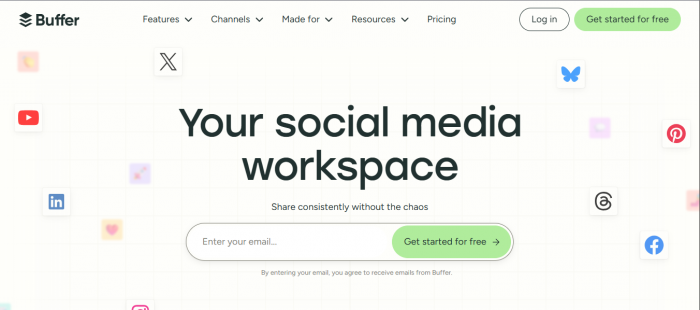
Buffer remains one of the most widely adopted social media scheduling tools, particularly among solo creators and small teams. Its appeal lies in its simplicity. The interface is clean, intuitive, and designed to minimize friction during onboarding.
In recent years, Buffer has added AI-powered assistance directly into its publishing workflow. Users can generate or refine captions inside the platform, making content creation smoother without adding complexity.
Compared to more feature-heavy enterprise platforms, Buffer focuses on clarity and usability. It doesn’t overwhelm users with layers of dashboards and settings. Instead, it prioritizes quick scheduling and straightforward publishing.
For startups, independent creators, and small marketing teams, Buffer offers a practical balance between functionality and ease of use.
Hootsuite: Enterprise-Level Control
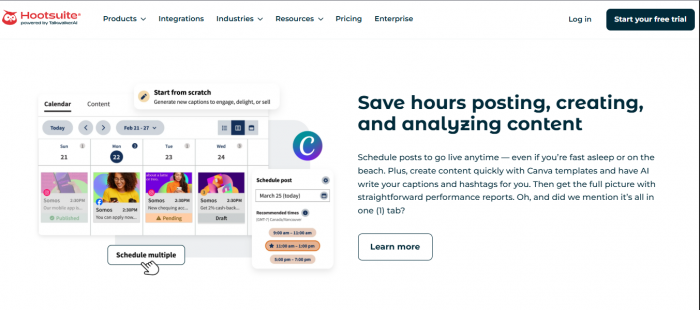
Hootsuite continues to dominate the enterprise segment of the market. It supports large teams managing multiple brands across numerous social channels.
The platform integrates AI tools like OwlyWriter and OwlyGPT to assist with caption creation and accelerate content workflows. Beyond publishing, Hootsuite offers a centralized social inbox, advanced analytics, approval workflows, and extensive third-party integrations.
Its strength lies in its depth. Agencies and multi-brand organizations often choose Hootsuite because it provides structured control over complex social operations.
The trade-off is that it can feel heavier and more expensive compared to creator-focused alternatives. But for organizations requiring full oversight and reporting, the depth justifies the weight.
Sprout Social: Analytics-Driven Scheduling
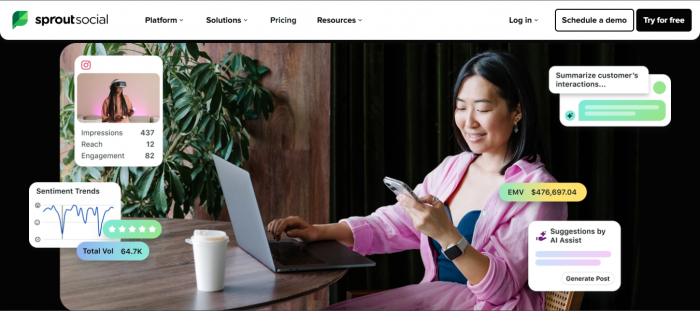
Sprout Social is widely recognized for its analytics capabilities. While it includes scheduling features similar to other platforms, its real differentiator is reporting depth and audience insight.
The platform has integrated AI capabilities to refine scheduling intelligence and improve engagement predictions. However, where Sprout truly excels is in social listening, audience segmentation, and performance analysis.
Mid-to-large organizations that prioritize data-driven decision-making often gravitate toward Sprout Social. It’s not just about posting content; it’s about understanding how that content performs and why.
For teams that value analytics as much as publishing speed, Sprout remains a top contender.
Later: Built for Visual Planning

Later has carved out a strong niche among visual brands, influencers, and ecommerce businesses. Its drag-and-drop calendar and feed preview system make it particularly appealing for Instagram-focused strategies.
The platform emphasizes visual planning, allowing teams to see how their content grid will look before publishing. This approach helps maintain brand consistency and aesthetic cohesion.
Later works especially well for brands where visuals are the primary driver of engagement. It simplifies the process of planning image-heavy campaigns while still supporting AI-assisted captioning and scheduling.
Loomly: Structured Campaign Management
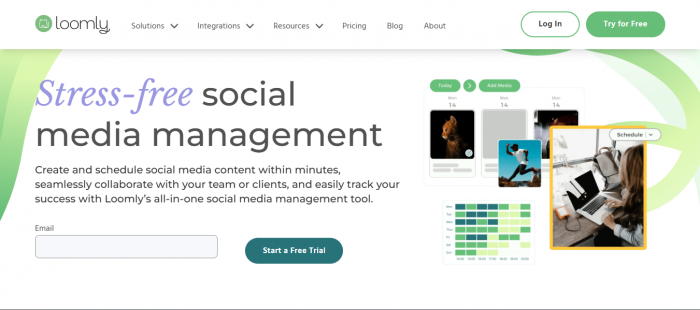
Loomly appeals to teams that need more than just post scheduling. It provides structured campaign planning tools alongside publishing features.
One of its advantages is flexibility. Loomly can integrate with automation platforms such as Zapier, allowing posts to be distributed across custom or niche networks. The platform also includes structured approval flows, making it useful for coordinated marketing campaigns that require review layers.
For teams managing organized campaigns rather than spontaneous posting, Loomly provides helpful structure.
Sendible: Agency-Focused Simplicity
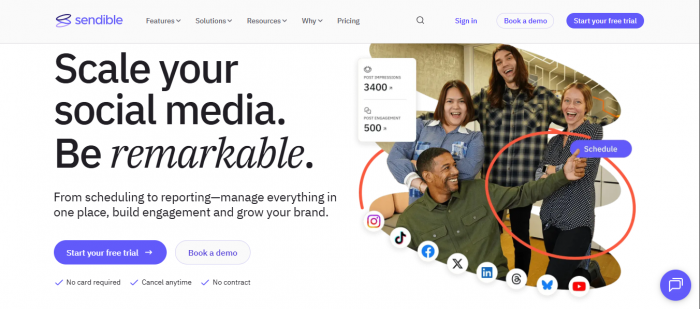
Sendible positions itself as an all-in-one solution tailored to agencies. It combines scheduling, monitoring, analytics, and reporting into a single dashboard.
Compared to enterprise-level platforms, Sendible often strikes a strong balance between functionality and affordability. Agencies managing multiple client accounts appreciate its multi-client dashboards and automation workflows.
It doesn’t aim to be the most complex tool in the market. Instead, it offers practical capabilities at a reasonable price point.
Vista Social: High Value for Growing Teams
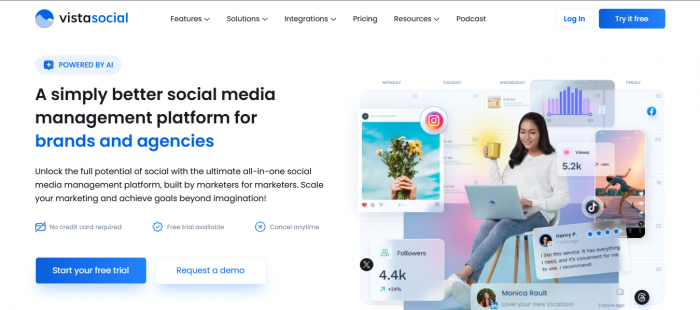
Vista Social has been gaining attention as a cost-effective alternative that still delivers robust functionality. Industry comparisons frequently highlight its competitive pricing alongside features typically found in higher-tier tools.
The platform includes collaboration tools, a unified inbox, scheduling automation, and analytics capabilities. For small to mid-size teams looking for strong value without enterprise pricing, Vista Social presents a compelling option.
Its growth reflects a broader demand for affordable yet capable AI scheduling solutions.
Zapier: The Automation Connector
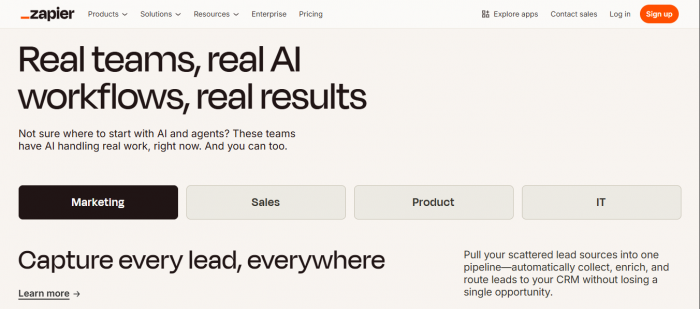
Zapier is not a social media scheduler in the traditional sense, but it has become increasingly important in AI-driven social workflows.
Teams use Zapier to connect AI writing tools, design platforms, and scheduling software into a unified automation pipeline. For example, a generated blog post can automatically trigger social captions, which are then pushed directly into a Buffer or Hootsuite queue.
Zapier enables automation beyond what standalone schedulers provide. It connects systems, reduces manual transfer tasks, and transforms isolated tools into integrated workflows.
For advanced teams building scalable operations, Zapier often becomes the backbone of automation.
Building a Modern AI Scheduling Stack
High-performing social media teams rarely rely on a single platform. Instead, they build layered systems.
A typical efficient stack includes AI writing tools for content generation, a scheduling platform like Buffer or Later for publishing, automation layers like Zapier for workflow integration, and analytics tools such as Sprout Social for performance tracking.
This layered approach allows teams to scale output without proportionally increasing workload. It transforms social media from a daily manual task into a structured operational system.
Key Trends Shaping Social Media Scheduling in 2026
Several clear shifts are redefining the space. AI-generated captions have become standard across major platforms. Cross-platform publishing from a single dashboard is expected rather than optional. Predictive timing algorithms are improving, offering smarter recommendations for engagement windows.
Perhaps most importantly, workflow automation is becoming the real differentiator. The biggest productivity gains now come not from individual features but from how well tools connect with one another.
The future of social media management is not just smarter posting. It is smarter integration.
Final Perspective
AI social media scheduling tools have evolved into full marketing infrastructure. Buffer remains one of the cleanest and simplest options for creators and small teams. Hootsuite and Sprout Social continue to dominate the enterprise tier. Later leads in visual planning, while Vista Social and Sendible offer strong value alternatives.
However, the most strategic move in 2026 is not selecting a single “winner.” It is building a layered system that combines AI-driven content creation, intelligent scheduling, automation, and performance analytics.
Teams that embrace this approach publish more consistently, adapt faster to trends, and scale their presence without multiplying manual effort.
In today’s landscape, AI scheduling is no longer just about convenience. It is about competitive advantage.
Post Comments
Be the first to post comment!