Table of Content
- Why “Ketchum” Looks Like a Word Even Though It Isn’t One
- Understanding Ketchum as a Proper Noun, Not a Dictionary Term
- Tracing the English Roots of the Ketchum Surname
- Ketchum as a Family Name and Lineage Marker
- Why Pop Culture Changed How We Interpret “Ketchum”
- How I Personally Interpret “Ketchum” Now
- The Most Accurate Way to Define Ketchum (In One Sentence)
- Final Thoughts: Why Ketchum Still Feels Meaningful
When I first came across the word “Ketchum,” I assumed it would be straightforward. It sounds English, it appears on multiple “meaning” websites, and it’s familiar thanks to pop culture. But once I started researching it properly, I realized something important: Ketchum is not a normal vocabulary word at all.
Instead, it’s a surname, a place name, a cultural reference, and a symbolic construct, depending on where and how it’s used. What confused me initially, and what clearly confuses many people online, is that all of these meanings get blended together without explanation.
So I decided to go step by step, trace every credible source, separate fact from speculation, and understand what Ketchum actually means, where it comes from, and why so many definitions disagree.
Why “Ketchum” Looks Like a Word Even Though It Isn’t One
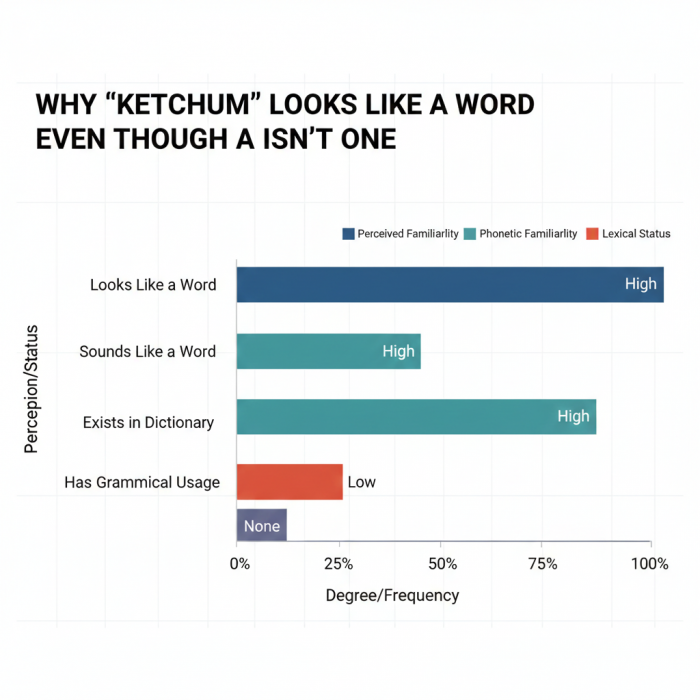
The first thing I noticed is that Ketchum feels like a word. It follows English spelling rules, it’s easy to pronounce, and it looks like it should mean something on its own. My brain automatically tried to associate it with verbs like catch or phrases like catch them.
That reaction is natural. Our brains are wired to recognize patterns, especially when a word looks familiar. “Ketchum” visually resembles:
- catch
- catch ’em
- catch them
- other English surnames derived from verbs
But linguistic comfort does not equal linguistic validity. When I checked serious lexical sources, one thing became clear very quickly: Ketchum is not a standalone English dictionary word. It does not function as a verb, noun, or adjective in standard English usage.
What it is, and this matters, is a proper noun.
Understanding Ketchum as a Proper Noun, Not a Dictionary Term
Once I reframed Ketchum as a proper noun, everything started making sense.
From a linguistic standpoint, Ketchum functions primarily as a surname and a place name. That means it behaves like:
- Smith
- Johnson
- Baker
- Turner
These words look meaningful, but they don’t function as modern vocabulary. You don’t “smith” something. You don’t “johnson” an object. In the same way, you don’t “ketchum” anything in standard English.
This distinction is critical, because many online “definition” pages blur the line between naming something and defining a word.
Tracing the English Roots of the Ketchum Surname
When I looked into surname history and genealogy sources, a clearer picture emerged.
The surname Ketchum is generally traced back to English origins, and most reputable sources agree that it likely evolved from occupational or descriptive roots. Early English surnames often came from:
- professions
- physical traits
- habitual actions
- locations
In this case, the strongest interpretation connects Ketchum to the verb “catch.” This does not mean the name literally translates to “catch them” in modern grammar. Instead, it suggests that the original bearer of the name may have been:
- a hunter
- a game catcher
- a bird catcher
- or someone known for trapping or capturing animals
Over time, pronunciation shifts, spelling variations, and regional accents transformed earlier forms into what we now recognize as Ketchum.
I also found that Ketchum and Ketcham are frequently treated as historical variants of the same name, which supports the idea that spelling stabilized later, not at the origin.
Ketchum as a Family Name and Lineage Marker
Another thing that stood out during my research is how deeply rooted Ketchum is as a family identifier rather than a linguistic one.
Genealogy and ancestry records consistently treat Ketchum as:
- a hereditary surname
- passed through family lines
- associated with migration from England to North America
There are family crests, lineage documents, and historical records tied to the name. This reinforces the idea that Ketchum’s “meaning” comes from identity and heritage, not from dictionary semantics.
This is where many casual “meaning” blogs go wrong, they try to extract philosophical symbolism from something that was never intended to function symbolically in language.
The Role of Place Names: Ketchum as Geography
At one point in my research, I noticed that Ketchum also appears frequently as a place name, especially in the United States.
Examples include:
- Ketchum, Idaho
- Ketchum, Oklahoma
- geographical features like lakes, ridges, and glaciers
In these cases, the name does not describe the place linguistically. Instead, the place is named after a person or family with the surname Ketchum. This is extremely common in English-speaking regions.
Again, this reinforces the idea that Ketchum spreads through naming, not meaning.
Why Pop Culture Changed How We Interpret “Ketchum”
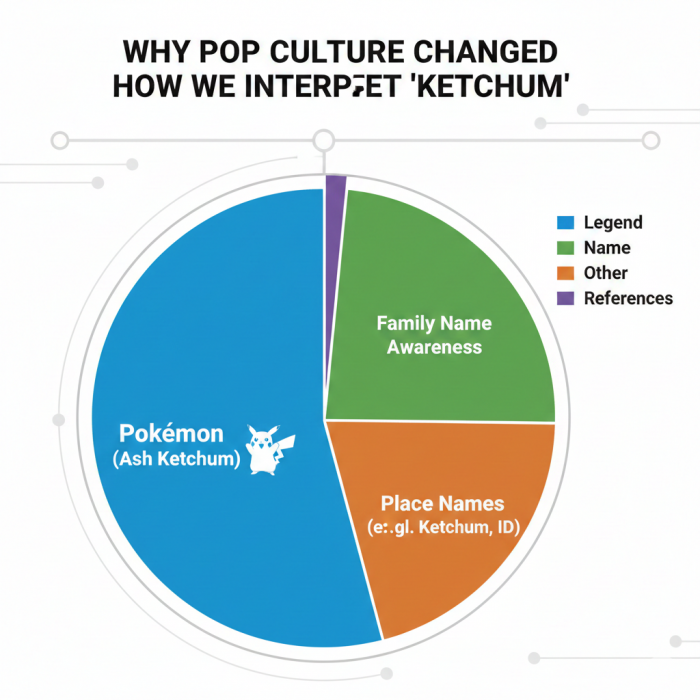
This is where things get interesting.
For many people today, the first time they ever encountered the name Ketchum was through Ash Ketchum, the protagonist of the Pokémon franchise. When I examined this connection, I realized why so many modern interpretations lean toward symbolic or playful meanings.
In this case, Ketchum was chosen deliberately because it sounds like:
“Catch ’em”
Which perfectly aligns with the franchise’s slogan:
“Gotta catch ’em all.”
This is not linguistic origin, it’s branding wordplay.
The Japanese character does not even have the surname Ketchum. The name was created during English localization to make the character instantly relatable to Western audiences.
So when people associate Ketchum with:
- ambition
- collection
- perseverance
- adventure
They’re responding to narrative meaning, not historical or linguistic meaning.
Why Slang and “Fun Meaning” Sites Are Misleading
As I went deeper, I noticed a pattern across many of the URLs you shared. A lot of sites:
- confidently define Ketchum as if it were a word
- invent emotional or spiritual meanings
- list personality traits
- create “symbolic interpretations” with no sources
These sites are not dictionaries or linguistic authorities. Most of them are content aggregation platforms that:
- reuse similar wording
- infer meaning from pop culture
- optimize for search engines
- prioritize engagement over accuracy
That’s why you’ll see wildly different explanations on different sites, even though none of them can cite historical usage of Ketchum as a vocabulary term.
Why All These Definitions Contradict Each Other
Once I stepped back, the reason for the contradictions became obvious.
Most online pages follow this flawed chain:
- Ketchum sounds like “catch”
- “Catch” feels meaningful
- Pop culture reinforces the association
- Content gets copied and rephrased
- Symbolic meaning replaces factual origin
At no point does this process require linguistic evidence. That’s why definitions multiply while accuracy declines.
How I Personally Interpret “Ketchum” Now
After doing all this research, here’s how I personally interpret the word when I see it online:
- If it’s capitalized, I treat it as a name, not a word.
- If it’s tied to Pokémon, I treat it as intentional wordplay, not etymology.
- If it’s described spiritually or emotionally, I recognize it as creative interpretation, not factual meaning.
- If it appears in genealogy or geography, I treat it as historical identity, not language.
This mental framework instantly clears confusion.
The Most Accurate Way to Define Ketchum (In One Sentence)
If I had to define it honestly, without exaggeration or filler, I would say this:
Ketchum is a surname of English origin, historically linked to occupational or descriptive naming, later reinforced through place names and pop culture, but not a standard English dictionary word.
It’s not poetic. It’s not mystical. But it’s accurate.
Final Thoughts: Why Ketchum Still Feels Meaningful
Even though Ketchum isn’t a vocabulary word, it feels meaningful because:
- it sounds active
- it resembles a verb
- it’s reinforced by culture
- it’s emotionally familiar
And that’s okay, as long as we don’t confuse cultural meaning with linguistic definition.
Once I separated those layers, Ketchum stopped being confusing and started being fascinating.
Post Comments
Be the first to post comment!