Table of Content
- Understanding AI-Driven Traffic Monitoring
- Core Technologies Behind Smart Intersections
- Real-Time Adaptive Traffic Signal Control
- Improving Road Safety with AI Monitoring
- Traffic Flow Optimization Across Entire Cities
- Environmental Benefits of Intelligent Traffic Systems
- Challenges in Deploying AI Traffic Monitoring
- The Future of AI-Powered Urban Mobility
- Conclusion
Urban traffic congestion is increasing as urban populations grow and vehicle ownership rises. Traditional traffic management methods such as fixed-time signals, manual monitoring, and static road sensors cannot effectively adapt to dynamic traffic conditions in dense cities. To address this limitation, cities are adopting AI-driven traffic monitoring systems that use computer vision, machine learning, and real-time data analytics to monitor traffic flow and manage intersections more efficiently.
These systems collect continuous data from cameras, sensors, and connected infrastructure to analyze traffic patterns and adjust signal timings dynamically. Smart intersections can detect congestion early, optimize vehicle movement, and identify potential safety risks. While AI-based traffic systems can significantly improve traffic efficiency and safety, their large-scale implementation requires strong infrastructure, investment, and effective data management.
Understanding AI-Driven Traffic Monitoring
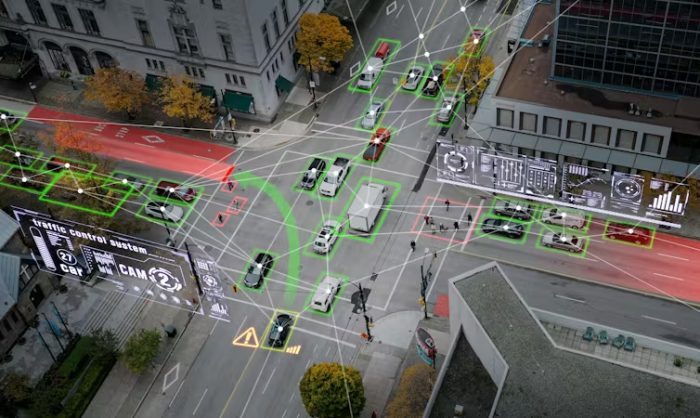
At its core, AI traffic monitoring replaces static traffic systems with data-driven decision making. Traditional traffic lights operate on fixed cycles that rarely adapt to real-time conditions. Even systems with basic sensors usually detect only vehicle presence, not the broader traffic situation.
AI monitoring systems operate very differently. They continuously analyze multiple streams of data to understand what is happening across an entire intersection or corridor.
These systems typically combine several capabilities:
● Computer vision models that analyze live video feeds from roadside cameras
● Sensor networks that track vehicle movement, speed, and density
● Predictive models that anticipate traffic flow changes
● Adaptive signal control systems that adjust light timings dynamically
Instead of waiting for congestion to happen, AI systems learn traffic patterns over time and respond proactively. For example, an AI system may detect a growing queue of vehicles on a side street and extend the green light by several seconds to prevent a backlog.
The result is a traffic control environment that behaves more like a real-time operating system for roads, continuously optimizing movement across multiple directions.
Core Technologies Behind Smart Intersections
AI-powered traffic monitoring depends on several complementary technologies that work together to interpret and manage traffic behavior.
Computer Vision and Camera Analytics
Modern traffic monitoring systems rely heavily on high-resolution cameras combined with computer vision models. These systems analyze video streams to identify vehicles, pedestrians, bicycles, and public transportation vehicles.
Unlike older camera systems that simply recorded footage, AI-enabled cameras perform live analysis. The system can count vehicles, detect turning patterns, identify illegal maneuvers, and monitor pedestrian crossings in real time.
Advanced systems can also classify vehicle types such as buses, motorcycles, or trucks. This allows intersections to prioritize certain traffic flows, for example giving buses longer green phases to improve public transit efficiency.
Edge Computing Infrastructure
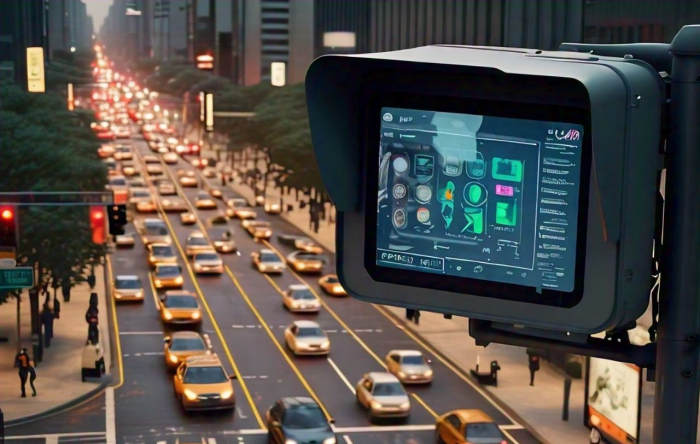
AI traffic systems often rely on edge computing devices installed near intersections. Instead of sending every video feed to a central data center, processing happens locally at the roadside.
This architecture offers several advantages. First, it reduces latency, allowing the system to react instantly to traffic changes. Second, it reduces bandwidth requirements because only summarized insights are transmitted to central traffic control centers.
Edge processing also helps cities maintain privacy by analyzing video data without storing identifiable information.
Sensor Fusion
In addition to cameras, AI traffic monitoring platforms often incorporate data from multiple types of sensors.
These may include radar sensors, lidar systems, inductive loop detectors embedded in roads, and GPS signals from connected vehicles. By combining these inputs, AI systems create a richer understanding of intersection conditions.
For example, radar sensors may detect vehicle speed while cameras analyze turning behavior. The system merges these data streams to determine whether traffic is flowing smoothly or beginning to slow down.
Machine Learning Traffic Models
AI traffic management platforms use machine learning models trained on large datasets of traffic patterns. These models identify patterns such as rush hour surges, event-related congestion, or unusual disruptions.
Over time, the system learns how traffic behaves in a particular location. This allows it to predict congestion before it forms and adjust signal strategies accordingly.
Some systems also use reinforcement learning techniques where the AI continuously improves its decision-making by testing different traffic signal strategies and learning from the results.
Real-Time Adaptive Traffic Signal Control
One of the most impactful applications of AI in traffic monitoring is adaptive signal control.
Traditional traffic lights operate on fixed schedules that rarely change unless manually adjusted by traffic engineers. AI-driven systems instead analyze live traffic conditions and continuously adjust signal timing.
For example, if traffic is heavier on a main road than expected, the AI may extend green light durations for that direction. If a pedestrian crowd forms at a crosswalk, the system may temporarily prioritize pedestrian crossing time.
This dynamic approach allows intersections to function more efficiently across varying conditions.
Cities that have deployed adaptive traffic control often report significant improvements in traffic flow, including reduced waiting times at intersections and smoother traffic movement across corridors.
Improving Road Safety with AI Monitoring
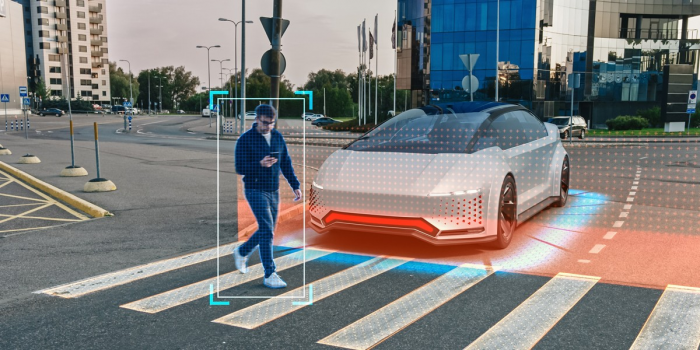
Beyond traffic efficiency, AI monitoring systems are increasingly used to improve road safety.
Computer vision systems can detect dangerous driving behaviors such as red-light running, illegal turns, and near-collision situations. When risky patterns are identified, the system can alert traffic authorities or adjust signal timing to reduce risk.
AI can also identify pedestrians entering crosswalks and ensure that vehicles remain stopped until the crossing is clear.
Another emerging application involves predictive safety analytics. By analyzing historical accident data and real-time traffic behavior, AI systems can identify intersections where collisions are likely to occur and intervene proactively.
For example, if the system observes frequent sudden braking in a particular lane configuration, traffic engineers can investigate and redesign the intersection layout.
Traffic Flow Optimization Across Entire Cities
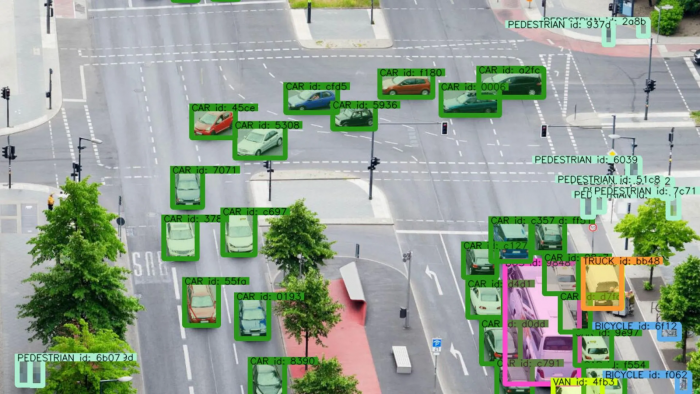
AI traffic monitoring becomes even more powerful when deployed across multiple intersections within a city.
Instead of optimizing each intersection independently, AI platforms coordinate signals across entire corridors. This coordination enables green wave traffic flow, where vehicles traveling at a certain speed encounter a sequence of green lights.
Coordinated systems also allow traffic managers to redirect vehicles dynamically during congestion, accidents, or construction.
Large metropolitan areas increasingly integrate AI traffic platforms into centralized urban traffic control centers, where engineers monitor citywide traffic conditions and intervene when necessary.
Environmental Benefits of Intelligent Traffic Systems
Traffic congestion is not only an inconvenience but also a major contributor to urban air pollution. Vehicles stuck in traffic emit more pollutants due to idling engines and repeated acceleration.
AI traffic monitoring systems help reduce these environmental impacts by improving traffic flow and minimizing stop-and-go conditions.
Studies in several cities show that adaptive traffic signal systems can reduce vehicle idle times significantly. This translates directly into lower carbon emissions and improved urban air quality.
Smart intersections can also support broader sustainability goals by prioritizing buses, bicycles, and pedestrian traffic where appropriate.
Challenges in Deploying AI Traffic Monitoring
Despite their advantages, AI traffic systems face several challenges that cities must address during deployment.
Infrastructure Costs
Installing smart intersections requires significant investment in cameras, sensors, computing infrastructure, and communication networks. Cities must balance these costs against long-term efficiency gains.
However, many municipalities are adopting phased deployment strategies, beginning with high-traffic corridors before expanding citywide.
Data Privacy Concerns
Video-based monitoring systems raise legitimate concerns about surveillance and data privacy. While most systems analyze footage without storing identifiable images, transparency about data use is critical.
Cities must establish clear governance policies regarding data storage, anonymization, and public accountability.
Integration with Legacy Systems
Many cities operate traffic control infrastructure that was installed decades ago. Integrating AI systems with older hardware and software can be technically complex.
Successful deployments often require upgrading signal controllers, communication networks, and data platforms.
Algorithm Bias and Reliability
AI models must be carefully tested to ensure they function reliably across diverse conditions such as weather changes, nighttime traffic, or unusual events.
If algorithms are poorly trained or biased, they may misinterpret traffic behavior or prioritize certain vehicle flows unfairly.
Continuous monitoring and periodic retraining of models are essential to maintaining system performance.
The Future of AI-Powered Urban Mobility
AI traffic monitoring is only one component of a broader transformation in urban mobility.
As connected vehicles become more common, intersections may eventually communicate directly with vehicles to coordinate movement. Vehicles could receive real-time information about signal changes, recommended speeds, and upcoming congestion.
Autonomous vehicles will further accelerate this transformation by interacting directly with smart infrastructure.
In the long term, AI-driven traffic systems could enable cities to operate road networks with the efficiency of digital systems. Traffic lights, road sensors, and vehicles would function as part of an integrated network that continuously optimizes transportation flows.
Conclusion
AI-driven traffic monitoring systems represent one of the most promising applications of artificial intelligence in urban infrastructure. By combining computer vision, predictive analytics, and adaptive signal control, smart intersections transform how cities manage traffic movement.
Rather than reacting to congestion after it forms, AI systems allow cities to anticipate problems, adjust traffic flows dynamically, and improve both efficiency and safety.
While challenges remain around infrastructure costs, data governance, and system integration, the trajectory is clear. As cities continue to expand and transportation demands grow, intelligent traffic systems will play an increasingly central role in shaping the future of urban mobility.
The intersection of artificial intelligence and transportation infrastructure is not simply a technological upgrade. It is the beginning of a broader shift toward data-driven cities, where urban systems learn, adapt, and respond in real time to the needs of their citizens.
Post Comments
Be the first to post comment!
Related Articles


Millions Still Use Softonic But Should You?
Corey Robson . Feb 27, 2026