Table of Content
- The First Encounter: What You Actually See
- Under the Hood: How Much Content Is Really There?
- Now the Confusing Part: What the Rest of the Internet Says
- Hype vs Reality: Two Voomixis, One Domain
- Trust, Transparency, and the Question of Reliability
- SEO, Strategy, and What the Owners Might Be Aiming For
- So, Is Voomixi Worth Your Time?
- The Honest Way to Frame Voomixi in 2026
Voomixi.com is one of those sites that makes you pause for a second and think, “Wait, what exactly are you trying to be?” On the surface, it looks like a straightforward multi‑category blog. Yet if you scan the web, you’ll find grand claims about Voomixi as a powerful digital platform, creative hub, even a productivity environment. That gap between the hype and the homepage is where the real story of Voomixi sits.
Let’s look at Voomixi less like a static website and more like a “work in progress” digital project: how it presents itself, how others frame it, and what that combination means for anyone landing there.
The First Encounter: What You Actually See
Open Voomixi.com in a new tab and ignore everything you’ve read elsewhere for a moment. What you’re greeted with is not a login screen, onboarding wizard, or sleek SaaS dashboard. It’s a content site. A blog. A magazine‑style layout with familiar trappings: logo, navigation menu, category links, article cards, and a traditional footer.
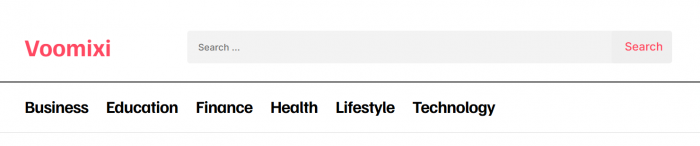
The navigation is built around broad, mass‑appeal categories. You’ll see sections for Technology, Health, Lifestyle, Business, Finance, and Education. Click into any of those and you’re taken to an archive page listing posts in that category. Each article opens into a conventional blog view: title at the top, text in the middle, perhaps an image, and basic meta information.
What you do not see is just as important:
● There’s no obvious “Sign up” or “Start now” button leading to a product experience.
● There’s no workspace, projects area, or toolkit where you configure anything.
● There’s no interface suggesting Voomixi is software you “use” rather than content you “read”.
In other words, the lived reality of the site is a multi‑topic blog, not an app or digital suite.
The overall design is functional, if unremarkable. The typography is readable, the structure is familiar, and the site doesn’t assault you with intrusive ads or pop‑ups in its current state. At the same time, it doesn’t feel especially opinionated or branded. You could swap the logo and color palette and this template would easily pass as a hundred different small blogs on the web.
Under the Hood: How Much Content Is Really There?
Close the homepage and start exploring category by category, and a pattern emerges: Voomixi feels more like a framework than a fully stocked library.
In Technology, for instance, you’d expect a modern site to be brimming with reviews, explainers, how‑tos, and breakdowns of tools and trends. Instead, the visible article count is modest. Posts exist, but they lean toward basic overviews rather than long, data‑rich, heavily sourced analysis. Structurally, headings and formatting are there, but you don’t get the sense that this is a deeply optimized, relentlessly updated tech hub. It’s more like a generalist blog poking into tech topics when it can.
Health is an even more delicate test. Health content lives in the “Your Money or Your Life” zone where credibility and expertise matter more than anywhere else. On Voomixi, the Health section is thin. There aren’t many posts to begin with, and those that do appear don’t loudly foreground medical credentials or robust referencing. As a casual read, it is fine; as a primary health authority, it falls short of what a cautious reader should demand.
Lifestyle reads like you would expect from a small, general‑interest blog: accessible topics, simple explanations, light commentary. It doesn’t try to reinvent the wheel, but it also hasn’t carved out a distinctive voice that makes you think, “Only Voomixi would say it this way.” It’s content you can skim quickly and understand, but it doesn’t linger in your mind.
Business, Finance, and Education are present as menu items and archives, yet they show the same early‑stage pattern. There are posts, but not many. Few of them lean on original data, case studies, or detailed frameworks that separate “generic blog” from “serious niche resource”. It gives the impression of a site that has mapped out its intended territory but hasn’t had the time, resources, or editorial push to populate that map with real depth.
If you zoom out, you can almost see the strategy that might be behind this: put up a multi‑category architecture that can, over time, be filled with content. As of now, though, Voomixi is much closer to a skeleton than a fully fleshed‑out body of work.
Now the Confusing Part: What the Rest of the Internet Says
If all you had to go on was the live site, you would call Voomixi “a young, multi‑category blog with thin but functional content.” The confusion begins when you search for “Voomixi com review” or similar keywords and start reading what other sites say.
Several third‑party write‑ups paint a very different picture. In their telling, Voomixi is not just a blog. It’s:
● An “all‑in‑one digital hub for creators” where you host portfolios, share work, receive feedback, and collaborate.
● A sort of “digital platform changing online experiences,” complete with dashboards, analytics, modular workspaces, and the ability to streamline workflows.
● In some descriptions, something closer to a browser‑like environment focused on “speed and simplicity in web browsing,” which you would use day‑to‑day like a tool, not casually visit like a blog.
These pieces speak confidently about features: AI‑powered assistance, cross‑device sync, customizable workspaces, advanced controls, comprehensive analytics. They mention user success stories and business use cases, sometimes even implying that teams are “running their entire operations” through Voomixi.
But when you compare that narrative with the actual experience at Voomixi.com, the two do not align. There is no visible sign‑in flow, no product tour, no dashboard, no list of pricing plans, no “Get started” funnel that would indicate a live software product behind the domain. What the articles promise and what users can do are not the same thing.
That doesn’t automatically mean ill intent, but it does suggest something important: a large chunk of the “Voomixi platform” conversation online seems to be driven by promotional, template‑like content rather than hands‑on, user‑tested reviews.
Hype vs Reality: Two Voomixis, One Domain
It might help to think of “two Voomixis” here.
The first is the theoretical Voomixi described in external articles. In this version, Voomixi is a polished platform with a defined feature set, deep integrations, and a user base that relies on it for creativity or business operations. This Voomixi sounds like a cross between a productivity suite, a creative community, and a browser.
The second is the practical Voomixi that anyone can verify today by visiting Voomixi.com. This one is a public multi‑category blog with a modest number of posts across Technology, Health, Lifestyle, Business, Finance, and Education, built on a conventional website template.
You can move between those two images, but you can’t inhabit both at the same time. The internet’s narrative and the site’s reality haven’t caught up with each other.
For the user, this mismatch has real implications. If you arrive expecting software, you’ll be disappointed. If you arrive expecting a light blog, you’ll find exactly that, but you may still question why so many places online describe something more ambitious.
Trust, Transparency, and the Question of Reliability
The mismatch naturally leads to a bigger question: how much should you trust Voomixi as a source of information?
On‑site, Voomixi exhibits several traits of a typical early‑stage blog:
● Simple layout and navigation that make it easy to move between categories and posts.
● Limited visible information about who exactly runs the site, what their qualifications are, and how the editorial process works.
● Articles that rarely showcase extensive referencing, original data, or expert credentials, especially in high‑stakes areas like health and finance.
External write‑ups that take a more cautious tone tend to highlight the same concerns: Voomixi, as a brand, is lightly documented. There’s not a strong, public, verifiable identity behind it yet.
From a basic safety standpoint, the site uses HTTPS, and there’s no widely reported pattern of malicious behavior tied directly to the main domain. The risk is less about technical danger and more about informational reliability. If the people behind the site are not clearly visible and if the content remains thin, it’s not the place to base health, financial, or legal decisions on.
So the sensible stance is: treat Voomixi like any other young, generalist blog you’ve just discovered. It’s fine for casual reading. For anything critical, cross‑check elsewhere.
SEO, Strategy, and What the Owners Might Be Aiming For
Looking at Voomixi through an SEO and content‑strategy lens makes its current shape easier to understand.
The category layout suggests an attempt to capture traffic across several major verticals: tech, health, lifestyle, business, finance, education. That’s an ambitious map for any single site, especially one that does not yet have deep content in each area. Modern content frameworks generally reward topical depth within narrower themes rather than breadth across many loosely connected subjects.
Titles and headings on Voomixi tend to follow familiar patterns that align with informational search intent. You’ll see queries implied in the structure: definitions, benefits, overviews, basic advice. That indicates some awareness of search behavior, but it doesn’t yet feel like a carefully orchestrated topical‑cluster strategy with deep internal linking.
Category pages themselves function more like plain archives than fully optimized “hub pages.” They list posts but don’t offer a strong introductory explanation of the topic, highlight key subtopics, or guide the reader through a structured journey. For an SEO‑minded observer, it’s clear that the architecture exists, but the strategic content layers that typically sit on top of it are still missing.
If the people behind Voomixi decide to lean into this project, they’ve got a few obvious paths:
● Narrow their focus and build authority in one or two categories instead of all six at once.
● Invest in longer, better‑sourced, genuinely useful articles that stand out in search results.
● Make their authors and editorial standards more visible so readers understand who is speaking to them.
● Transform category pages into true content hubs instead of simple lists.
Right now, though, Voomixi feels like a site that’s laid down its scaffolding and hung a few pieces on it, without yet building up the kind of mass or depth that moves the needle.
So, Is Voomixi Worth Your Time?
Whether Voomixi is “worth it” depends less on the marketing narratives around it and more on what you are hoping to get from the site.
If you are a casual reader who stumbles in from Google looking for a short explanation on a tech or lifestyle topic, Voomixi can serve that role. The articles are readable, the layout is simple, and you won’t need a manual to navigate the site.
If, however, you arrive expecting the sophisticated platform described in some third‑party reviews, you’ll be disappointed. That product experience, at least on the public‑facing Voomixi.com domain, simply isn’t there right now.
And if you are making decisions that truly matter about your health, your finances, or your business strategy Voomixi, in its current state, should not be your only source. The content is too thin, the expertise too opaque, and the brand identity too under‑explained for that level of trust.
The Honest Way to Frame Voomixi in 2026
If you strip away the hype and just look at the evidence, Voomixi in 2026 is best described like this:
It is a young, multi‑category blog with a simple design and a broad set of ambitions, but limited depth across each of its chosen topics. Around it, a cloud of external articles describes a much more powerful “platform” than users can actually see or use, which creates an expectations problem and raises fair questions about how those reviews were written.
That doesn’t make Voomixi inherently bad or dangerous. It makes it incomplete. It’s a site that needs to grow into the story that has been told about it or, alternatively, clarify what it really wants to be and let go of the platform mythology.
Until one of those two things happens, the safest mental model is simple: treat Voomixi as a basic information site you can browse, not as a transformative tool that will replace your apps, your browser, or your expert resources.
Post Comments
Be the first to post comment!
Related Articles