Table of Content
- Payment Apps Must Evolve into Financial Ecosystems
- Embedded Finance Will Define Competitive Advantage
- Artificial Intelligence Must Power Risk and Personalization
- Security Must Be Invisible but Absolute
- Cross-Border and Multi-Currency Infrastructure Is Essential
- Real-Time Settlement Is the New Standard
- Financial Wellness Features Will Differentiate Leaders
- Super App Architecture Will Dominate
- What Is the Future of Payments in 2026?
When I evaluate payment apps in 2026, I no longer judge them by how quickly they move money from one account to another. That is now the minimum requirement. A truly future-ready payment app operates as financial infrastructure, identity layer, data engine, and ecosystem gateway all at once. The future of payments is not a feature upgrade. It is an architectural transformation.
Let me break down what that actually means in practical, real-world terms.
Payment Apps Must Evolve into Financial Ecosystems
In 2026, a payment app cannot survive as a single-purpose transaction tool. The strongest platforms are transforming into ecosystem hubs where payments act as the foundational layer connecting multiple services. Super app evolution demonstrates how payments are becoming embedded within ride-hailing, insurance, commerce, subscriptions, lending, and even digital identity systems.
This means a future-ready payment app must be built with extensibility in mind. It should support API integrations that allow external services to plug into the payment rail. Instead of forcing users to leave the platform for credit services, wealth management, or subscription tracking, the payment layer must facilitate those interactions internally. Architecture becomes modular rather than rigid.
If an app cannot integrate seamlessly with embedded financial services, it will feel outdated in a landscape where users expect everything to function within a unified digital environment.
Embedded Finance Will Define Competitive Advantage
Embedded finance is no longer experimental. Insights from fintech outlooks show how non-banking companies are integrating lending, insurance, and credit tools directly into their platforms.
For a payment app to be future-ready, it must allow contextual financial services. This means that when a user completes a transaction, the system can intelligently offer installment payments, credit extensions, or micro-loans without redirecting them to a separate banking app.
Understanding mechanisms like overdrafts, illustrates how short-term liquidity tools are becoming integrated into digital wallets. A forward-looking payment platform in 2026 must provide predictive credit buffers, proactive low-balance alerts, and AI-powered repayment flexibility.
Payments and lending are no longer separate industries. They are merging into a unified financial interface.
Artificial Intelligence Must Power Risk and Personalization
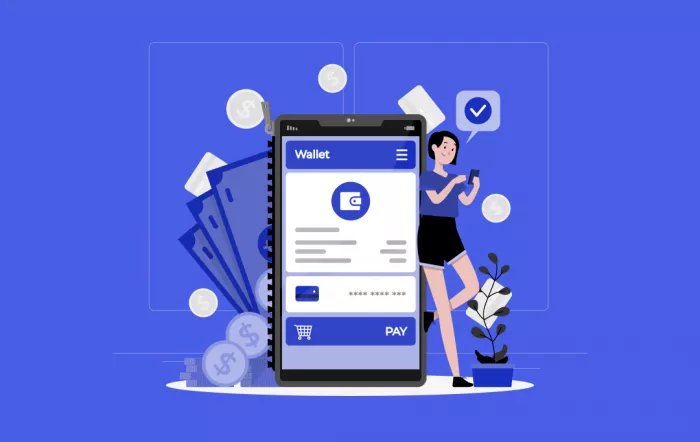
Artificial intelligence is not optional in 2026. It is foundational.
Mobile development studies such as the one from Appinventiv emphasize AI integration across app ecosystems. In payment technology, this translates into behavioral fraud detection, dynamic risk scoring, and predictive transaction modeling.
Traditional rule-based fraud systems operate on static conditions. Modern fraud prevention systems analyze user behavior in real time. They evaluate transaction frequency, device patterns, location anomalies, and contextual inconsistencies within milliseconds. This allows risk mitigation without interrupting legitimate transactions.
But AI is not just about fraud prevention. It also drives personalization. A future-ready payment app analyzes spending behavior and provides contextual insights. It can suggest smarter payment routing, offer subscription alerts, or optimize currency exchange timing. Intelligence becomes embedded within every transaction.
The goal is to make payments safer and smarter without increasing user friction.
Security Must Be Invisible but Absolute
Security compliance remains non-negotiable. The PCI Security Standards Council guidelines outline strict frameworks for protecting cardholder data. However, compliance is merely the starting point.
In 2026, users expect zero tolerance for breaches. Payment apps must incorporate tokenization, end-to-end encryption, and zero-trust architecture principles. Device-level encryption and secure enclave integrations are becoming standard.
The key shift is that security must operate silently. If authentication feels cumbersome, users disengage. Biometric verification, passkey-based authentication, and behavioral biometrics are replacing password-heavy models.
A future-ready payment app protects data without reminding users that it is doing so.
Cross-Border and Multi-Currency Infrastructure Is Essential
Globalization is accelerating digital commerce. Platforms like Skrill demonstrate how cross-border transactions and multi-currency wallets are now mainstream expectations.
In 2026, remote work, international freelancing, and global e-commerce demand seamless currency conversion. A payment app that cannot handle real-time foreign exchange, cross-border transfers, and compliance across jurisdictions will struggle.
Future readiness requires regulatory agility and international AML alignment. Real-time settlement systems must operate across currency zones. Interoperability becomes more important than exclusivity.
The next generation of payment apps will not be country-specific. They will be globally adaptive.
Real-Time Settlement Is the New Standard
The tolerance for delayed payments has disappeared. Consumers expect instant transfers, instant refunds, and immediate settlement notifications.
Real-time payment rails are expanding globally. A future-ready payment app integrates with instant payment systems and provides live transaction visibility. Merchants expect immediate access to funds. Consumers expect confirmation within seconds.
Speed has moved from competitive advantage to baseline expectation.
Financial Wellness Features Will Differentiate Leaders
Another defining feature of future-ready payment apps is embedded financial intelligence. Instead of simply recording transaction history, advanced platforms analyze spending trends and provide actionable insights.
Payment apps are becoming financial advisors in lightweight form. They detect subscription leakage, forecast upcoming bills, identify unnecessary expenses, and recommend savings allocations.
This is not about budgeting templates. It is about intelligent cash-flow forecasting powered by transaction data.
The payment app becomes a personal finance dashboard.
Super App Architecture Will Dominate
Super app architecture is not a passing trend. It represents structural evolution.
Payment systems increasingly function as the economic engine inside multi-service ecosystems. In this structure, payments power ride bookings, food orders, entertainment subscriptions, and micro-investments.
A payment app that wants to remain relevant must adopt open API ecosystems, mini-app frameworks, and third-party integration capabilities.
In 2026, isolation is a liability. Integration is power.
What Is the Future of Payments in 2026?
The future of payments is contextual, AI-driven, ecosystem-integrated, and globally interoperable. Payment technology is becoming programmable infrastructure rather than a standalone utility.
Instead of asking how money moves, the real question becomes how intelligently it moves and how securely it integrates into digital life.
Post Comments
Be the first to post comment!
Related Articles


How Web Complexity Affects Android Devices
Corey Robson . Mar 17, 2026