
Voice AI refers to artificial intelligence technology that enables machines to understand, generate, and interact using human speech. It plays a key role in powering voice assistants, conversational bots, voiceovers, transcription systems, and interactive audio experiences across industries.
Features
Who Can Use Voice AI
Voice AI is suitable for developers, enterprises, content creators, and product teams looking to build voice-enabled experiences. It supports both consumer-facing applications and internal enterprise systems that rely on speech-based interaction.
Huge library of community‑made voices.
Real‑time voice changer plus soundboard support.
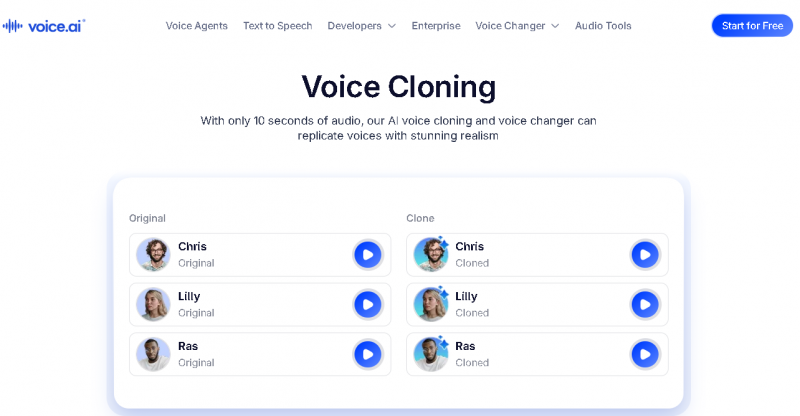
Can clone voices from short audio clips.
Works well for pranks, streams, casual content.
Needs high‑end GPU; mid PCs get lag and glitches.
Many voices sound robotic or low‑quality in real use.
*Price last updated on Feb 2, 2026. Visit voice.ai's pricing page for the latest pricing.