
Zapier is a no-code automation platform that enables users to connect applications and automate workflows without writing code. The platform is commonly used to reduce manual data transfer and repetitive operational tasks. Zapier also supports AI-assisted automation steps, allowing users to incorporate intelligent processing into workflows while maintaining control over triggers and actions.
How It Works
Zapier workflows, known as Zaps, are created by defining a trigger event followed by one or more actions. Users can include conditional logic, filters, and AI-based steps to handle more complex scenarios. Automations run in the background once activated.
Use Cases
Automates workflows between many apps with AI suggestions
Easy setup with no coding required
Supports thousands of app integrations
AI can help generate and improve automation logic
Saves time on repetitive business processes
Works with complex multi‑step workflows
Reliable and scalable for teams and businesses
Offers scheduling and trigger‑based automation
Advanced AI features often require higher‑tier plans
Can be expensive for heavy or large‑scale use
AI suggestions may need manual refinement
Setup complexity increases with advanced workflows
Some integrations have limited capabilities
Not always ideal for highly customized AI logic
Occasional lag or execution delays with complex automations

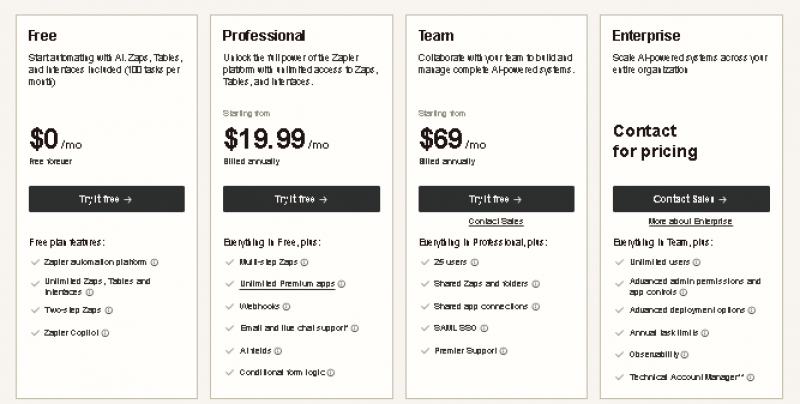
*Price last updated on Jan 7, 2026. Visit zapier.com's pricing page for the latest pricing.