Table of Content
- Midjourney and Leonardo AI : Two Leaders, Two Philosophies
- Feature Set and Capabilities
- Pricing and Value for Money
- User Experience and Learning Curve
- Workflow Integration and Productivity
- Performance, Speed and Reliability
- Output Quality and Style Characteristics
- Use Cases: Who Is Each Best For?
- Privacy and Visibility
- Ethics and Safety
- User Ratings and Sentiment
- Final Verdict: Which One Should You Choose?
Midjourney and Leonardo AI are now two of the most influential AI image generators, but they approach the same problem very differently. One behaves like an “artist in a box”; the other feels more like a visual production studio built for real‑world workflows.
Midjourney and Leonardo AI : Two Leaders, Two Philosophies
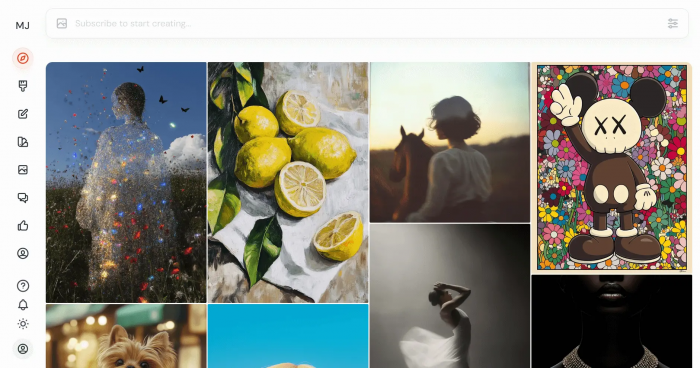
Midjourney built its reputation on jaw‑dropping, stylized images that look like concept art from a AAA studio. It originally grew inside Discord, where users interact with a bot using text prompts and commands, and now also offers a web interface mainly for browsing and managing creations. Its reputation is built on artistic quality, imaginative outputs and an extremely active creative community.
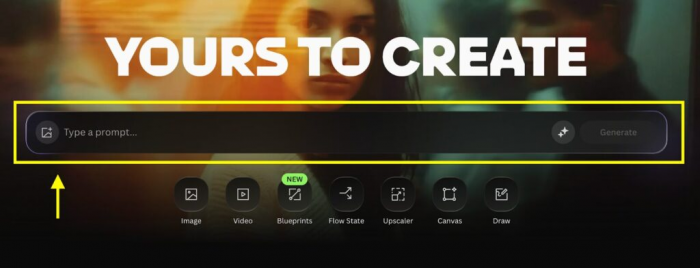
Leonardo AI, on the other hand, has focused on giving creators a browser‑based control panel for image generation, with custom models, batch tools, and a more “production” mindset. It includes text‑to‑image, custom model training, an AI canvas for editing, batch generation, background removal and even basic video generation features. Where Midjourney focuses on artistic output, Leonardo focuses on control, consistency and scaling visual production for brands, marketers, game artists and content teams.
Feature Set and Capabilities
Both tools can turn text prompts into images, but they serve different types of users and projects.
Midjourney centers almost everything on the prompt. You type /imagine, describe what you want, tweak a few parameters like aspect ratio or stylization strength, and let the model interpret creatively. You can re‑roll, create variations or upscale, but the main “interface” is language plus a handful of flags. This makes Midjourney incredibly powerful for people who love prompt craft and want a bit of unpredictability in the results.
Leonardo AI behaves more like a creative suite. You get a dashboard where you choose models, set parameters with sliders, run batch jobs, train custom models and refine outputs inside an AI canvas. You can pick specific base models optimized for realism, illustration or particular styles, then fine‑tune them on your own data for brand‑ or character‑consistent outputs. For teams that need not just beautiful images but repeatable, controllable production, this is a huge advantage.
Feature snapshot
| Area | Midjourney | Leonardo AI |
| Text‑to‑image | Yes, highly refined engine | Yes, with multiple base models and style presets |
| Custom model training | Limited user‑facing options | Full custom models and dataset management |
| Image editing (canvas) | Variations and re‑rolls | AI canvas for in‑painting, out‑painting, and refinements |
| Batch generation | Grid outputs per prompt | Bulk generation and workflow‑style runs |
| Background removal | Not native; external tools needed | Built‑in background removal and transparent PNG export |
| Video generation | Not a core feature | Basic AI video tools (short motion and animations from stills) |
| Free tier | No ongoing free tier | Daily free tokens available |
Pricing and Value for Money
Pricing is one of the clearest differences between Midjourney and Leonardo AI.
Midjourney uses a subscription model based on GPU time, with “fast” and “relax” modes. Entry‑level plans sit in the lower monthly price range and include a limited number of fast generations. Higher tiers add more GPU hours, concurrent jobs and features like Stealth Mode (private generations). Relax mode on some plans effectively gives you unlimited slower generations, making Midjourney attractive for users who spend many hours experimenting and iterating.
Leonardo AI uses a token/credit system layered on top of a generous free tier. Free users get a daily allowance of tokens, enough for light or exploratory use. Paid plans start around the same ballpark as Midjourney’s entry plans but typically offer thousands of tokens, which can translate into a large number of images, especially if you use efficient settings. Higher tiers add more tokens, higher limits and advanced controls, often at a cost‑per‑asset that is very competitive for serious production.
Typical plan comparison
| Plan level | Leonardo AI | Midjourney |
| Free tier | Daily tokens, usable for small projects and testing | No permanent free tier |
| ~10 USD / month | Thousands of fast tokens, suitable for heavy solo use | Basic plan, limited fast generations |
| ~30 USD / month | Tens of thousands of tokens, some “unlimited slow” options | Standard plan with relax mode (unlimited slow) |
| ~60 USD / month | More credits plus expanded features and privacy options | Pro plan with more GPU hours and Stealth Mode |
| Enterprise | Custom “pro/enterprise” programs | Business/enterprise tiers |
In practical terms: if you’re measuring cost per usable asset, Leonardo often comes out ahead for structured campaigns and batch work. If you care more about endless creative exploration and don’t mind subscription‑only access, Midjourney can be worth paying for month after month.
User Experience and Learning Curve
User experience is another area where the tools clearly diverge.
Midjourney is still heavily tied to Discord. You join a server, type commands like /imagine, add parameters and wait for the bot to respond with a grid of images. For some creators, this is exhilarating: you’re in a live stream of creativity, seeing what others generate in real time and learning from their prompts.
For less technical or non‑gamer users, Discord itself can be a barrier. Explaining it to clients or stakeholders is not always straightforward, even though Midjourney now has a web view for browsing and organizing images.
Leonardo AI lives in a conventional web app. You log in, choose a model, type a prompt, adjust sliders and click a button. Parameters like guidance scale, step count, image size and style strength are surfaced visually, which feels natural to people used to Figma, Canva or other SaaS tools. For teams who need to standardize how the tool is used across multiple people, this kind of interface is easier to document and train.
UX summary
| UX Aspect | Midjourney | Leonardo AI |
| Primary interface | Discord chat (plus a web gallery/manager) | Web dashboard |
| Learning curve | Simple prompting but Discord norms add complexity | Gentle; similar to other design and SaaS dashboards |
| Collaboration style | Very community‑driven and public by default | Project‑oriented, account‑based and more controlled |
| Control exposure | Mostly via prompts and a few flags | Many visible controls, toggles and presets |
Workflow Integration and Productivity
In real workflows, you rarely need one image; you need a coherent set of assets that match a brief, brand or character.
Midjourney is outstanding for ideation. It is widely used for moodboards, concept frames, storyboarding and visual R&D. Creative professionals often use it at the start of a project to explore color palettes, compositions and styles at a speed that would be impossible manually. Once a direction is chosen, the chosen Midjourney images are frequently exported and refined in tools like Photoshop, Illustrator or video editors to fit final deliverable requirements.
Leonardo AI focuses more on reducing hand‑offs. Its batch generation features let you produce many variations in one go, and custom models help maintain consistent characters, products or brand elements across hundreds of outputs. The AI canvas allows localized edits removing or changing objects, extending scenes, or adjusting details without immediately switching to another tool. Built‑in background removal and image‑to‑image workflows streamline repetitive tasks like creating a series of product shots on different backgrounds or producing variations of a single layout for A/B testing.
For content and SEO work, Leonardo is particularly strong when you need a large volume of aligned visuals: consistent blog illustrations, product comparison images, or thematic banners. Midjourney, on the other hand, remains a favorite for standout thumbnails, hero graphics and editorial art where originality matters more than rigid consistency.
Performance, Speed and Reliability
Both tools are fast enough for daily professional use, but they structure performance differently.
Midjourney’s speed is tied to your plan and system load. “Fast” mode can be quick for simple prompts, but heavy prompts or peak usage hours can push generation times to a minute or more. Relax mode trades speed for volume: generations can take longer, but you’re not as worried about running out of GPU minutes. This model fits long experimentation sessions where you queue multiple jobs and review them later.
Leonardo AI’s credit‑based system encourages more predictable use. Generations normally complete in seconds for draft quality and under a minute for higher‑quality or larger images, depending on settings. You decide when to spend more tokens on higher fidelity or bigger resolutions. Because usage is governed by credits rather than unlimited bursty demand, performance tends to feel stable and predictable across a workday.
From a reliability standpoint, both platforms have matured significantly. Midjourney’s massive public usage can sometimes mean visible congestion, while Leonardo’s more controlled usage patterns feel slightly more predictable for team workflows. For time‑sensitive commercial projects, that predictability is often as important as raw speed.
Output Quality and Style Characteristics
Output quality is where opinions are strongest, and both sides have passionate supporters.
Midjourney has become synonymous with “AI art” for a reason. Its images often have dramatic lighting, intricate details and a cohesive visual style that makes even simple prompts look premium. It excels at painterly, cinematic and surreal aesthetics, and it is especially strong in concept art, fantasy scenes, sci‑fi imagery and stylized portraits. Even without highly engineered prompts, the default look tends to be very polished.
Leonardo AI focuses more on controllability and realism, particularly when paired with the right model and settings. It performs very well on product renders, game assets, user interface elements and realistic photography. Crucially, its custom model capabilities mean you can lock in a specific character, art direction or brand visual language and reproduce it consistently. This makes it a better fit for asset pipelines where you have to maintain continuity across campaigns or game levels, not just create one‑off masterpieces.
Quality comparison
| Dimension | Midjourney | Leonardo AI |
| Artistic “wow” | Extremely strong; often looks like high‑end concept art | Strong, but often tuned for practical, production‑ready use |
| Photorealism | Very good in recent versions | Excellent with the right models and parameters |
| Consistency | Can vary, especially with highly creative prompts | High consistency with custom or fine‑tuned models |
| Faces and anatomy | Generally strong, occasionally stylized distortions | Good control; can be improved via model tuning |
In simple terms: Midjourney is ideal when you want art; Leonardo is ideal when you want assets.
Use Cases: Who Is Each Best For?
The way people actually use these tools reveals clear patterns.
Midjourney is favored by concept artists, illustrators and designers who want to explore visual ideas quickly. It is popular among YouTubers, streamers and content creators for bold thumbnails and hero graphics that stand out in feeds. Agencies often use it for moodboards, early pitch visuals and explorations where the brief is still evolving and creative richness is more important than strict brand adherence.
Leonardo AI is widely used by marketers, product teams and small businesses that need large numbers of consistent, brand‑safe visuals. E‑commerce teams can use it to generate product shots and lifestyle imagery at scale. Game developers and asset creators use its model training and batch tools to produce coherent characters, environments and props. For AI influencer or mascot‑style projects, Leonardo’s ability to keep faces and outfits consistent across many images is a major advantage.
Use‑case alignment
| User type / Goal | Better fit | Why |
| Solo artist exploring styles | Midjourney | Maximum artistic flair and community inspiration |
| Brand/SEO content at scale | Leonardo | Consistency, batch tools, free tier and controllable output |
| YouTube thumbnails & socials | Midjourney | Eye‑catching, scroll‑stopping artwork |
| Product shots / mockups | Leonardo | Photorealism, background removal and workflow features |
| AI influencer / mascot IP | Leonardo | Character consistency and custom model training |
| Agency moodboards and pitches | Midjourney | Fast exploration and impactful visuals |
Privacy and Visibility
Privacy and how your images are exposed is an important consideration, especially for client work or unreleased products.
Historically, Midjourney’s lower‑tier plans have emphasized public generation. Images were visible in shared Discord channels and accessible in public galleries by default, which is part of what fuels its vibrant community. Truly private or “stealth” generation has typically required higher‑tier plans. For creators working on confidential campaigns, this means you either need to pay for the right tier or be comfortable with some level of visibility in the community.
Leonardo AI tends to lean more toward controlled, project‑oriented privacy. Generations live inside your account in a web dashboard and are not automatically pushed into a highly public community feed in the same way. Paid plans generally offer stronger privacy controls by default, which suits agencies, in‑house teams and anyone working under NDAs. While both platforms encourage sharing and community, Leonardo’s default posture is more aligned with conventional SaaS expectations around private workspaces.
Ethics and Safety
As AI image generation matures, ethics and safety are becoming central to tool selection.
Midjourney operates one of the largest AI art communities in the world, which brings both opportunity and risk. On the one hand, it has robust content filters, moderation policies and banned prompt categories. On the other hand, sheer volume and the community‑driven nature of Discord can make enforcement challenging. There are also broader debates about training data, style mimicry and artist rights, which affect public perception and how comfortable some brands feel using the tool.
Leonardo AI, with its more controlled environment, generally positions itself as a professional tool where policy compliance is easier to monitor. It implements content filters and moderation as well, and its dashboard‑based usage makes it simpler for teams to define internal guidelines and check how the tool is being used.
For companies in sensitive sectors or with strict brand safety requirements, this controlled environment can be a deciding factor, even if the philosophical questions around training data and artistic ethics still apply to all major AI image tools.
User Ratings and Sentiment
Across Reddit threads where users compare Midjourney and Leonardo, a common pattern appears:
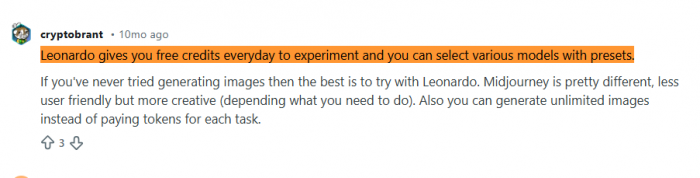
● People praise Midjourney for output quality and “magic” but criticize the lack of a free tier and the Discord‑only barrier. reddit
● They praise Leonardo for offering a generous free tier, more direct control, and stronger privacy options, while sometimes noting that its images feel slightly less “alive” or “artistic” than Midjourney at default settings.
Review‑style articles and tool directories often crown Leonardo as “best overall value” or “best for professionals”, while naming Midjourney “best for pure artistic quality”. That split is a useful headline framing for your blog: value and control vs raw artistry.
Final Verdict: Which One Should You Choose?
Both Midjourney and Leonardo AI are excellent, just in different ways.
Choose Midjourney if you want the most visually impressive, creatively expressive images and you’re comfortable working in or around Discord. It is ideal for artists, designers, content creators and agencies looking for moodboards, concept art, thumbnails and visuals that demand attention.
Choose Leonardo AI if you need a practical, workflow‑ready system for generating consistent assets at scale. It suits marketers, SEO teams, product owners, game developers and agencies who care about control, privacy, cost per asset and predictable production. Its web interface, batch tools and custom models make it easier to integrate into professional pipelines.
For many professionals, the ideal setup is not “Midjourney or Leonardo”, but “Midjourney for exploration, Leonardo for production”.
Post Comments
Be the first to post comment!
Related Articles