Table of Content
- Why you need AI beyond “Smart Bidding”
- 1. Optmyzr : Automation cockpit for serious PPC teams
- 2. Adalysis : Always‑on auditor and testing engine
- 3. Ryze AI : Autonomous co‑pilot for hands‑off management
- 4. WordStream : Guided assistant for smaller advertisers
- 5. Adzooma : Budget‑savvy manager with free tier
- 6. SpyFu : Competitor intelligence for search ads
- 7. Revealbot : Rule‑based bid and budget automation
- 8. Cotera : AI agents for monitoring and alerts
- Quick view: which tool fits which advertiser?
- Verdict: how to pick your AI stack
AI tools for Google Ads sit on top of Google’s own automation and give you what the platform itself rarely offers: control, clarity, and speed. Used well, they can cut wasted spend, improve ROAS, and save hours of manual optimization every week.
In this article, we’re not just listing tools; we’re unpacking how each one fits into a real Google Ads workflow. Think of it as assembling your “AI stack”: a mix of pilots, auditors, testers, and bodyguards that together make your campaigns smarter, safer, and more profitable.
Why you need AI beyond “Smart Bidding”
Google’s native AI (Smart Bidding, Performance Max, auto-apply recommendations) is powerful but biased toward spending more rather than strictly maximizing profit. Third‑party AI tools counterbalance that by:
● Exposing hidden issues with structure, tracking, and wasted spend.
● Automating repetitive work like bidding, budget moves, and ad testing with transparent rules.
● Turning messy account data into clear recommendations you can accept, edit, or reject.
Think of Google’s AI as the engine and these tools as the driver‑assist layer that keeps your account on the right road.
1. Optmyzr : Automation cockpit for serious PPC teams
Optmyzr is a PPC automation suite built specifically for Google Ads and other major ad platforms, with deep workflows for bidding, budgets, audits, and reporting. It is widely recommended for agencies and in‑house teams managing multiple or higher‑spend accounts.
Key capabilities
Optmyzr offers rule‑based and algorithmic automation for bids, budgets, and campaign changes, plus monitoring to catch anomalies before they become expensive. It also comes with rich reporting and dashboards that can be reused across many client accounts.
Core strength in Google Ads
The tool shines as a control panel layered over Google’s own AI: you can orchestrate bid strategies, budget pacing, and Quality Score improvements in a structured way across dozens of campaigns and accounts.
Limitations to note
● Pricing starts relatively high, so it is overkill for very small budgets.
● Learning curve is steeper; you need some PPC experience to unlock full value.
Pricing and plans: Plans start from around 208–249 USD per month depending on the source and package. Higher tiers scale with account volume and feature access, typically aimed at agencies and larger in‑house teams.
Best suited for : Optmyzr is best for agencies, consultants, and in‑house marketers handling multiple or high‑spend accounts who want granular control, sophisticated automation, and customizable reporting rather than “black‑box” suggestions.
2. Adalysis : Always‑on auditor and testing engine
Adalysis focuses on automated account audits and structured A/B testing for Google Ads, making it a favorite among performance marketers obsessed with account health and creative experiments.
What it does well
The platform continuously scans your account for structural problems, bidding issues, and missing best practices, and it suggests fixes. Its testing workflows help you systematically rotate ads, identify winners, and roll out improvements at scale.
Core strength in Google Ads
Adalysis excels as a quality and testing inspector: it not only flags issues but also surfaces optimization opportunities tied to Quality Score, search terms, and underperforming ads.
Drawbacks and trade‑offs
● Focus is narrower than some full‑suite tools; it is not a comprehensive cross‑channel platform.
● Interface and workflows assume some familiarity with split‑testing and PPC metrics.
Pricing and plans: Pricing typically starts at about 99–149 USD per month at lower spend levels and scales with ad spend or account size.
Best suited for
Adalysis is ideal for teams that already run Google Ads at a reasonable scale and now want to standardize audits, enforce best practices, and run continuous ad tests without spreadsheets.
3. Ryze AI : Autonomous co‑pilot for hands‑off management
Ryze AI positions itself as a more autonomous Google Ads manager: instead of just suggestions, it can act on your behalf to keep campaigns aligned with your goals. It was rated very highly in recent expert tests of Google Ads AI tools.
Standout functionality
Ryze AI monitors performance, adjusts elements like bids and budgets, and highlights insights, functioning almost like a PPC account manager that never sleeps. It is designed to minimize the amount of manual tweaking you have to do.
Core strength in Google Ads
Its biggest strength is low‑touch management: once configured, Ryze AI can handle many optimization tasks end‑to‑end while still giving you visibility into what changed and why.
Where it can fall short
● Less suitable if you want extremely granular control over every setting and prefer to build your own rules.
● May not yet have the deep ecosystem or custom workflows that long‑established tools like Optmyzr offer.
Pricing and plans : Typical starting point is roughly 40 USD per month on a flat pricing model, with tiers scaling as you grow.
Best suited for : Ryze AI is a strong choice for small teams or solo advertisers who want “done‑for‑you” style optimization without hiring a dedicated PPC specialist or agency.
4. WordStream : Guided assistant for smaller advertisers
WordStream has long targeted small and medium businesses that find Google Ads confusing and need a guided, simplified experience. It wraps recommendations, education, and light automation into a single interface.
How it helps
It highlights quick wins such as pausing wasteful keywords, adjusting budgets, and optimizing ads, often with plain‑language tips. Some versions include managed services and additional tools for multi‑channel campaigns.
Core strength in Google Ads
WordStream’s strength is its approachability: it bridges the gap between total beginner and full‑blown agency tool, making it easier for non‑specialists to improve their accounts.
Limitations
● Advanced users may find it limiting versus more technical platforms.
● Exact pricing can vary by region and packaging, and enterprise‑grade automation is not its focus.
Pricing and plans : A free tier or free tools are commonly available, with paid plans and managed services offered on a custom‑pricing basis.
Best suited for : WordStream is best for small businesses and beginners who want a friendly assistant to keep their Google Ads from bleeding cash, without diving into complex automation logic.
5. Adzooma : Budget‑savvy manager with free tier

Adzooma is a Google Ads management platform that emphasizes ease of use, budget control, and a generous free tier. It’s often recommended as a first step into AI‑assisted PPC.
What stands out
Adzooma provides account health scores, performance alerts, and optimization suggestions that can be applied in a few clicks. It also supports multiple ad platforms from one dashboard, making it useful for small teams running Google and other channels.
Core strength in Google Ads
Its biggest strength is accessibility at low cost: you can get meaningful insights and automation without committing to a high monthly price.
Constraints
● Functionality and automation depth are more limited compared to heavyweights aimed at big agencies.
● Some advanced features may sit behind higher‑tier plans or partner offers.
Pricing and plans : Adzooma offers a free campaign management tier and then paid plans that unlock more automation and scale.
Best suited for : Adzooma is ideal for budget‑conscious advertisers and freelancers who want to monitor and improve Google Ads performance without expensive software overheads.
6. SpyFu : Competitor intelligence for search ads
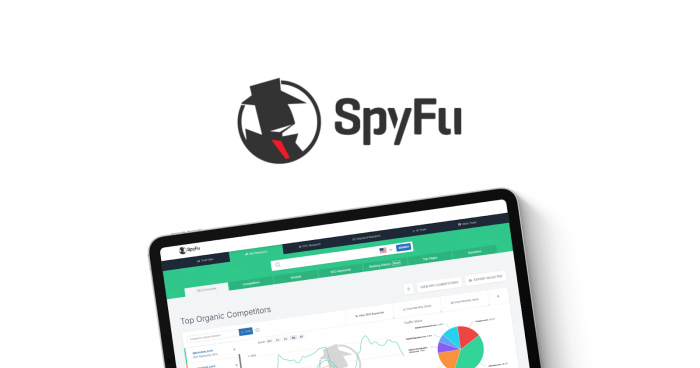
SpyFu is not a pure optimization tool; it is a competitive intelligence platform that helps you understand what rivals are doing on Google Search Ads. It can be a powerful companion for keyword strategy, ad copy ideas, and market positioning.
What you can do with it
SpyFu lets you see competitors’ keywords, estimated ad spend, and ad variations over time, so you can spot gaps and opportunities. This data can feed directly into your keyword lists and creative testing roadmap.
Core strength in Google Ads
Its core strength is visibility into the competitive landscape: instead of guessing what others are bidding on or testing, you get a reasonably clear picture.
Limitations
● It does not manage campaigns or automate bidding; you still need another tool or manual work for execution.
● Data is modeled and may not be perfectly precise, especially in small markets.
Pricing and plans : Plans start from about 39 USD per month, with higher tiers offering more results and features.
Best suited for : SpyFu is best for advertisers who want to sharpen their Google Ads strategy with solid competitor data, especially in competitive niches where every keyword decision matters.
7. Revealbot : Rule‑based bid and budget automation
Revealbot is an automation platform best known in social ads but increasingly used for rule‑driven bidding and budget adjustments in Google Ads as well. It focuses on flexible, custom logic rather than generic recommendations.
How it operates
You define rules based on metrics such as cost per conversion, ROAS, or CTR, and Revealbot automatically adjusts budgets and bids when conditions are met. This makes it possible to react in near real time to performance swings.
Core strength in Google Ads
Revealbot’s strength is highly configurable automation: performance‑savvy teams can codify their playbook into rules that run 24/7, reducing manual monitoring.
Where it may not fit
● It assumes you know which thresholds and KPIs to optimize; not ideal for complete beginners.
● Native Google Ads scripts or built‑in rules may be enough for basic needs, making Revealbot more attractive at scale.
Pricing and plans : Pricing typically starts from about 99 USD per month, with tiers that scale based on ad spend and connected accounts.
Best suited for : Revealbot is a strong choice for data‑driven teams running sizable budgets who want to encode their own bidding and budget logic instead of relying solely on opaque smart bidding.
8. Cotera : AI agents for monitoring and alerts
Cotera is an AI agent platform that includes specialized agents for Google Ads monitoring and anomaly detection. Instead of traditional dashboards, it leans into conversational insights and proactive alerts.
What makes it different
Cotera’s agents watch your Google Ads performance, alert you when metrics drift, and can help explain what changed. The interface is more like messaging an assistant than navigating a typical PPC tool.
Core strength in Google Ads
Its standout strength is proactive monitoring with AI explanations: you get notified about issues and can discuss them in natural language, which is handy for non‑technical stakeholders.
Limitations
● Still emerging compared to long‑established PPC tools, so some advanced optimization workflows may be less mature.
● Focus is heavier on monitoring and insights than on deep, hands‑on optimization.
Pricing and plans : Cotera offers a free tier, with paid plans unlocking more agents, higher usage, and advanced capabilities.
Best suited for : Cotera suits teams that want smarter monitoring and AI‑driven explanations layered on top of existing Google Ads setups or other optimization tools.
Quick view: which tool fits which advertiser?
| Tool | Ideal user profile | Starting price (approx.) |
| Optmyzr | Agencies, in‑house teams, high‑spend PPC | 208–249 USD/month |
| Adalysis | Performance‑focused marketers, testers | 99–149 USD/month |
| Ryze AI | Small teams wanting autonomous management | ~40 USD/month |
| WordStream | SMB owners and beginners | Free tools, custom paid plans |
| Adzooma | Budget‑conscious advertisers, freelancers | Free tier, paid upgrades |
| SpyFu | Competitor‑heavy niches, strategy planners | From 39 USD/month |
| Revealbot | Data‑driven teams with custom rules | From 99 USD/month |
| Cotera | Teams wanting AI monitoring and explanations | Free tier available |
Verdict: how to pick your AI stack
Using AI in Google Ads is not a differentiator anymore, it is the baseline. The real edge comes from choosing the right layer of AI on top of Google’s own automation and wiring it to your business goals, not Google’s default appetite for spend.
Optmyzr and Adalysis are your power tools when you care about disciplined structure, testing, and audit‑level control; Ryze AI and Adzooma are the closest you get to a plug‑and‑play co‑pilot when you are time‑poor but still want decent performance; SpyFu quietly sharpens your strategy by showing you the battlefield; Revealbot encodes your in‑house playbook into always‑on rules; and Cotera keeps watch, surfacing anomalies and insights before they turn into expensive mistakes.
Used in isolation, each tool gives you incremental gains; used as a stack that matches your maturity and budget, they turn Google Ads from “set‑and‑pray” into a measurable, repeatable growth system.
Post Comments
Be the first to post comment!