Design today doesn’t look anything like it did a few years ago. What once required advanced software skills, long hours of tweaking layouts, and a strong eye for detail can now be done in minutes with surprisingly good results. Whether you’re running a small business, organizing an event, or just trying to make your social media stand out, visual content has become non-negotiable, and thankfully, it’s also become much easier to create.
One of the biggest shifts in this space is the rise of intelligent design systems that help users generate visuals from simple ideas. Instead of starting with a blank canvas and feeling stuck, you can now rely on an AI-powered poster creation tool like AI poster maker, that turns a short description into a fully designed poster. It handles layout, typography, spacing, and color suggestions in a way that feels almost like working with a professional designer sitting next to you. What used to take hours of manual effort can now be shaped in a few clicks, leaving more room for creativity and less frustration over technical details.
Why AI Is Becoming a Game-Changer in Visual Design
The most noticeable impact of AI in design is how it removes friction from the creative process. Traditionally, even a simple poster required multiple steps: choosing a template, adjusting fonts, aligning elements, correcting spacing, and testing different color combinations. For non-designers, this process often felt overwhelming.
Now, AI simplifies that entire workflow. Instead of building everything manually, you describe what you want in natural language, and the system generates design options instantly. This doesn’t just save time, it changes how people think about creativity. You no longer need to “know design” to create something visually appealing. You just need an idea.
Another subtle but powerful shift is how AI encourages experimentation. When design becomes fast and reversible, people are more willing to try bold layouts, unusual color combinations, or different styles they might have avoided before. That freedom often leads to better results because there’s no pressure to get everything perfect on the first attempt.
How AI-Driven Poster Creation Feels in Practice
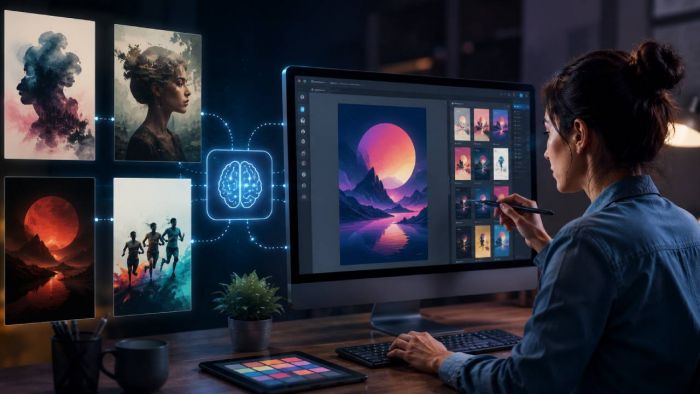
Using modern AI design tools is surprisingly intuitive. You usually start by describing your idea in plain language. For example, you might write something like: “clean and modern poster for a tech conference with blue tones and minimal typography.” Within seconds, the system produces multiple visual interpretations of that request.
What stands out is how structured the results already feel. Instead of random layouts, you get compositions that follow basic design principles—clear hierarchy, balanced spacing, and readable typography. It’s almost like the AI already understands what makes a design effective.
From there, the process becomes more interactive. You can refine the result, adjust tone, swap visuals, or regenerate variations until something feels right. This back-and-forth creates a sense of collaboration rather than automation. You’re still making the creative decisions, but without the technical bottlenecks slowing you down.
Where AI Posters Are Making a Real Difference
The impact of AI-generated design isn’t theoretical, it’s already visible across many everyday use cases.
Small Businesses
Local shops, cafés, and startups often need promotional materials but don’t have access to dedicated designers. AI tools allow them to quickly create posters for sales, events, and announcements that look polished and professional without extra cost.
Event Promotion
From community gatherings to concerts and workshops, events rely heavily on visual communication. A well-designed poster can determine whether someone notices or ignores an announcement. AI makes it easier to produce eye-catching visuals even at the last minute.
Content Creators
On platforms like Instagram or Pinterest, visuals are everything. Creators need consistent, high-quality graphics to maintain engagement. AI helps them generate themed posters, quotes, and promotional visuals quickly, keeping their content fresh without burnout.
Education and Student Projects
Students often need visuals for presentations or club activities. Instead of relying on basic slides, they can now create visually engaging posters that make their work stand out and communicate ideas more effectively.
Tips for Getting Better Results from AI Design Tools
Even though AI does most of the heavy lifting, the input you provide still shapes the final outcome significantly. A few small adjustments in how you approach it can make a big difference.
Be descriptive but focused. Instead of vague instructions, include tone, purpose, and audience. For example, “a bold, energetic poster for a music festival targeting young adults” works better than simply “music poster.”
Think about emotional tone. Design isn’t just visual, it communicates feelings. A calm wellness event poster should look very different from a high-energy product launch.
Don’t ignore simplicity. One common mistake is overloading posters with too many elements because AI can generate rich visuals. In most cases, clarity wins over complexity.
Finally, treat AI outputs as a starting point, not a final product. Small refinements,like adjusting spacing or simplifying text—can elevate a good design into something truly professional.
Common Pitfalls to Avoid
While AI makes design easier, it can also lead to lazy decision-making if you’re not careful. One of the biggest mistakes is accepting the first result without any adjustments. Even a well-generated design usually benefits from a bit of human refinement.
Another issue is inconsistency. If you’re using posters for a brand or business, you need to ensure that colors, fonts, and tone stay aligned with your identity. AI can generate variety, but your brand still needs structure.
Lastly, avoid clutter. Just because something looks visually rich doesn’t mean it’s effective. The best posters are often the simplest ones,clear message, strong hierarchy, and easy readability.
Conclusion
Design is no longer a barrier reserved for trained professionals. With the help of AI-driven tools, anyone can turn an idea into a visually compelling poster in a matter of minutes. The process has become faster, more flexible, and far more accessible, opening the door for creativity at every level.
As these technologies continue to evolve, we’re moving toward a world where expressing ideas visually is as natural as writing them down. And in that world, good design won’t be about technical skill,it will be about imagination, clarity, and the ability to communicate a message that actually connects with people.
Post Comments
Be the first to post comment!
Related Articles

Grubby AI vs WriteHuman: Which One Should You Use?
Ridge Harper . Jun 30, 2026
The best AI tools for making an audiobook
Ariel Blake . Jun 29, 2026