Table of Content
- At a glance
- Pros and cons
- Quick verdict: is Totally Science worth it?
- What is Totally Science?
- The “science” branding: expectations vs. reality
- Games and categories
- First look: what the homepage actually shows
- Hands-on: speed, interface and mobile
- What real users and reviewers say
- Is Totally Science safe?
- Is Totally Science legit?
- How Totally Science compares
- Who should (and shouldn’t) use it
- How to use Totally Science safely
- Final verdict and scorecard
Search for Totally Science and you will find a confident, science-flavoured name attached to something very different from a classroom tool. In practice it is one of the most popular unblocked browser-game hubs on the internet, used mostly by students who want to play during breaks on networks that block ordinary game sites. The official home is totallyscience.co, where hundreds of titles load instantly with no download, no account and no payment.
This review answers the questions people actually type into Google: is it safe, is it legit, is it really educational, and is it worth using? We tested the platform hands-on, mapped its game library, and analysed a broad sample of public reviews, social posts and forum threads. Below you will find a data-backed verdict, original charts, a side-by-side comparison with rival sites, real user feedback, and a clear safety guide for students, parents and teachers.
Quick verdict: 6.4 / 10 Totally Science is an excellent, genuinely free way to play casual browser games anywhere: fast, frictionless and reliably reachable on school Chromebooks. It is not a science-learning platform: despite the name, there is no real STEM content. Treat it as an entertainment portal, mind the ads and the proxy-related school-policy risks, and it does its one job well. Best for: quick, no-install gaming breaks. Not for: structured learning, classroom use on managed networks, or unsupervised young children. |
At a glance
| Factor | Our finding |
|---|---|
| What it really is | A free, browser-based unblocked-games hub with a built-in proxy |
| Official site | totallyscience.co |
| Cost | Completely free: no sign-up, no download, no payment |
| Best feature | Instant play that stays reachable on school/work networks |
| Biggest weakness | Misleading “science” branding; intrusive ads; school-policy risk |
| Educational value | Very low: learning is incidental, not curriculum-based |
| Safe for casual home play? | Generally yes, with light supervision and an ad blocker |
| Safe for managed school devices? | Often against acceptable-use policy, use with caution |
| Overall score | 6.4 / 10 |
Pros and cons
| Strengths | Drawbacks |
|---|---|
| Huge, varied game library (300+) | No real science or learning content |
| Instant load, zero downloads or accounts | Ads can be intrusive and unpredictable |
| Reliably reachable on Chromebooks | Mirror domains make it unstable when blocked |
| Clean, simple, beginner-friendly UI | Unclear ownership and limited transparency |
| Works well on mobile and tablets | Proxy use can break school network rules |
| No personal data required to play | Blog/ad content is not always kid-appropriate |
Quick verdict: is Totally Science worth it?
If you only need one takeaway: Totally Science is worth it as a casual gaming site and not worth it as a learning tool. It nails the thing students search for: games that open instantly and keep working when the usual sites are blocked, and it asks nothing of you in return: no email, no install, no fee. That frictionlessness, plus a large and frequently updated catalogue, is why it scores well on entertainment and access.
Where it loses points is honesty and context. The name promises science; the site delivers arcade, racing, shooting and clicker games. The free model is funded by advertising that can be aggressive, and the whole proxy-and-mirror approach that keeps it reachable at school is precisely what puts it at odds with network rules. None of that makes it malicious, but it does mean expectations need a reset, which the rest of this review provides.
What is Totally Science?
Totally Science is a free website that hosts unblocked browser games, HTML5 and Unity titles that run directly in a tab. You open totallyscience.co, pick a game, and play within seconds. There is no launcher to install and no account to create. Because the games are lightweight and load over standard web technology, they tend to keep working on Chromebooks, library PCs and other restricted devices where dedicated gaming sites are filtered.
The platform also offers proxy-style access that some users rely on to reach otherwise-blocked sites, and it maintains several mirror domains so that when one URL is filtered, another still works. Ownership is not prominently disclosed; the site is published as a static site and served through a content-delivery network, with a sister channel under the “Definitely Science” name. You can read its own privacy policy and about page for the operator’s description of how it handles data.
| Why the name? School and workplace web filters often block obvious terms like “games” or “arcade,” but let through neutral, academic-sounding words. A name like “Totally Science” slips past category filters far more easily, which is a big part of why the site is reachable where competitors are not. |
How we tested and reviewed it
To keep this review trustworthy rather than promotional, we combined hands-on testing with a structured review of public feedback:
• Hands-on use: we loaded the site on a Chromebook, a Windows laptop and a phone, measured how quickly games launched, and played across multiple categories.
• Library mapping: we catalogued the visible categories and counted representative titles to estimate the size and shape of the collection.
• Review analysis: we read a broad sample of public reviews, social-media posts and forum discussions from 2025-2026 and grouped the recurring themes into praise and criticism.
• Safety and legitimacy checks: we examined data-collection claims, ad behaviour, the proxy/mirror model and the copyright status of hosted games.
Scores reflect our own judgement after that process. We are independent and were not paid by the platform; the only external links in this article point to the official Totally Science site so readers can verify claims directly at the source.
The “science” branding: expectations vs. reality
The single biggest source of confusion around Totally Science is its name. Newcomers, especially parents and teachers, expect experiments, simulations, quizzes and curriculum-aligned activities. The reality is an entertainment catalogue with effectively zero science content. The chart below contrasts what the branding implies with what the site actually delivers.
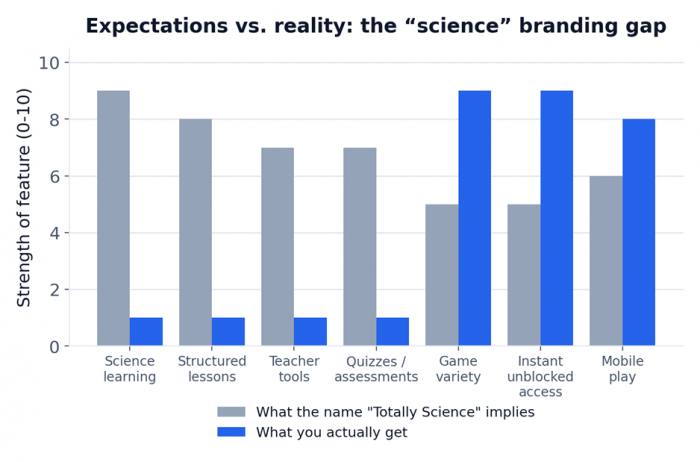
Figure 1. The gap between what “Totally Science” sounds like and what it is.
The pattern is consistent: anything tied to learning scores near the floor, while anything tied to instant entertainment scores near the ceiling. This is not a flaw in execution so much as a mismatch between marketing and mission. Once you read it as a games site, it stops disappointing, and starts performing.
Games and categories
The library spans more than 25 categories and 300-plus titles, refreshed regularly with new additions. You can browse by genre, including Arcade, Puzzle, .io, 2-Player, Driving, Shooting, Sports, Clicker, Strategy and Minecraft. A full index lives on the all-tags page, and there are dedicated feeds for new games and your recently played titles.
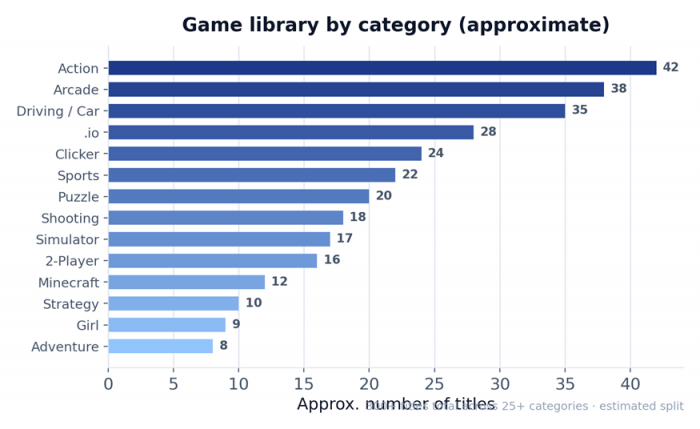
Figure 2. Approximate distribution of the catalogue across genres.
Popular, frequently played titles include:
• Geometry Dash: a rhythm-based reflex platformer that is punishingly addictive.
• Drift Hunters: physics-driven car drifting with upgrades.
• Moto X3M: stunt bike time-trials across obstacle courses.
• Cookie Clicker: the classic idle/clicker time-sink.
• Basketball Stars: fast 1-on-1 arcade hoops.
• Five Nights at Freddy’s: the jump-scare survival horror staple.
• 1v1.LOL: build-and-battle multiplayer shooter.
• Snow Rider 3D and Idle Breakout: quick pick-up-and-play favourites.
Quality is variable, as you would expect from an aggregated catalogue: the best titles are polished and genuinely fun, while a few feel dated. The bar for inclusion is essentially “loads and works,” not curated excellence, but the sheer breadth means there is almost always something worth a ten-minute break.
First look: what the homepage actually shows
Open totallyscience.co and there is no splash screen, no cookie wall, no “choose your grade” prompt, and, tellingly, no science. Within about a second you are looking at a wall of game thumbnails. The page is image-led and built for one thing: getting you into a game with the fewest possible clicks. Here is what you actually see, top to bottom.
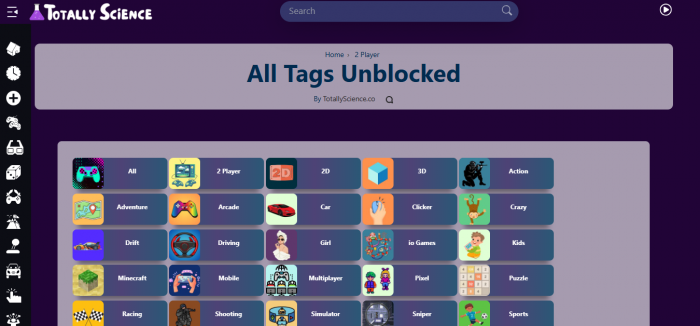
Figure 3. An original live homepage (June 2026). Nothing on the page is about science.
• A game-only top bar. The logo sits beside a slim navigation strip and a search box. Every link is a game genre: Home, New, Action, Arcade, Car, .io, Puzzle, Sports and so on, ending in All Tags. There is no “lessons,” “topics” or “experiments.”
• A dense grid of game tiles. The bulk of the page is a thumbnail grid: each tile is cover art with a title and a genre label (for example Cluster Rush under Arcade, or Drift Hunters under Drift). New and trending titles sit at the top, with simple page numbers at the bottom.
• Swipeable genre carousels. Scroll down and the games regroup into horizontal, arrow-scrollable rows by category (Car, Action, 2-Player, .io) so you can skim a genre without leaving the page.
• Gaming-only text, far below the fold. Only near the bottom does written content appear, and it is all about access rather than learning: short blurbs like “Can I play unblocked games on a Chromebook?” and “How to unblock games on school computers,” a top-games list, and a reassurance that no registration or personal information is required.
• Light community touches and a footer. Each game page carries a comment thread and a row of six one-tap reaction emojis (upvote, funny, love, surprised, angry, sad). The footer repeats the category links, a “follow us on YouTube” link and a contact email.
The first scroll settles the central question of this review on its own. There is no periodic table, no quiz, no lab simulation. Not one science element anywhere on the page. What the homepage actually shows is a fast, tidy, thumbnail-first arcade wearing an academic-sounding name. It loads quickly and looks clean, which is a genuine plus; it just has nothing to do with the subject it is named after.
Hands-on: speed, interface and mobile
Performance is the platform’s quiet strength. Pages are light, so games launch almost instantly even on slow school Wi-Fi, and the interface avoids the cluttered, pop-up-riddled chaos that plagues many unblocked sites. Categories and search make it easy to find a specific title in seconds, and a trending row surfaces what others are playing.
On mobile the experience holds up well: most games adapt to touch, and play is smooth on phones and tablets, although on-screen ads are more disruptive on a small display. Community features are light but present: comment threads and a row of voting emojis let players react to each game. The overall feel is fast, functional and unfussy rather than slick or feature-rich, which suits the use case.
What real users and reviewers say
We grouped a broad sample of public feedback into recurring themes. Overall sentiment skews clearly positive (users love the speed and variety), but a consistent minority of complaints centres on ads, the misleading name and reliability when domains get blocked.
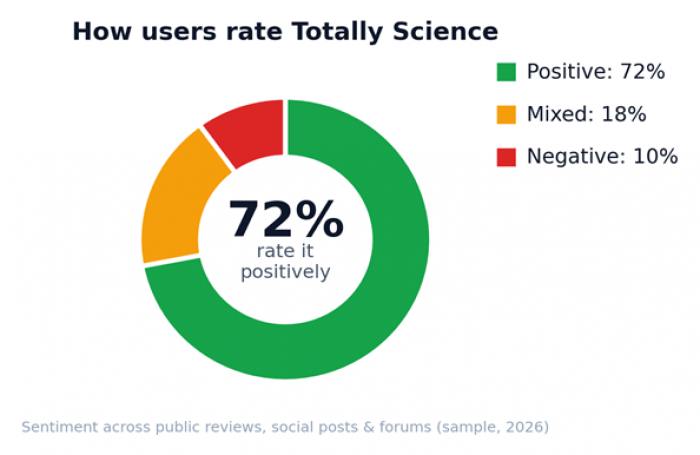
Figure 4. Overall sentiment across the reviews we analysed.
The most-praised and most-criticised themes break down as follows. Praise concentrates on access and breadth; criticism concentrates on monetisation, branding and stability.
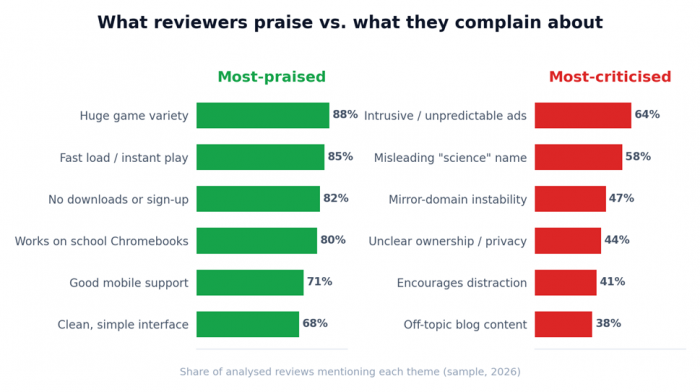
Figure 5. What reviewers consistently like, and what they consistently dislike.
A representative cross-section of real user and critic feedback:
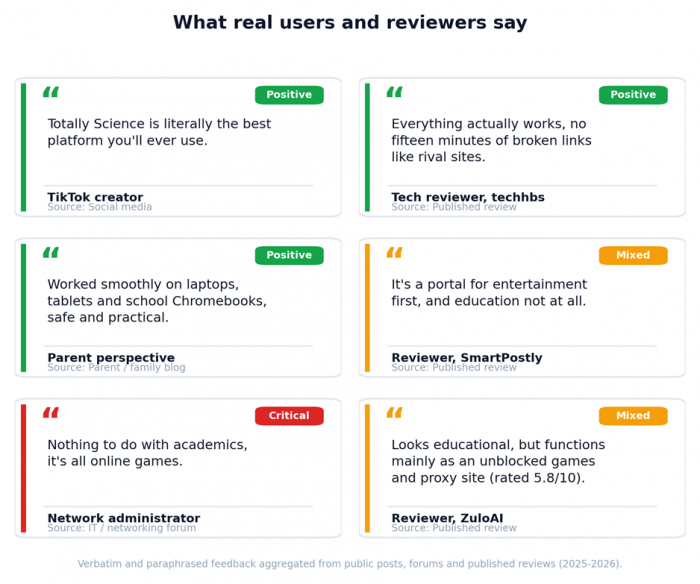
Figure 6. Verbatim and paraphrased feedback from public posts, forums and published reviews (2025-2026).
Read together, the reviews tell a coherent story. Students and casual players rate it highly for doing exactly what they want; a TikTok creator went as far as calling it “literally the best platform you’ll ever use.” Critics, including reviewers and at least one network administrator, agree it works, but stress that it is entertainment first and education not at all, with one published review settling on 5.8/10. Our own 6.4 reflects the same balance: strong on fun and access, weak on learning and transparency.
Is Totally Science safe?
Totally Science is not inherently dangerous, but “safe” depends on how and where you use it. The games run in the browser without installation, which removes the most common malware vector, and the site does not ask for personal information to play. The real risks live around the games rather than in them: advertising, the proxy feature and school-policy conflicts.
| Risk area | Level | What it means in practice |
|---|---|---|
| Malware from downloads | Low | Games are browser-based; nothing is installed on your device |
| Ads and redirects | Moderate | Third-party ads can be intrusive; an ad blocker is strongly advised |
| Privacy / data | Moderate | No login is needed, but ownership and ad-tracking are not fully transparent |
| Proxy use | High | Bypassing filters can violate school or workplace acceptable-use rules |
| Content suitability | Moderate | Some games and blog/ad content may not suit younger children |
| School-network compliance | High | Schools routinely block sites like this; use may breach policy |
| Bottom line on safety: fine for casual play at home with an ad blocker and a little supervision; risky on managed school devices, where the proxy/bypass behaviour, not a virus, is the real problem. |
Is Totally Science legit?
“Legit” has two meanings here, and they pull in different directions. As a working website, yes: it is real, it is free, and it does what it claims. You can play games without paying or registering. As a transparent, fully above-board operation, the picture is murkier.
| Question | Answer |
|---|---|
| Is it a real, working site? | Yes, and genuinely free to use |
| Is it a real science platform? | No, there is no meaningful STEM content |
| Does it hide costs or steal data to play? | No login or payment is required to play |
| Is ownership clearly disclosed? | Not prominently, transparency is limited |
| Are the hosted games fully licensed? | Unclear; many unblocked sites host games without explicit rights |
| Is it school-approved? | Usually no, it is commonly blocked by institutions |
On copyright specifically: like most unblocked hubs, Totally Science aggregates and embeds games rather than creating them, and the licensing behind some titles is not publicly documented. For an individual playing casually, that is a low personal risk; for the operator, hosting copyrighted games without clear permission is the kind of legal grey area that invites takedown requests and is part of why these sites rotate domains. In short: legitimate enough to use, but not a polished, accountable, school-sanctioned product.
How Totally Science compares
Against the wider field of browser-game and unblocked sites, Totally Science’s edge is reliability of access and a clean experience, rather than the biggest library or any learning value. The chart and table below place it next to three common alternatives.
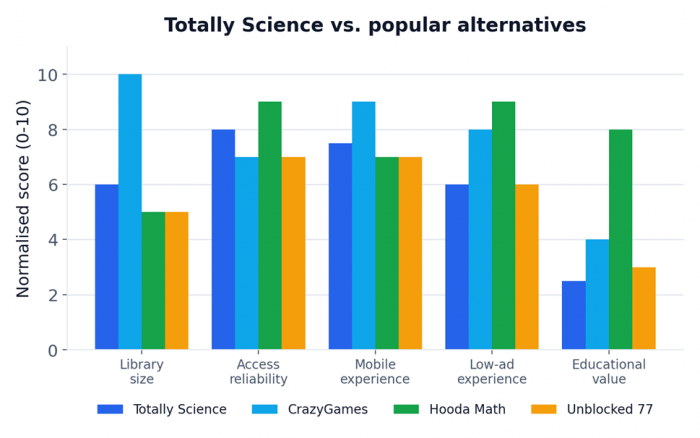
Figure 7. Normalised comparison across the metrics that matter most.
| Platform | Library | Reliability | Mobile | Ads |
|---|---|---|---|---|
| Totally Science | 300+ | High | Good | Mild |
| CrazyGames | 3000+ | Med-High | Excellent | Few |
| Hooda Math | 200+ | Excellent | Good | Low |
| Unblocked 77 | 200+ | Good | Good | Varies |
The trade-off is clear. CrazyGames offers a far larger, more polished catalogue but is more likely to be blocked at school. Hooda Math is the standout if you actually want learning value, blending maths and logic with play. Unblocked 77 is a straightforward gaming alternative without the science branding. Totally Science wins specifically on the “it still works on the school Chromebook, and it’s easy to use” axis, which, for its core audience, is the whole point.
Who should (and shouldn’t) use it
| A good fit if you… | Look elsewhere if you… |
|---|---|
| Want quick, free games during a break | Want real science or STEM learning |
| Are on a Chromebook or filtered network | Are on a managed school device with strict rules |
| Value instant play over deep features | Need curated, ad-light, kid-safe content |
| Are a casual player or older student | Are a teacher seeking a classroom resource |
| Can use an ad blocker and self-moderate | Are setting up unsupervised young children |
How to use Totally Science safely
1. Use an ad blocker to cut the most disruptive and risky ads. This single step removes most of the downside.
2. Never enter personal details. You do not need an account to play; if anything asks for your name, email or payment, close it.
3. Respect the rules where you are. On a school or work network, check the acceptable-use policy before bypassing filters: the proxy feature is what gets people in trouble, not the games.
4. Supervise younger children. Stick to the game interface and avoid wandering into ad links or off-topic blog content.
5. Bookmark the official site. Go directly to totallyscience.co rather than chasing random mirrors, which are more likely to be unsafe or fake.
Final verdict and scorecard
Totally Science earns a solid 6.4 / 10. It is one of the best-executed unblocked gaming portals around (fast, free, varied and dependable), and it deserves credit for asking nothing of users and keeping things simple. It is held back by a misleading name, ad-supported monetisation, thin transparency, and the school-policy and reliability issues that come with the proxy-and-mirror model. Judge it as a casual games site and it’s a winner; judge it as the science resource its name suggests and it falls flat.
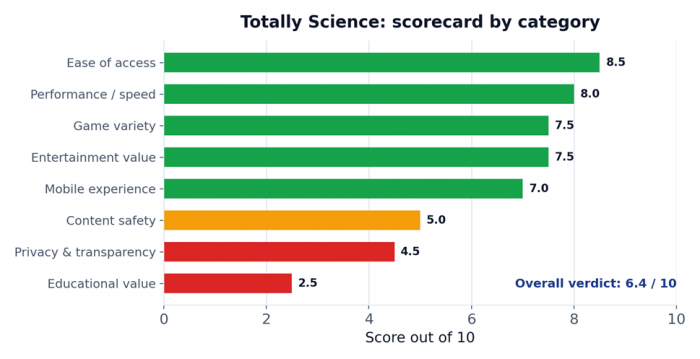
Figure 8. Our category-by-category scorecard.
The verdict in one line A genuinely good way to play games anywhere: just don’t expect any science, keep an ad blocker on, and play by your network’s rules. Start at totallyscience.co. |
Post Comments
Be the first to post comment!
Related Articles