Amazon’s latest bet on wearable AI, a tiny device called Bee, is now out in the wild — and early hands-on tests suggest it is less a flashy gadget and more a quiet companion designed to sit on your wrist or collar and listen just enough to make your life easier. Debuted around CES 2026 and now reaching early reviewers, Bee feels like Amazon’s attempt to move generative AI off smart speakers and phones and into something you barely notice until it nudges you with a reminder, a summary, or an insight drawn from your own day.
Physically, Bee is small and understated: a pill-shaped module that can snap into a sports band or clip onto clothing as a pin. There’s a single
What makes Bee feel different from a basic voice recorder is what happens after you press that button. Instead of storing hours of raw audio, Bee records conversations, transcribes them, and then discards the original sound, keeping structured text sections that are organized, color-tinted, and summarized inside the app. “Bee has the capability to listen, capture, and transcribe spoken conversations,” one report explains, but its unique twist is that it “divid[es] the audio into distinct segments and provid[es] summaries for each section rather than offering a general overview or a verbatim transcript.” That means a long meeting or interview might be broken into clear chapters — introductions, product details, Q&A, next steps — each with a quick summary you can scan later.
On Amazon’s side, the company is framing Bee as “ambient AI wherever customers are,” a wearable that “captures your conversations, understands your commitments, and builds a picture of your life that grows richer over time.” A single press of the button, Amazon stresses, is enough to start or stop capture, with “no setup, no training, no manual input” required before Bee begins learning from your daily patterns. Inside the app, a Memory view lets users scroll back through past days, while a “Grow” section offers personalized insights and trends, surfacing recurring themes in your mood, relationships, or workload and even recommending goals “like a coach who actually knows their life.”
The device is already wired into popular services, positioning it as more than just an AI notebook. Bee can connect to Gmail, Google Calendar, phone contacts and Apple Health, turning throwaway lines like “I’ll email you later” or “Let’s meet next week” into draft emails and calendar invites, thanks to a feature Amazon calls Actions. As one briefing puts it, “when you mention needing to send an email or schedule a meeting, Bee can draft the email, create the invite, and handle it for you,” effectively turning conversations into outcomes. The longer you wear it, the more Bee’s knowledge graph of your life fills in, helping it link people, places and commitments over time.
Market reception, however, is still an open question. At roughly the price of a budget smartwatch, Bee enters a space where Amazon has “had mixed results” before, re-entering the wearable market with a $50 AI gadget that promises to quietly manage your to-dos and your schedule. Analysts point out that Amazon is watching closely to see “whether this is a future that consumers desire,” especially for people who are not using Bee professionally in meetings or interviews. For now, the early hands-on verdict is that Bee is simple, surprisingly capable at turning talk into structured action, and very much a first-generation device whose real test will be whether users are ready to wear an AI that remembers what they say — and forgets the rest.
Post Comments
Be the first to post comment!
Related Articles


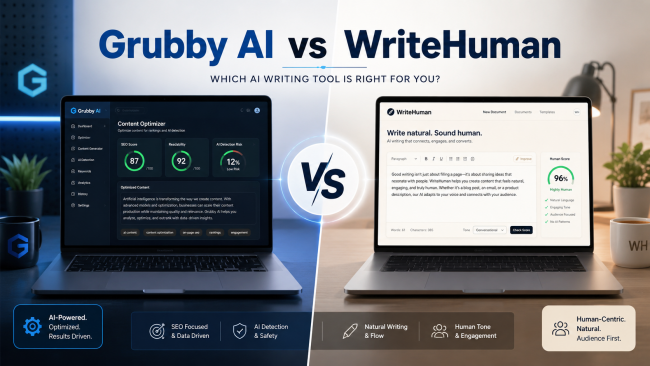
Grubby AI vs WriteHuman: Which One Should You Use?
Ridge Harper . Jun 30, 2026