PolyBuzz is one of the most popular AI character chat apps, famous for its enormous library of characters and its standard, immersive, and story modes. But it is not the only option, and depending on what you want, it may not be the best one for you. Maybe you want sharper long-term memory, fewer interruptions, richer storytelling tools, or a deeper emotional companion.
Why Look for a PolyBuzz Alternative?
PolyBuzz is genuinely good for casual character chat, but users commonly switch for a few reasons:
• Better memory: keeping track of your story and details across long conversations.
• More creative freedom: fewer filters interrupting a scene mid-roleplay.
• Stronger storytelling tools: lorebooks, world-building, and plot control.
• Deeper companionship: a single consistent AI that remembers your relationship.
• Pricing clarity: knowing exactly what the free and paid tiers include.
The right pick depends on which of these matters most to you. Use the comparison below to narrow it down quickly.
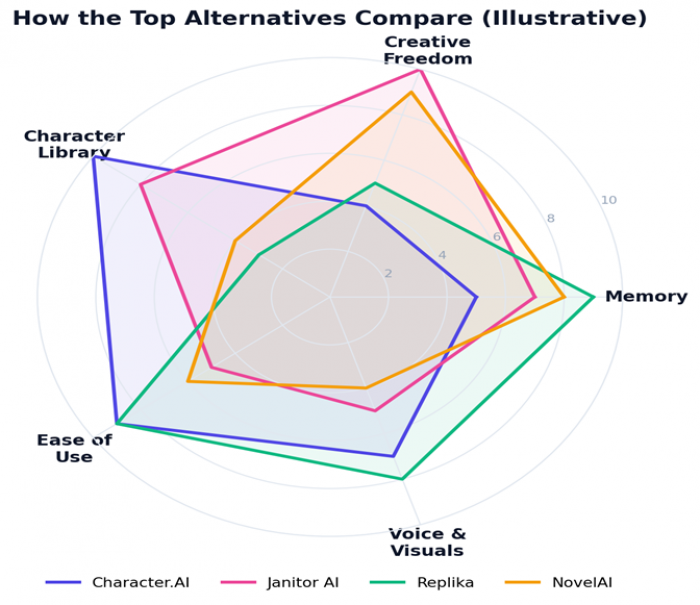
Figure 1: A simple view of how the leading alternatives balance memory, freedom, library size, ease of use, and media features.
The 8 Best PolyBuzz Alternatives in 2026
1. Character.AI: Best Overall for Beginners
Character.AI is the largest and most mainstream character platform, with millions of community-made characters spanning anime, fantasy, fiction, celebrities, and original creations. It is the easiest place to start because everything happens in one clean app: you browse a recommendation feed, tap a character, and begin chatting in under two minutes with no setup or model configuration.
The real draw is the community. Characters are constantly created, remixed, and improved by users, so the library feels alive in a way smaller apps cannot match. As any practical Character AI Review should note, the free tier is generous enough for casual roleplay, and an optional paid plan reduces peak-hour wait times and unlocks an image generator.
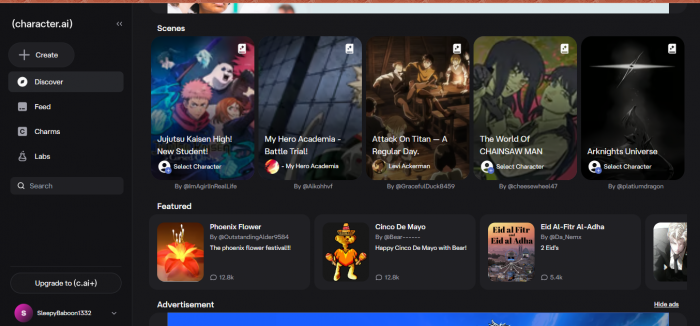
The trade-offs are well documented. Content filters have tightened over time, so some creative scenes get blocked or interrupted with disclaimers, and free users may see full-screen ads mid-conversation. Memory can also drift in very long sessions, which limits sustained, multi-chapter storytelling.
Best for: Newcomers and fandom-heavy creative play who want the biggest library with zero setup. Strength: unmatched character variety and community energy. Watch-out: tightening filters, ads on the free tier, and fading memory in very long chats.
2. Janitor AI: Best for Creative Control
Janitor AI is the power-user favorite. It hosts a massive community library and, crucially, lets you choose the AI model behind your characters. You can use its built-in model or connect an external one such as OpenAI, DeepSeek, or Google Gemini through your own key, which means the platform stays out of your way during a scene.
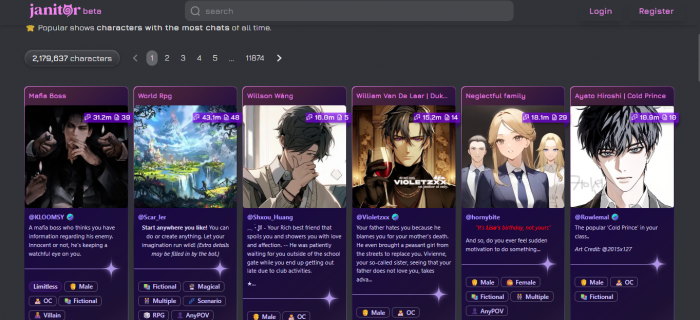
That model choice is the whole point. The built-in option is free but average; connecting a stronger external model dramatically improves writing quality, and paid API usage often runs only a few dollars a month for moderate use. There is also a switchable, age-verified mode that removes filtering for adult users, which is why many people migrate here from more restricted apps.
The catch is friction. Picking a model, pasting an API key, and tuning settings takes time and can feel intimidating if you have never done it. If “bring your own API key” makes your eyes glaze over, this may not be your first stop.
Best for: Users who want maximum customization, minimal filtering, and control over the underlying model. Strength: flexible backends and a large character library. Watch-out: setup and API keys can be confusing for beginners.
3. Replika: Best Emotional Companion
Replika is built around a single, persistent AI companion rather than a library of characters. Over time it adapts to how you talk, remembers life events and preferences you share, and aims to feel like a steady presence for support, reflection, and everyday conversation.

Its standout feature is long-term memory. Where many roleplay apps reset between sessions, Replika tries to carry your relationship forward across weeks and months, which is what makes it feel less like a tool and more like a friend. It also offers voice calls and a 3D avatar, and is available on iOS, Android, and web.
Because it focuses on one evolving companion, it is less suited to jumping between varied characters or running elaborate fictional plots. Many of the deeper features, including relationship modes and voice, sit behind Replika Pro, and past content-policy changes have made some longtime users cautious.
Best for: Long-term companionship and emotional continuity with one consistent AI. Strength: relationship memory across months, plus voice and avatar features. Watch-out: less flexible for varied creative roleplay; deeper features require Replika Pro.
4. NovelAI: Best for Serious Storytelling
NovelAI takes a writer-first, literary approach. Instead of a simple back-and-forth chat, it gives you authorial control over a long-form narrative, letting you steer plot, tone, and pacing as a co-writer rather than a chat partner.

Its signature tool is the lorebook, a manual memory system where you define characters, places, and facts that the AI pulls in at the right moments. This gives you the most precise control over continuity on this list, which is invaluable for sustained, multi-chapter stories where details must stay consistent. It also includes its own image generation for visualizing scenes and characters.
The power comes with a learning curve. Setting up lorebook entries and learning how the controls work takes effort, and full features require a subscription. It rewards writers who want to build a world, not users who just want to tap a character and chat.
Best for: Writers and interactive-fiction fans who want to direct a long story. Strength: lorebook memory and fine narrative control. Watch-out: a steeper learning curve and a subscription for full features.
5. Talkie AI: Best for Visual Character Cards
Talkie (also known as Talkie: Soulful AI) blends chatting with collecting. It offers a large library of community-created characters across anime, gaming, and fantasy, each shown as a visual character card, and adds a game-like layer where you earn collectible cards as you chat.
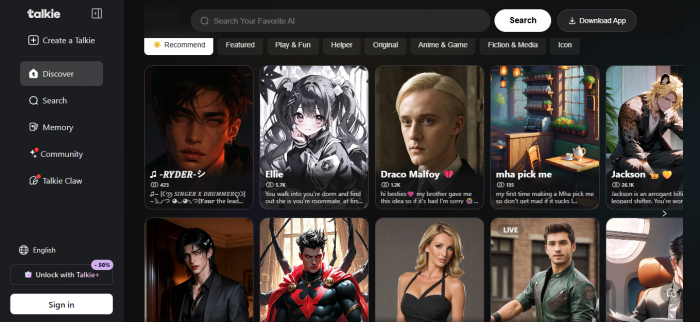
It leans into structured, playful roleplay with persona systems, character-matched voices, and group chat, all wrapped in a polished, mobile-first interface. That mix of visuals and light gamification makes it one of the most approachable and entertaining options for phone users.
On the downside, its filters are stricter than freedom-focused apps, replies can occasionally drift out of character, and its token-based system has drawn complaints about unclear costs. It is best treated as fun, casual entertainment rather than a deep, single long-term companion.
Best for: Mobile users who love visual, collectible characters and casual roleplay. Strength: rich visuals, voices, and a large community library. Watch-out: stricter filters and a token system some find opaque.
6. Kindroid: Best Modern Customization
Kindroid is designed around the idea of a companion that is truly yours. It offers some of the deepest character customization available, with a detailed personality system and a multi-layer, persistent memory architecture that tracks key plot points and details across sessions.
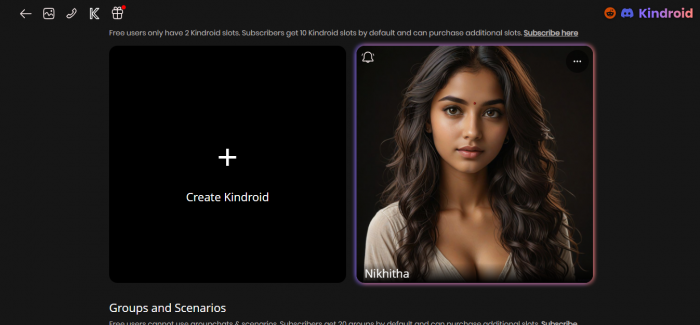
In practice that means companions that feel more personal and consistent than typical library apps, backed by high-quality voice calls that many reviewers rate as a standout. Onboarding takes only a few minutes, and a free tier lets you test it before paying. It supports both everyday and age-gated conversation modes.
Quality comes at a price: Kindroid sits at the higher end of the market, and while conversation is strong, replies can occasionally feel formulaic. It also emphasizes a single deep companion over a huge browsable character library, so it suits relationship-building more than character-hopping.
Best for: Users wanting a deeply customizable companion with voice and strong memory. Strength: rich personalization and persistent, cross-session memory. Watch-out: premium pricing and a focus on one companion over a big library.
7. SillyTavern: Best for Power Users and Privacy
SillyTavern is not a hosted app but an open-source front end you run yourself. It connects to the AI model of your choice, whether a cloud API or a model running locally on your own machine, and gives you total control over the experience behind your characters.
That control is unmatched. You decide the model, the prompts, the memory handling, and the content rules, with nothing dictated by a company. Running models locally also means your roleplay can stay completely private on your own hardware, which is the main reason enthusiasts and privacy-minded users swear by it.
The cost is setup. You need to install it, connect a model, and learn its many settings, which is a real time investment and assumes some technical comfort. If you want to click and chat immediately, start elsewhere; if you want to own every detail, nothing else compares.
Best for: Technical users who want full control and maximum privacy. Strength: complete flexibility and local, private setups. Watch-out: requires installation, configuration, and your own model access.
8. CrushOn AI: Best for Uninterrupted Roleplay
CrushOn focuses on the feel of the conversation itself. It pairs a clean, responsive interface with deep character creation, letting you specify physical traits, personality, and detailed backstories, and it is popular for emotionally engaging, companion-style, and romantic roleplay.

Its main selling point is flow: few mid-chat interruptions and an age-gated mode for adult users, so scenes are not broken up by disclaimers. It is also one of the more budget-friendly options, with paid plans that undercut pricier companion apps while keeping a feature-rich free tier.
As an unfiltered-leaning platform, it is best suited to adults who have confirmed the age rating and content settings. Response quality is generally smooth, though as with most apps it can become repetitive over very long sessions.
Best for: Adults who want smooth, emotionally engaging roleplay with deep character setup. Strength: clean chat flow, strong customization, and good value. Watch-out: leans unfiltered, so confirm the age rating and content settings.
Quick Comparison Table
| App | Best For | Standout Strength | Pricing Style |
| Character.AI | Beginners | Huge library | Free + optional plan |
| Janitor AI | Creative control | Flexible backends | Free + your API cost |
| Replika | Companionship | Long-term memory | Freemium + Pro |
| NovelAI | Storytelling | Lorebook control | Subscription |
| Talkie AI | Visual cards | Rich visuals | Free + in-app |
| Kindroid | Customization | Voice & images | Freemium |
| SillyTavern | Power users | Full control | Free (self-host) |
| CrushOn AI | Smooth roleplay | Clean chat flow | Freemium |
How to Choose the Right App
Match your main goal to the right app with this quick picker.
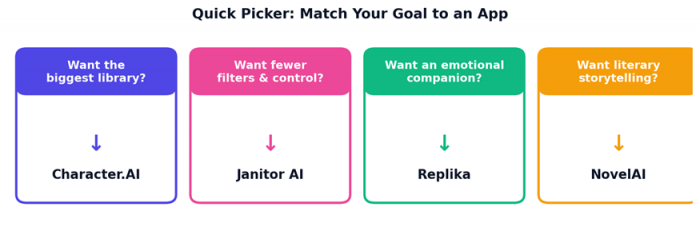
Figure 2: Pick your priority, then start with the app that fits it best.
1. Decide your priority. Library size, creative freedom, memory, or companionship.
2. Check the content policy. Confirm the age rating and filters match what you want and what is appropriate for you.
3. Try the free tier first. Most apps let you test the core experience before paying.
4. Test memory in a long chat. See how well it holds details over many turns.
5. Compare real costs. Look at monthly price, message limits, and any per-use charges.
Final Thoughts
There is no single best PolyBuzz alternative. The right app depends on what you value most. For the easiest start, try Character.AI. For creative control, explore Janitor AI or SillyTavern. For a steady companion, Replika stands out, and for serious storytelling, NovelAI leads. Test a couple of free tiers, see which one remembers your story and matches your style, and make that your new home base.
Key takeaway: Choose by your top priority, check the content policy, and test the free tier before you commit.
Post Comments
Be the first to post comment!
Related Articles



Grubby AI vs WriteHuman: Which One Should You Use?
Ridge Harper . Jun 30, 2026